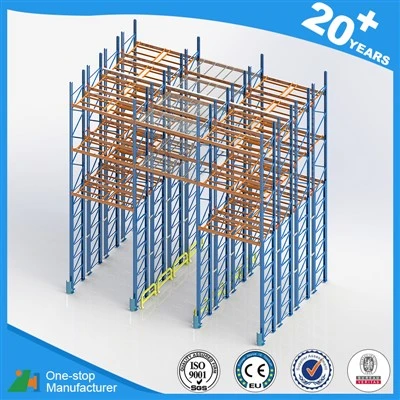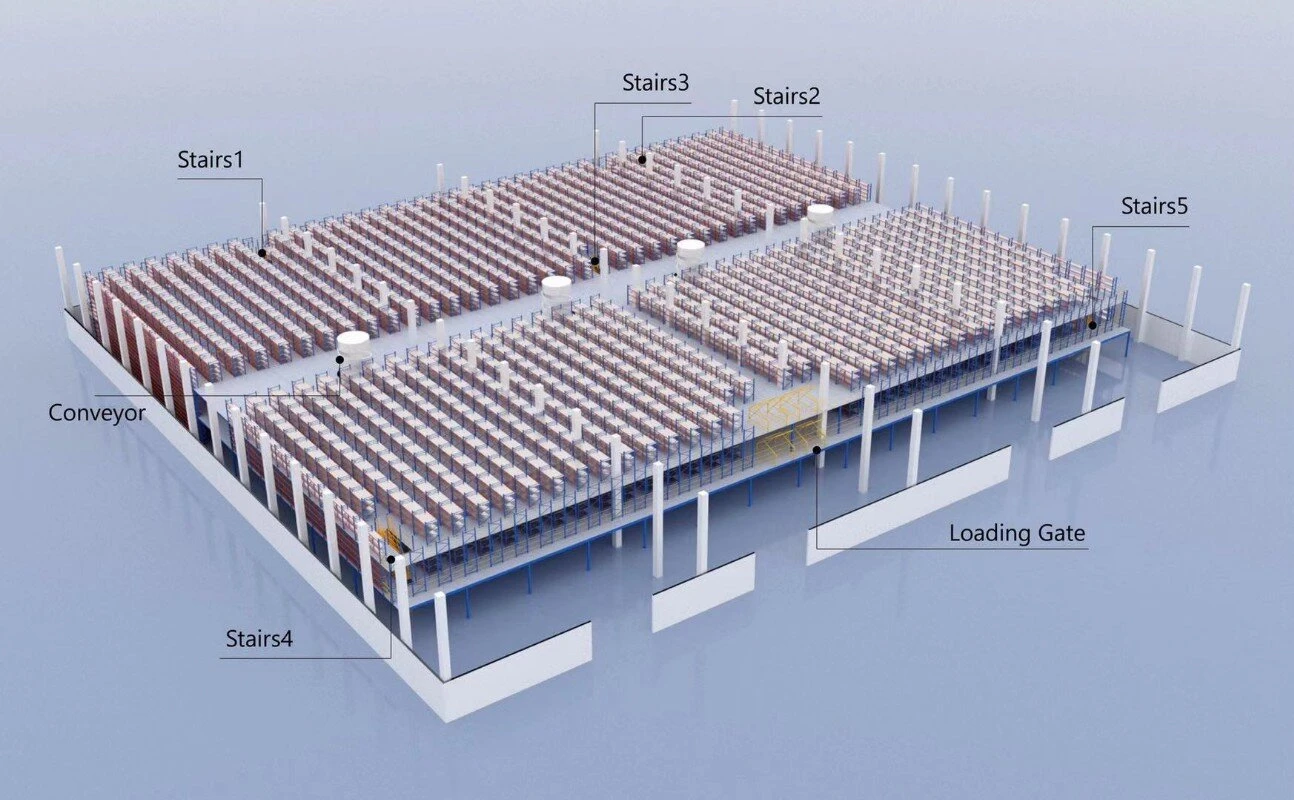
Engineered Very Narrow Aisle VNA Racking System installation by Remprack
High-Bay Storage & Space Optimization

Very Narrow Aisle VNA Racking System Design & Manufacturing

  • Save Up to 50% Floor Space & Retain 100% Pallet Selectivity
  • CE, ISO 9001, ISO 14001 & TUV Certified Engineering
  • Precision Wire & Rail Guidance Integration
20+ YearsRacking manufacturing since 2006
85+ CountriesProven high-bay installations
FEM & EN CompliantStructural integrity verified
10-Year WarrantyHeavy-duty steel profile quality
Technical Insight & Information Gain

The Definitive Buyer’s Guide to Very Narrow Aisle (VNA) Racking Systems

Comprehensive engineering analysis, layout geometry, floor slab tolerances, guidance mechanics, and procurement strategies for global supply chain leaders.

In modern industrial logistics, rising land costs, warehouse construction prices, and rapid SKU proliferation demand maximum storage density without sacrificing direct access to inventory. The Very Narrow Aisle VNA Racking System represents the gold standard of high-density pallet storage engineering. By shrinking conventional forklift aisles from 3.5–4.0 meters down to 1.5–1.8 meters, VNA racking enables logistics operations to increase usable storage footprint by up to 50% while maintaining 100% individual pallet selectivity.

At Remprack Storage Solutions Co., Ltd., we design, engineer, and manufacture heavy-duty VNA racking systems tailored to global warehouse standards. This engineering whitepaper addresses the core technical questions, spatial economics, floor slab tolerances, and future automation trends that global procurement directors and industrial engineers evaluate when specifying high-bay VNA racking infrastructure.

Key Operational Takeaway: Why VNA Outperforms Standard Pallet Racking

Standard selective pallet racking spends up to 60% of total building volume on forklift clearance paths. A professionally engineered VNA Racking System reclaims this dead space, converting horizontal footprint into vertical storage capacity up to 18+ meters high. Combined with specialized VNA turret trucks or Articulated Forklifts, your warehouse achieves the volumetric efficiency of high-density storage with the operational flexibility of single-pallet picking.

1. Spatial Engineering: Mathematical Footprint Comparison

When evaluating storage infrastructure investments, ROI is calculated based on floor-space utilization efficiency, pallet-position density, and throughput speed. Below is a comparative engineering benchmark between Standard Selective Pallet Racking, Drive-In Racking, and a high-bay Very Narrow Aisle VNA Racking System.

Racking Parameter Standard Selective Racking Drive-In Racking System Very Narrow Aisle (VNA) System
Operating Aisle Width 3.5m – 4.2m (Reach Truck / Counterbalance) 3.0m – 3.5m (Access Aisle) 1.5m – 1.8m (Turret Truck / Wire Guided)
Maximum Lift Height Up to 11.0 Meters Up to 10.0 Meters Up to 18.0+ Meters
Pallet Selectivity 100% Immediate Direct Access Low (LIFO Block Storage) 100% Immediate Direct Access
Floor Area Utilization 35% – 40% Storage Footprint 65% – 75% Storage Footprint 55% – 68% Storage Footprint
Volumetric Efficiency Moderate High (Low SKU Mix) Maximum (High SKU Mix)
Handling Equipment Standard Forklift / Reach Truck Standard Counterbalance VNA Turret Truck / Articulated / VNA-AGV

2. System Components & Structural Tolerances

High-bay VNA racking structures demand significantly tighter engineering tolerances than standard racking. Because VNA systems frequently exceed 12 to 18 meters in height, even millimeter-level structural deflections can disrupt turret truck mast clearances. Remprack Storage Solutions Co., Ltd. implements strict structural standards across all critical VNA components:

Upright Profiles & Frame Assembly

Our VNA upright profiles are precision roll-formed from high-tensile structural steel (Q235B / Q355B or grade S355JR). Frames feature heavy-duty diagonal and horizontal bracing patterns designed to absorb dynamic braking forces generated by high-reach turret trucks.

  • Upright Profile Widths: 90mm, 100mm, 120mm, and 140mm customized to loading criteria.
  • Pitch Adjustability: 50mm, 75mm, or 76.2mm (3 inches) for optimized beam spacing.
  • Heavy-Duty Footplates: Anchored with dual dynamic expansion bolts per leg to resist high overturning moments.
VNA Narrow Aisle Racking Profile Engineering
Remprack Custom Heavy Duty VNA Pallet Racking

Box Beams & Connector Locks

Remprack VNA step beams and boxed profile beams utilize multi-claw connectors with safety locking pins. Beam deflection is strictly capped at L/200 under full static load according to FEM 10.2.02 standards, ensuring total clearance for turret truck fork rotation.

  • Specialized Top Ties: Overhead portal frames bridge opposing rack rows to provide extreme lateral stability.
  • Pick & Drop (P&D) Stations: Cantilevered drop-off brackets at aisle entry points optimize forklift transfer cycles.
  • Guide Rail Brackets: Floor-anchored structural angles guide VNA trucks smoothly along the entire channel.
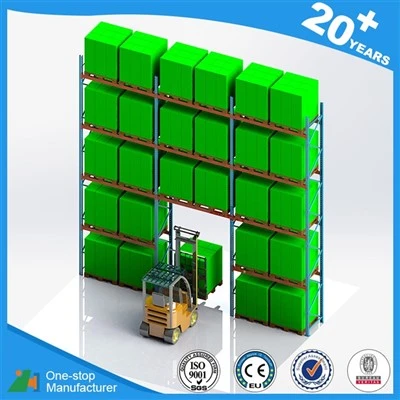
3. Guidance Systems: Mechanical Rail vs. Inductive Wire Guidance

A crucial technical decision when deploying a Very Narrow Aisle VNA Racking System is selecting the vehicle guidance infrastructure. VNA turret trucks operate within narrow clearances (often only 100mm clearance on each side of the vehicle mast). Consequently, automated or guided steering within the aisle is mandatory.

Mechanical Guide Rails

Heavy-duty steel angle channels (e.g., L100x75x8 or cold-drawn custom profiles) are anchored along the base of the rack columns. Rubber guide rollers mounted on the base of the VNA truck run directly against the rails.

Advantages: Extremely robust structural barrier; protects upright base feet from direct forklift collision; lower initial electronics cost.

Best For: Heavy industrial facilities & high-impact environments

Inductive Wire Guidance

A low-frequency signal wire is embedded into a 15mm-deep slot saw-cut into the concrete floor slab along the center of each racking aisle. Sensors on the turret truck detect the electro-magnetic field and automatically steer the mast.

Advantages: Completely flush floor surface; simplified bottom-level pallet placement directly on floor slab; zero mechanical rail wear.

Best For: E-commerce fulfilment centres & cleanroom cold stores
Manufacturing Expertise

Why Global Buyers Partner with Remprack Storage Solutions Co., Ltd.

Over two decades of precision manufacturing, certified engineering, and international export service make Remprack your trusted partner for high-bay VNA systems.

40,000 m² Advanced Production Base

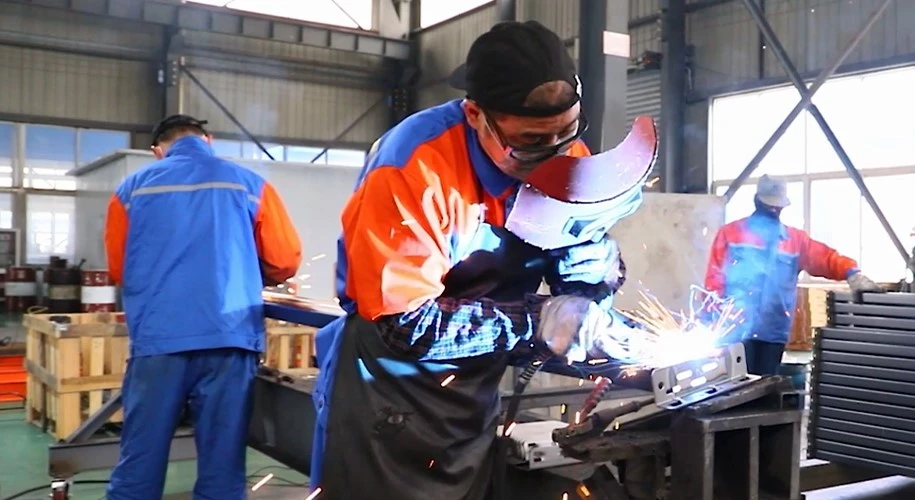
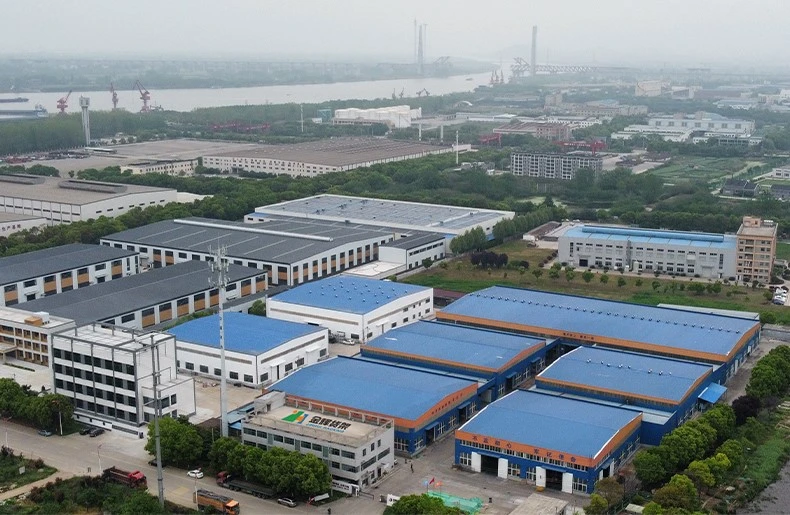
Established in 2006 in Nanjing, China, our factory houses continuous cold-roll forming lines, automated robotic welding stations, and high-capacity powder coating plants.

International Quality Certification

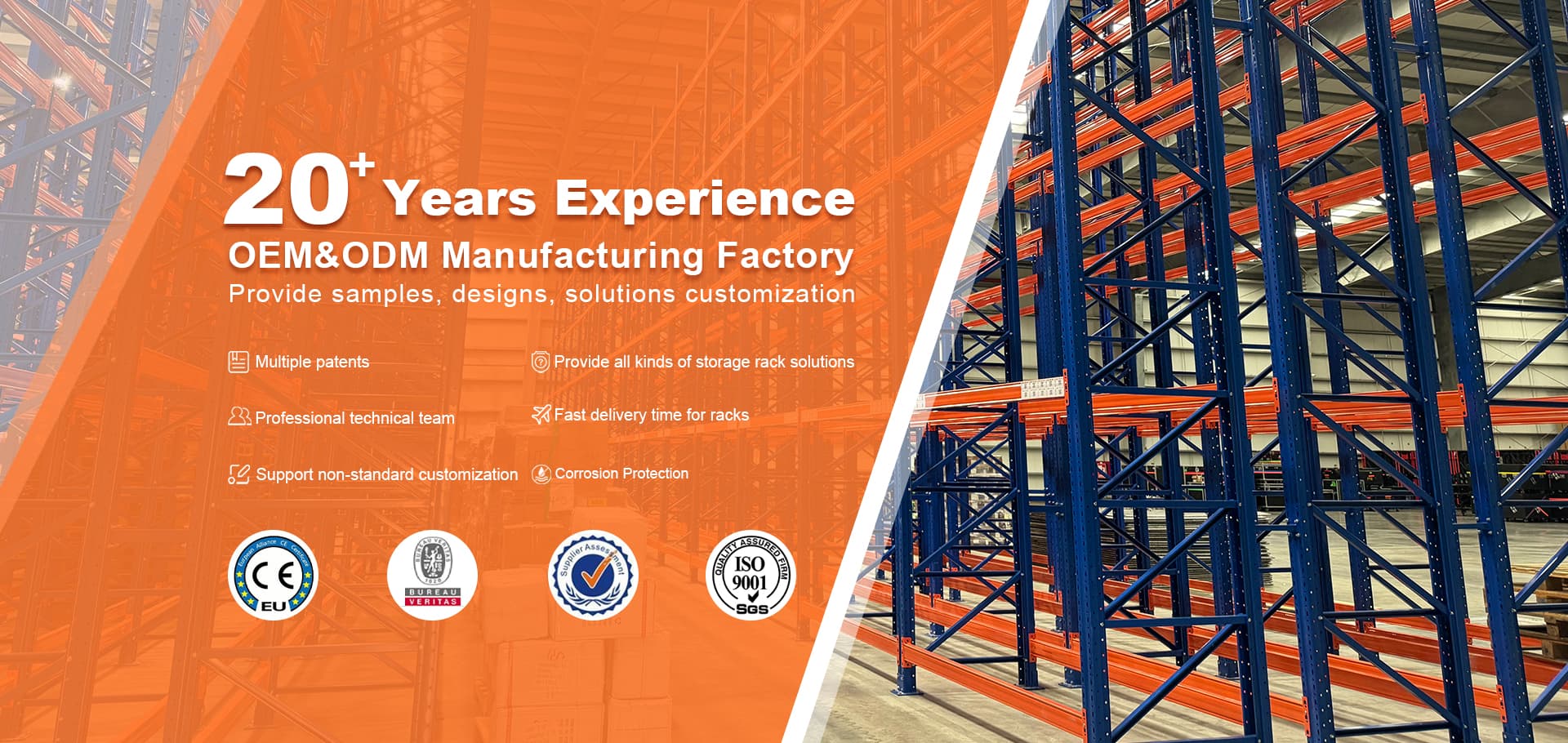
Our VNA racking systems are fully certified to CE, ISO 9001, ISO 14001, and TUV standards, strictly complying with FEM 10.2.02 and EN 15512 structural design codes.

Proven Export Performance in 85+ Countries

We have engineered and delivered over 2,000 successful racking projects across Europe, North America, South America, Southeast Asia, and the Middle East.

Send an Inquiry

Frequently Asked Questions on VNA Racking Systems

1. What exact floor flatness tolerances are required for a VNA racking installation?
VNA racking systems operating at height require specialized concrete floor flatness to prevent turret truck swaying. Floors should conform to TR34 DM2/DM1, DIN 15185, or VDI 2198 standards. When installing towers above 12 meters, a "Superflat" floor classification is strongly recommended to ensure vehicle stability and operating safety.
2. How does a VNA racking system compare to standard selective pallet racking in terms of ROI?
While VNA systems require a higher initial capital investment (due to high-bay structural profiles, precision floor grinding or wire guidance, and specialized turret trucks), they reduce warehouse footprint requirements by 40% to 50%. In high-cost real estate markets, a VNA racking system typically achieves full payback within 18 to 24 months by eliminating the need to buy or lease additional land.
3. Wire guidance vs. Mechanical rail guidance: Which is better for my facility?
Mechanical guide rails provide physical protection against forklift collisions and are ideal for high-throughput industrial environments. Wire guidance creates a clean, obstacle-free floor surface that simplifies bottom-level pallet picking and floor maintenance. Our engineering team at Remprack Storage Solutions Co., Ltd. evaluates your daily throughput and handling equipment to recommend the optimal solution.
4. What maximum height can Remprack VNA racking structures reach?
Remprack engineers and manufactures VNA racking systems up to 18 meters (59 feet) high. All high-bay structures undergo rigorous finite element analysis (FEA) to verify structural stiffness, beam connection stability, and seismic resistance in according with EN 15512 and FEM standard 10.2.02.
5. What is the typical production and delivery lead time for OEM VNA racking orders?
Standard OEM manufacturing lead time at our 40,000 m² Nanjing facility is approximately 20 to 30 days following engineering CAD approval. We provide containerized bundle packaging engineered for sea freight efficiency to prevent transit damage to high-bay profiles.
6. Does Remprack supply custom powder coating colors and OEM branding?
Yes. We provide full custom RAL color options for upright frames, box beams, and guide rails to align with your corporate brand identity. OEM branding plates, beam load signs, and customized structural profiles are standard services for international distributors and integrators.

Maximize Your Warehouse Density with a Remprack VNA System

Contact our engineering specialists today for a custom CAD layout, structural load calculation, and factory-direct quotation.

Send an Inquiry