Drive-In Pallet Racking Architecture in High-Cost, Seismic-Active Japanese Industrial Zones
Modern supply chain logistics across Japan’s key metropolitan areas—such as Tokyo, Greater Osaka, Nagoya, and Fukuoka—face a unique operational dual-challenge: extreme industrial land premiums per tsubo (坪) and strict regulatory mandates for earthquake resilient structural engineering. For logistics asset managers, cold storage operators, and third-party logistics (3PL) providers, conventional selective pallet racking often falls short, utilizing less than 40% of absolute warehouse cubic volume due to wide forklift access aisles.
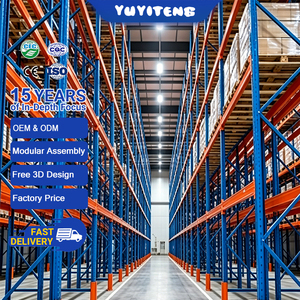
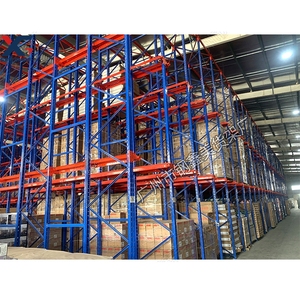
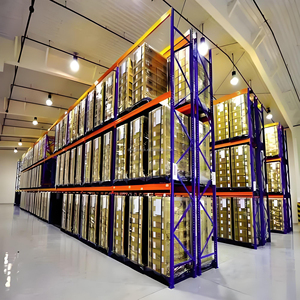
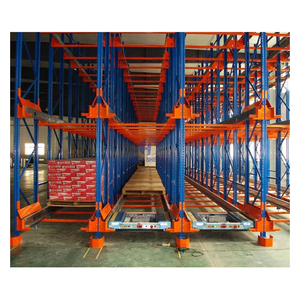
Drive-In Pallet Racking systems configured by Remprack Storage Solutions provide the definitive structural answer. By eliminating operating aisles and allowing counterbalanced or reach forklifts to drive directly into deep storage bays, Drive-In racking increases storage density by up to 75% to 85% compared to traditional aisle-dependent layouts. Operative on a Last-In, First-Out (LIFO) inventory management framework, Drive-In systems are optimized for high-volume, low-SKU inventory, cold-chain food reserves, beverage staging, and automotive parts buffer stock.
To withstand seismic shear forces endemic to Japan’s Pacific Ring of Fire location, Remprack engineers utilize premium cold-rolled Q355B (equivalent to SS490/SM490 structural steel grades) structural steel profiles rather than standard Q235 steel. Uprights feature continuous cold-roll forming with proprietary section profiles, optimized load-bearing ribs, and heavy-duty seismic base plates anchored deep into reinforced concrete slab floors using chemical expansion anchor bolts.
Drive-In racking lacks horizontal beam ties across the access channels; therefore, dynamic stability relies entirely on top-bracing frames, back-bracing assemblies, and high-stiffness cantilever support arms. Remprack integrates forged steel support arms with multi-point hook connectors that lock seamlessly into slotted upright profiles. Heavy-duty ground-mounted forklift guide rails (available in structural channel or angle iron designs with tapered entry funnels) are mandatory across our Japanese project installations to prevent mast-impact damage to racking uprights inside deep lanes.
Localized Market Trends Reshaping Warehousing Strategy in Japan (2024–2030)
Navigating the Japanese logistics ecosystem requires a nuanced understanding of macro-economic regulatory shifts, labor dynamics, and technological integration trends currently transforming the country's supply chain infrastructure.
1. The "2024 Problem" & Driver Labor Constraints
The enforcement of Japan's Workstyle Reform Law (働き方改革) caps overtime hours for commercial truck drivers. Warehouses must now minimize truck dwell times through rapid high-density loading and staging zones. Drive-In racking channels located directly behind loading docks allow bulk staging of identical outbound freight, expediting loading procedures.
2. Explosion in Sub-Zero Cold Chain Storage
With Japan's increasing reliance on frozen imported foods and pre-packaged meals, sub-zero logistics centers (refrigerated warehouses operating down to -25°C or -30°C) are growing rapidly. Utility bills in cold rooms are exceptionally high; Drive-In and Radio Shuttle systems maximize cubic efficiency, reducing thermal energy loss per stored pallet position.
3. Enhanced Post-Earthquake Structural Mandates
Following recent seismic events across Japan, corporate procurement standards now mandate verified structural calculations incorporating peak ground acceleration (PGA) resistance factors. Remprack provides full seismic calculation modeling using finite element analysis (FEA) tailored to localized Japanese soil classes.
Localized Application Scenarios Across Japan’s Industrial Hubs
Drive-In Pallet Racking serves diverse industrial sectors across Japan, adapted specifically to local handling equipment, pallet standards (JIS T11 / 1100mm × 1100mm), and storage environment requirements.
Tokyo Bay & Yokohama Port Logistics Hubs
Primary Use Case: Import/Export 3PL Warehousing & Consumer Goods Staging.
Facilities in Shinagawa, Odaiba, and Yokohama Port demand maximum height utilization. Drive-In racking reaching heights up to 10–12 meters allows high-volume sea-container goods to be unpacked and stored efficiently in high-density lanes prior to regional distribution.
Greater Osaka & Kobe Cold Storage Facilities
Primary Use Case: Sub-zero Seafood, Meat, and Frozen Food Storage.
In Osaka Bay’s industrial parks, temperature-controlled facilities install Remprack hot-dip galvanized Drive-In systems. Hot-dip galvanizing resists frost condensation and rust, preventing structural degradation in harsh, high-moisture sub-zero environments down to -30°C.
Nagoya (Aichi Prefecture) Automotive Supply Chains
Primary Use Case: OEM Component Buffers & Stamping Die Parts Storage.
Serving Japan's automotive manufacturing belt, Drive-In systems house heavy steel-palletized automotive stampings, engines, and transmission sub-assemblies. Heavy-duty structural beams support unit loads exceeding 1,500 kg per pallet position with minimal deflection.
Drive-In Racking System Technical Specifications Matrix
Compare structural configurations, material ratings, and dimensional tolerances engineered by Remprack for Japanese industrial requirements:
Heavy-Duty M16/M20 Chemical Anchor Bolts with Base Plate Shims
Forklift Protectors
Optional Frame Guards
Integrated Ground Guide Rails (C-Channel / Angle Steel) Included
International Compliance
CE, ISO 9001, ISO 14001, TUV Rheinland
Aligned with JIS Z 0610 Building Code Safety Standards
Why Remprack is Japan’s Trusted Racking OEM & Direct Factory Partner
Remprack Storage Solutions Co., Ltd. brings two decades of precision manufacturing expertise directly to Japanese distributors, logistics integrators, and industrial facility owners.
20+ Years Manufacturing Excellence
Established in 2006, Remprack operates a 40,000 m² state-of-the-art manufacturing plant powered by continuous cold-roll forming lines, robotic welding stations, and automated powder coating systems.
Patented R&D & Engineering Expertise
With a skilled team of over 300 professionals and holding more than 100 technology patents, our dedicated engineering office produces 2D/3D CAD layouts and structural finite element analysis for every project.
Global Footprint in 85+ Nations
Having completed over 2,000 major warehouse racking installations worldwide, we maintain deep experience navigating international shipping, port customs compliance, and specialized container loading practices.
Strict Quality Assurance & Certifications
Every structural profile undergoes rigorous tension, loading, and weld-integrity inspections. Remprack holds full CE, ISO 9001 quality management, ISO 14001 environmental management, and TUV safety certifications.
End-to-End OEM / ODM Customization
From unique upright stamping patterns and custom corporate powder coating hues to tailored pallet support rail profiles, we fulfill full OEM/ODM branding specifications for Japanese procurement partners.
Frequently Asked Questions for Japanese Procurement & Supply Chain Executives
Find authoritative answers regarding structural engineering, shipping timelines, customs compliance, and customization options for Japanese installations.
Q: How does Remprack ensure Drive-In racking complies with Japanese seismic regulations (JIS Z 0610)?
Our engineering team performs localized seismic calculations based on your warehouse site's specific ground acceleration values. We supply upgraded Q355B heavy-section uprights, oversized seismic base plates, top horizontal bracing frames, rear vertical diagonal bracing, and chemical anchoring bolt systems to ensure maximum earthquake shear resistance.
Q: What dimensions are required for Drive-In racking accommodating standard Japanese JIS T11 pallets?
The Japanese JIS T11 pallet measures 1100mm × 1100mm. For this standard, Remprack custom-engineers support rail bay widths, arm overhang clearances, and guide rail channel spacing (typically 1350mm to 1400mm clear width per lane depending on forklift mast width) to maximize entry safety and structural stability.
Q: What is the typical factory lead time and ocean shipping transit time to major ports in Japan?
Standard production lead times at our facility are 15 to 25 days, depending on project tonnage. Direct container shipping from our primary shipping ports to Yokohama, Tokyo, Kobe, or Osaka typically requires only 3 to 6 days at sea, ensuring fast turnaround times for tight construction schedules.
Q: Should we select standard Powder Coating or Hot-Dip Galvanizing for cold storage installations in Japan?
For ambient or dry warehouses, our electrostatic epoxy powder coating (60–80μm) provides outstanding scratch and corrosion protection. However, for sub-zero cold storage facilities (-20°C to -30°C) or coastal facilities near Tokyo Bay, we strongly recommend Hot-Dip Galvanizing (HDG > 65μm), which prevents sub-surface rusting caused by ambient moisture condensation.
Q: Can Remprack supply customized forklift floor guide rails for narrow-aisle drive-in entries?
Yes. We manufacture heavy-duty steel angle or C-channel ground guide rails painted in high-visibility safety yellow or hot-dip galvanized. Floor guide rails feature flared entry funnels at lane openings, preventing forklift tyre and chassis collisions with structural racking uprights.
Q: What documentation is provided for import clearance and architectural approval in Japan?
We supply complete technical documentation packages with every project, including mill test certificates (MTC) for steel raw materials, 2D layout drawings in CAD/PDF, 3D structural BIM models, structural load capacity certificates, CE/ISO certificates, and comprehensive installation manuals.
Transform Your Warehouse Density with Seismic-Engineered Racking
Send us your warehouse CAD floor plan, ceiling height under beams, pallet specifications, and forklift parameters. Our senior structural engineering team will prepare a complimentary layout design, structural proposal, and factory-direct quotation within 24 hours.