Industrial Pallet Racking & Stacker Crane Systems
Explore our high-performance structural steel pallet racking configurations engineered for automated stacker crane integrations, heavy load capacities, and dense high-bay logistics centers.
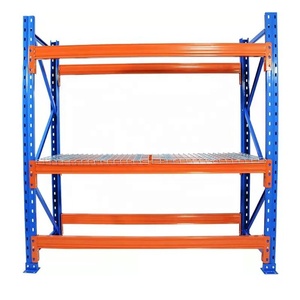
Q235B Steel Heavy Duty Selective Pallet Rack System Industrial Warehouse Beam Racking 2500kg Capacity Customized Storage
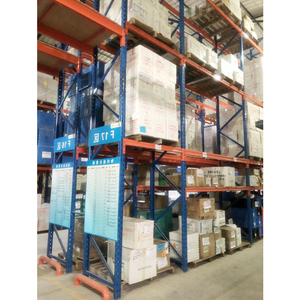
Steel Structure Racks Industriales Adjustable Warehouse Racking Heavy Duty Pallet Racking Systems Metal Storage Rack
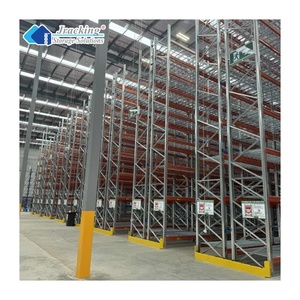
Jracking High-Strength Warehouse Rack AU Standard Pallet Racking System for Logistics Centers AS4084 Certified
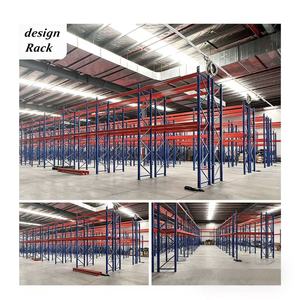
Certificated Bolted Heavy Duty Industrial Forklift Stacking Rack Selective Shelves Storage Rack Pallet Racking
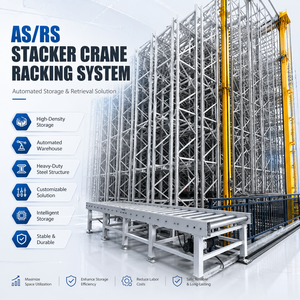
Automated ASRS Mezzanine Rack Stacker Crane Racking System High Density Warehouse Storage Heavy Duty Steel Pallet Rack OEM ODM
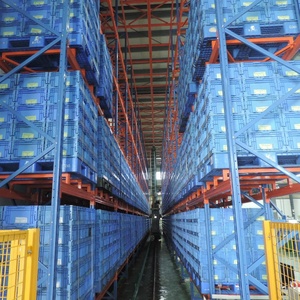
Automatic Storage and Retrieval System Pallet Racking Automated Warehouse ASRS System Stacker Crane
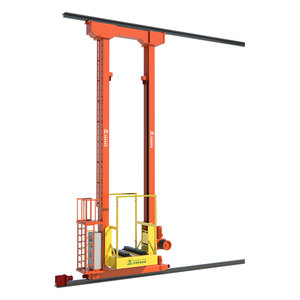
Automatic Pallet Stacker Crane Racking Intelligent Steel Warehouse System with Corrosion Protection for Automated Storage
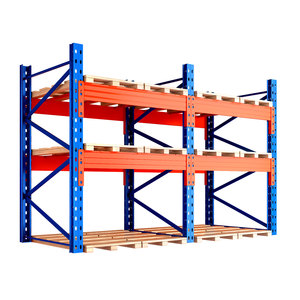
Heavy Duty Industrial Storage Shelves System Metal Rack Stacking Units Warehouse Steel Industrial Pallet Racking
Crane Supported Racking Architecture in Singapore’s Land-Scarce Economy
In Singapore’s hyper-dense industrial landscape, industrial land allocation managed by JTC Corporation (Jurong Town Corporation) demands maximum Plot Ratio and structural volumetric efficiency. As premium logistics hubs in Tuas Mega Port, Changi East Industrial Zone, and Jurong Innovation District reach historic high land-rent rates, traditional low-rise floor-mounted racking fails to deliver economically viable payback. Industrial enterprise engineering teams are turning aggressively toward Crane Supported Pallet Racking (also classified as Rack-Supported Buildings or RSB Automated Storage & Retrieval Systems - AS/RS).
Unlike conventional warehouse buildings where steel framing, cladding, and roofs are erected independently before installing inner storage racks, a Crane-Supported Pallet Racking System utilizes the heavy-duty structural steel racking framework as the core load-bearing building structure. The vertical racking uprights directly carry the roof load, wall cladding, wind shears, and seismic forces, alongside high-speed automated rail-guided stacker cranes (SRMs). This unified engineering architecture eliminates building columns, unlocks heights exceeding 40 meters, and maximizes cubic storage utilization by up to 400% compared to standard reach-truck selective racking.
Structural Building Integration
Eliminates building structural columns. Uprights serve a dual purpose: bearing heavy pallet payloads and supporting exterior wall purlins and roof trusses.
Automated Stacker Crane Rails
Integrated top guide rails and floor-embedded running tracks enable single- or double-deep stacker cranes to travel up to 240 m/min with millimeter accuracy.
BCA & Singapore Code Compliance
Engineered to meet Singapore Building and Construction Authority (BCA) structural stability mandates, SS EN 1993 Eurocode structural steel design, and SCDF fire safety guidelines.
Engineering Parameters & Localized Singapore Application Scenarios
Deploying crane-supported racking systems within Singapore’s distinctive tropical marine climate and stringent regulatory envelope requires specialized metallurgy and precision engineering. Remprack Storage Solutions Co., Ltd. custom engineers structural steel racking profiles utilizing high-grade Q235B and Q355B structural cold-formed steel, verified through Finite Element Analysis (FEA) to withstand continuous dynamic crane forces, vibration fatigue, and localized environmental stress factors.
1. Biomedical & Pharmaceutical Cold Chains (Tuas Biomedical Park)
Singapore serves as Asia-Pacific’s premier biomedical manufacturing engine. In sub-zero cold rooms (-25°C to -30°C) and cleanroom storage, thermal expansion control and structural steel embrittlement protection are paramount. Our crane-supported cold storage systems utilize specialized low-temperature impact-tested steel, hot-dip galvanized coating, or epoxy powder finishes resisting condensation corrosion. Automated stacker cranes operate 24/7 inside oxygen-reduced environments without human labor, eliminating thermal leakage caused by frequent forklift door operations.
2. High-Throughput Omnichannel & E-Commerce Hubs (Changi Free Trade Zone)
Air cargo and 3PL operations demands extreme throughput velocity. Crane-supported racking integrated with multi-tier conveyor loops, automated guided vehicles (AGVs), and WMS/WCS software orchestration provides seamless inbound-to-outbound pallet buffering. The rigid vertical structure eliminates dynamic deflection, allowing stacker cranes to operate safely across aisles narrower than 1.5 meters (VNA configuration).
3. Dangerous Goods & Chemical Storage (Jurong Island & Pioneer Basin)
Storage of hazardous materials and flammable liquids in Singapore is heavily regulated under SS 532 (Code of Practice for Storage of Flammable Liquids) and SCDF guidelines. Crane-supported racking systems engineered by Remprack feature fully integrated in-rack sprinkler pipe supports, explosion-proof sensor mounts, chemical-resistant drip trays, and rack-supported fire barrier walls designed to compartmentalize potential thermal runaway risks.
Technical Comparison Matrix: Crane Supported Racking vs. Standard Warehouse Systems
The following engineering data table highlights the operational and financial trade-offs between conventional racking installations and automated crane-supported rack buildings in Singapore industrial estates.
| Performance Metrics | Selective Pallet Racking | Very Narrow Aisle (VNA) | Crane-Supported AS/RS (RSB) |
|---|---|---|---|
| Maximum Achievable Height | up to 12 meters | up to 17 meters | 20 to 45 meters |
| Aisle Width Requirement | 3.2m – 3.8m | 1.6m – 1.9m | 1.3m – 1.5m (Crane Guide) |
| Floor Area Utilization (m²) | Baseline (100%) | + 45% Capacity | + 250% to 400% Capacity |
| Building Column Dependency | Requires full civil building | Requires full civil building | No Building Columns Needed |
| Handling Velocity (Pallets/Hr) | 20 – 35 pallets/hr | 25 – 40 pallets/hr | 80 – 160+ pallets/hr |
| Singapore JTC Land ROI Horizon | 7 – 10 Years | 5 – 7 Years | 2.5 – 4 Years (Land Savings) |
| Operating Cost / Pallet Position | High (Forklift + Labor) | Medium (VNA Trucks) | Lowest (Full Automation) |
Why Singapore Industrial Procurement Choose Remprack
With over two decades of dedicated R&D and heavy-duty manufacturing expertise, Remprack Storage Solutions Co., Ltd. provides complete end-to-end technical support for Singapore engineering contractors, logistics integrators, and factory developers.
Frequently Asked Questions (FAQ) - Singapore Market
Optimize Your Singapore Warehouse Space Today
Consult with Remprack’s senior storage systems engineers. We will analyze your warehouse footprint, provide customized 3D layout drawings, and calculate structural load proposals tailored to Singapore building standards.