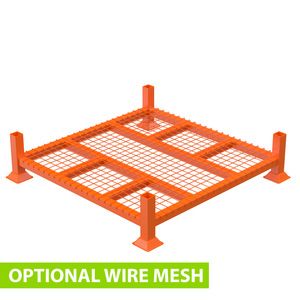
Engineered Product Line
Heavy-Duty & Specialized Coil Storage Racking Systems
Explore our certified industrial racking solutions tailored for steel coils, wire spools, heavy sheet metals, and high-density warehouse environments.
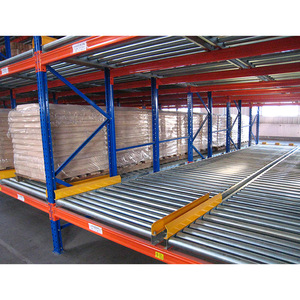
FIFO High Efficient Warehouse Storage Gravity Pallet Flow Racks Roller Rack/Pallet Flow Racking
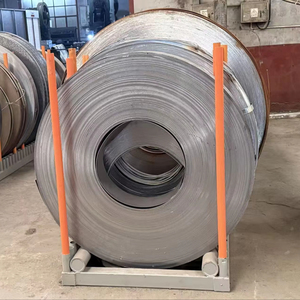
Heavy Duty Steel Coil Storage Rack, Industrial Cradle Rack for Coil Material Handling
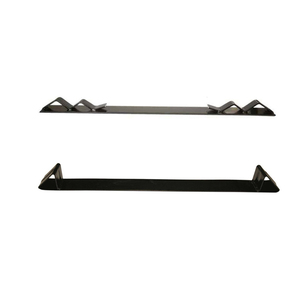
Standard Light-Duty Coil Racking, Lightweight Black Steel Warehouse Coil Storage Rack
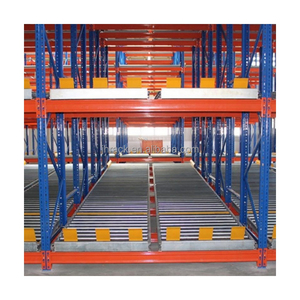
Chinese Racking Suppliers Roller Racking System Pallet Storage Warehouse Gravity Flow Rack In Warehousing
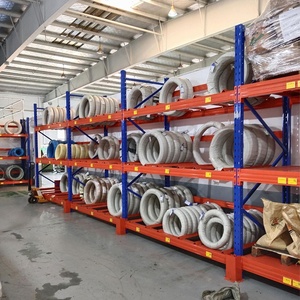
Shibang Industrial Pallet Rack Double Deep Selective Pallet Rack for Coil Material Storage
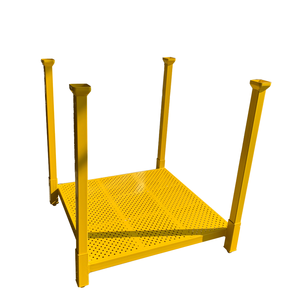
Factory Direct Hot Sale Customized Corrosion Protection Steel Warehouse Stacking Rack Foldable Storage Pallet Rack
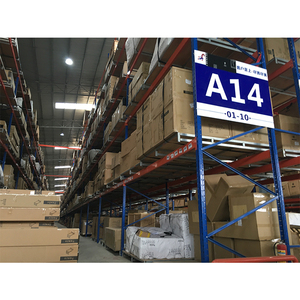
Boltless Heavy Duty Beam Rack Sturdy Steel Construction Pallet Shelving for Factory Warehouse Distribution Center
20+
Years Manufacturing Experience (Since 2006)
85+
Global Export Markets Supported
40,000m²
Modern Production Base & R&D Hub
10Yrs
Structural Structural Warranty
E-E-A-T Verified Manufacturer
Why Tier-1 Industrial Buyers Choose Us
Combining structural precision engineering, ISO-certified steel fabrication, and end-to-end OEM/ODM customization for global steel mills, stamping plants, and logistics hubs.
International Quality Accreditation
Certified strictly according to CE, ISO 9001 quality management, ISO 14001 environmental standards, and TUV safety certifications. Every batch undergoes non-destructive weld inspections and finite element structural testing.
Full In-House Manufacturing
Operates 40,000 m² of modern production facilities featuring automated cold-roll forming, robotic laser welding, shot-blasting pretreatment, and electrostatic powder coating lines with annual steel throughput exceeding 50,000 metric tons.
Patented Load Cradle R&D
Over 100 national patents in structural optimization, anti-deformation V-cradles, coil-preservation polymer linings, and heavy-duty interlocking beam designs engineered specifically for concentrated metal coil loads.
Industrial White Paper: Engineering & Procurement Architecture for Coil Storage Pallet Racking
Storing rolled metallic materials—such as hot-rolled carbon steel coils, cold-rolled automotive steel sheet rolls, copper spools, and aluminum coil stock—presents distinct structural challenges that standard selective pallet racking systems cannot safely accommodate. Unlike standard box-palletized goods, steel coils represent concentrated, cylindrical, high-density mass. A single coil can weigh anywhere from 3 metric tons to over 35 metric tons, exerting intense point-loads, rotational dynamic forces, and localized shear stresses on support beams and upright frames.
As a leading China-based coil storage racking manufacturer and global exporter established in 2006, Remprack Storage Solutions engineers high-integrity structural coil racks that transform hazardous floor stacking into safe, organized, and space-efficient vertical storage architectures. This technical white paper analyzes essential design considerations, engineering parameters, safety compliance standards, and selection criteria required by warehouse project managers and procurement directors.
Key Engineering Fact: Standard pallet rack beams designed for uniformly distributed loads (UDL) experience severe mid-span deflection and structural twist when subjected to single-point cylindrical coil loading. Professional coil storage racking must utilize engineered V-saddles, structural channel cradles, or customized cradles lined with high-density polyurethane (PU) to distribute concentrated loads across beam connections safely.
1. Concentrated Load Physics & Structural Safety Factors
In standard warehouse racking design (governed by ANSI MH28.2 and FEM 10.2.02 standards), beam load ratings assume evenly distributed weight. However, when placing a 10-ton steel coil onto a racking level, the load is applied across two narrow tangential contact points on the cradle support assembly. This generates four critical structural failure vectors if improperly engineered:
- Beam Torsion & Rotation: Unbalanced placement of a heavy coil creates eccentric loading, twisting hollow box beams outward and compromising connector lock-in hooks.
- Localized Web Buckling: High point pressures on beam profiles can crush the top flange if structural cross-bracing and heavy-gauge stiffeners are absent.
- Dynamic Impact Loading: When overhead cranes or heavy-capacity forklifts lower a coil into a cradle, impact dynamic amplification factors (typically 1.25x to 1.5x static weight) temporarily overload the structure.
- Floor Slab Punching Shear: Concentrated upright post loads under high multi-tier coil racks can exceed concrete floor slab PSI limits without custom-engineered heavy baseplates and anchor arrays.
Our engineering team utilizes Finite Element Analysis (FEA) computer modeling to simulate dynamic stress patterns, ensuring minimum safety factors ranging from 1.65 to 2.0 based on local seismic design codes (such as AS4084, EN15512, and RMI standards).
2. Structural Component Engineering & Surface Preservation
To deliver maximum operational longevity, our heavy-duty coil storage racks incorporate high-tensile structural steel profiles (Q235B and Q355B structural grades). Key structural innovations include:
- Custom V-Shaped Saddles & Cradles: Precision-welded structural steel cradles angled between 120° and 140° to capture coils securely, preventing roll-off during loading or seismic events.
- Non-Marring Protective Linings: For high-finish cold-rolled steel, copper, or aluminum coils, cradles are fitted with high-density Polyurethane (PU) pads, Nylon inserts, or UHMW-PE liners to prevent scratching, surface pressure marks, and coil banding indentation.
- Heavy Structural Beams (H-Section & Double-C Box Beams): Heavy-duty hot-rolled structural steel I-beams or interlocked C-channel box beams featuring heavy-gauge end plates secured by high-tensile Grade 8.8 structural bolts.
- Heavy Upright Frames & Footplates: Upright columns engineered with continuous roll-formed profile geometry up to 140mm wide and up to 3.0mm–4.5mm material thickness, anchored by heavy-duty 12mm+ baseplates.
Coil Storage System Architecture Selection Guide
Selecting the optimal coil racking layout depends on coil weight ranges, coil diameter dimensions, warehouse ceiling clearance, handling equipment types (c-hook overhead cranes vs heavy forklifts), and required stock selectivity.
| System Type | Load Capacity / Tier | Selectivity | Handling Equipment | Primary Industry Application |
|---|---|---|---|---|
| Selective Heavy-Duty Coil Racks | 3,000 kg – 15,000 kg | 100% Direct Access | Forklifts with Coil Ram / Crane | Steel Service Centers, Stamping Plants |
| Stackable Steel Coil Cradles (Post Racks) | 2,000 kg – 8,000 kg | Block Storage / LIFO | Standard Heavy Forklifts | Flexible Warehouses, Temporary Storage |
| Automated Coil ASRS Racking | 5,000 kg – 35,000 kg | 100% Automated FIFO/LIFO | Automated Stacker Cranes (SRM) | Automotive OEMs, Major Steel Mills |
| Cantilever Coil Arm Racks | 1,000 kg – 6,000 kg/arm | High Selectivity | Overhead Crane with C-Hook | Narrow Spool Storage, Wire & Cable |
| Gravity Roll Coil Racks | 2,000 kg – 5,000 kg | Strict FIFO Rotation | Forklifts / Conveyors | High-Volume Continuous Production Lines |
Future Procurement Trends in Heavy-Duty Industrial Coil Storage
The global industrial logistics sector is experiencing rapid transformation driven by automation, workplace safety regulations, and environmental sustainability mandates. Procurement teams evaluating coil storage infrastructure over a 10-to-20-year horizon must account for the following emerging trends:
01
Integration with Automated Stacker Cranes (Coil ASRS)
High-bay Automated Storage and Retrieval Systems (ASRS) specifically engineered for 10-to-30-ton metal coils are replacing traditional floor storage. Automated heavy-duty stacker cranes running on high-precision floor rails dramatically increase storage density while eliminating forklift collisions and human exposure in heavy handling zones.
02
Smart IoT Load & Structural Strain Monitoring
Future coil racking installations are increasingly incorporating embedded strain-gauge sensors and wireless displacement monitors. These smart IoT networks alert safety officers in real-time if a rack level experiences dynamic shock overloads, ground settlement, or structural fatigue beyond safe threshold tolerances.
03
Modular OEM/ODM Post & Cradle Standardization
Global industrial buyers are steering away from rigid, fully welded permanent structures toward modular boltless or post-interlocking coil racks. Modular designs allow rapid adjustment of cradle spacing when coil diameters or widths change across production cycles, delivering significantly lower Total Cost of Ownership (TCO).
04
Eco-Coating & Anti-Corrosion Longevity
With environmental compliance tightening worldwide, electrostatic powder coating systems are shifting to zero-VOC, heavy-metal-free thermosetting epoxy-polyester coatings. Advanced outdoor or high-humidity coil storage applications utilize hot-dip galvanizing (HDG) conforming to ISO 1461 standards to ensure 30+ years of rust-free operation.
Technology & Industry Development Trends in Heavy Metal Handling
As manufacturing sectors such as electric vehicle (EV) battery production, automotive stamping, and renewable energy transformer core fabrication demand lighter yet stronger alloys, coil storage systems must evolve to handle diverse coil metallurgy and sensitive surface finishes:
A. Ultra-Delicate Surface Protection Materials
Modern electrical steel coils (grained silicon steel used in transformers) and ultra-thin aluminum foil coils require zero contact pressure deformation. Racking manufacturers are innovating composite cradle toppings—combining elastomeric polyurethane cores with self-lubricating polymer skins—that eliminate microscopic fretting corrosion during coil placement.
B. Seismic-Resistant Structural Geometry
Global logistics facilities located in active seismic regions (such as the Pacific Rim, South America, and Southern Europe) require advanced dynamic response engineering. High-capacity coil racks now incorporate diagonal cross-aisle structural bracing towers, energy-dissipating baseplate dampers, and positive locking safety pins that hold coils in cradles even under vertical seismic acceleration vectors.
C. High-Bay Vertical Space Optimization
Floor space costs in industrial zones continue to escalate globally. Stacking heavy coils 2-high on the floor wastes up to 80% of vertical warehouse volume. The industry trend is moving toward 8-meter to 15-meter vertical coil rack towers serviced by specialized narrow-aisle (VNA) coil trucks or automated heavy-payload shuttles, multiplying warehouse volumetric efficiency by 300% to 400%.
Frequently Asked Questions (FAQ) for Coil Racking Procurement
Find technical answers to common engineering, customization, logistics, and safety queries when sourcing industrial coil storage pallet racks from China.
What critical parameters are required to custom-design a heavy-duty coil storage rack?
To engineering a fully compliant coil rack, our engineering team requires: (1) Maximum and minimum coil outer diameter (OD) and inner diameter (ID); (2) Maximum coil width/length; (3) Weight per coil (e.g., 3 tons, 5 tons, 10 tons, 15+ tons); (4) Total number of coils to store; (5) Handling equipment specifications (forklift capacity, coil ram attachment dimensions, or overhead crane C-hook specs); and (6) Building clear height, concrete floor slab thickness/PSI, and local seismic zone data.
How do you prevent beam deflection and structural twisting under heavy coil point-loads?
Standard beam designs are susceptible to torsion under point loads. We eliminate beam twist by deploying heavy structural H-beams or heavy double-channel interlocked box section beams fitted with custom V-cradles. These cradles are welded directly across structural tie-bars that distribute weight symmetrically to both front and rear beam members. Furthermore, high-tensile safety locking pins and heavy-duty 4-hook or 5-hook connectors lock the beams rigidly to the upright columns.
What certifications and quality standards do Remprack coil storage racks meet?
Our storage racking systems and manufacturing plant hold ISO 9001:2015 Quality Management, ISO 14001:2015 Environmental Management, CE marking compliance (EN 1090 / EN 15512), and TUV Rheinland structural safety certifications. All raw steel materials are sourced from top-tier steel mills with Mill Test Certificates (MTC) verifying tensile and yield strength.
Do you offer OEM and ODM customization for industrial rack distributors and integrators?
Yes. As a direct factory manufacturer since 2006, over 60% of our production volume is OEM/ODM manufacturing for international racking brands, equipment integrators, and industrial supply distributors. We provide custom upright profile roll-forming, tailored beam section dimensions, specialized RAL color powder coating, branded packaging, and complete private-label engineering documentation.
What surface coating options are available for harsh or outdoor environments?
For indoor dry warehouses, we apply an electrostatic thermosetting epoxy-polyester powder coating (60–80 microns thick) with automated shot-blasting pretreatment (Sa 2.5 standard). For humid environments, cold storage, or chemical environments, we offer heavy-duty zinc-rich primer undercoats, epoxy coatings, or full Hot-Dip Galvanizing (HDG) according to ISO 1461, delivering superior corrosion protection against moisture and atmospheric exposure.
What warranty and after-sales installation support do you provide for international projects?
All Remprack coil storage racking systems are backed by a comprehensive 10-year structural warranty when operated under specified load capacities. For international projects across our 85+ export countries, we provide complete CAD assembly drawings, 3D step-by-step installation manuals, video guides, structural calculation reports, and remote real-time engineering support during installation.
Consult Our Structural Racking Engineers Today
Need a custom coil storage layout, structural FEA calculation, or competitive factory-direct quote? Contact our technical design team for a comprehensive CAD layout and structural proposal within 24 hours.
Get Catalog