Architectural Guidance for Global Logistics Directors
This industrial whitepaper examines technical criteria, steel grade standards, structural safety coefficients, and strategic purchasing trends for sourcing heavy-duty Drive-Through and Drive-In Pallet Racking systems directly from premier Chinese manufacturers.
Featured High-Density Racking & Warehouse Solutions
Engineered to ISO 9001, CE, and FEM 10.2.02 standards for maximum floor-space utilization.
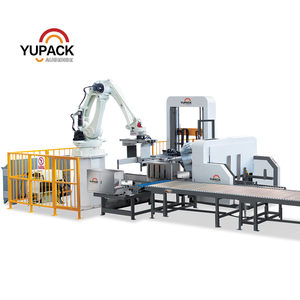
Robotic Palletizing System: Saves 6 Labor, 350% Efficiency, for Bundled Cardboard & Corrugated Box Handling.
Contact Us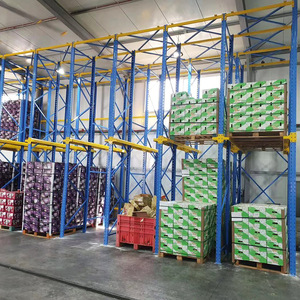
High Density Storage Racking System Heavy Duty Steel Warehouse Rack Drive in Pallet Rack for Forklift Deep Lane
Contact Us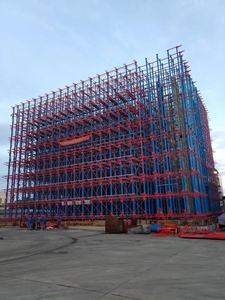
Pallet Shuttle Rack Is a Deep lane Storage and Retrieval System Which Helps You to Optimise the Storage Capacity
Contact Us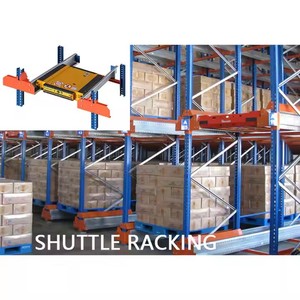
High-Density Automatic Four Way Shuttle Rack Radio Shuttle Rack System With Shuttle System
Contact Us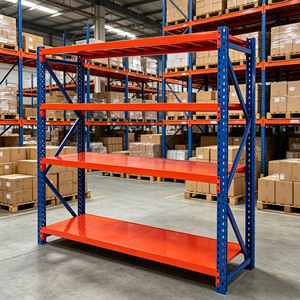
Heavy Duty 5 Layer Selective Pallet Racking System with Corrosion Protection Adjustable Steel Beam Warehouse Storage Pallet Rack
Contact Us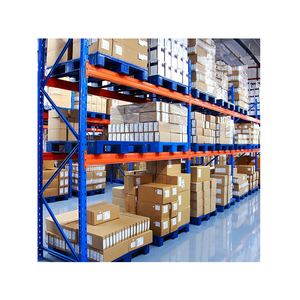
Racking Adjustable Forklift Vna Rack Double Deep Industrial Selective Storage Pallet Racking Heavy Duty Rack System
Contact Us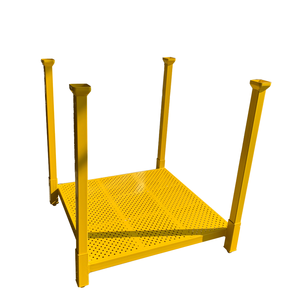
Factory Direct Hot Sale Customized Corrosion Protection Steel Warehouse Stacking Rack Foldable Storage Pallet Rack
Contact Us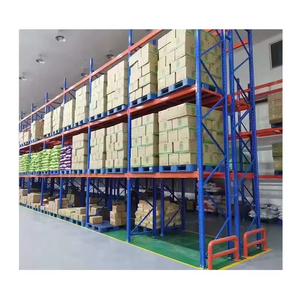
Customized Factory Warehouse Adjustable Racks Industrial Storage Shelving Supply Racking Pallet Storage Rack
Contact Us1. Drive-Through vs. Drive-In Racking Systems: Structural Engineering & Operational Dynamics
Modern supply chain infrastructures demand maximum volumetric utilization of warehouse cube space. When real estate acquisition costs climb and cold-chain energy expenditures soar, conventional selective pallet racking—which dedicates up to 65% of floor footprint to forklift aisles—often proves economically inefficient. High-density storage architectures, specifically Drive-In and Drive-Through Pallet Racking Systems, resolve this spatial dilemma by eliminating intermediate aisles in favor of continuous deep-lane storage tracks.
Structural Differences: Drive-In vs. Drive-Through
Although frequently grouped together, Drive-In and Drive-Through systems present distinct structural and mechanical operational profiles:
- Drive-In Racking (LIFO - Last-In, First-Out): Features a single entry/exit point for forklifts per storage lane. Forklifts back into the lane to place pallets onto continuous cantilevered support arms and exit from the same side. This layout requires rigid top bracing and rear-frame X-bracing, establishing high structural stability under heavy lateral loading.
- Drive-Through Racking (FIFO - First-In, First-Out): Engineered with open access on both sides of the racking structure. Material handlers load pallets from the rear entry point and retrieve them from the front exit point. Because rear X-bracing cannot be installed without blocking the aisle, Drive-Through systems demand reinforced vertical columns, heavy-duty portal ties, and anchor-bolted top tie beams to withstand horizontal shear forces.
| Technical Parameter | Selective Pallet Rack | Drive-In Racking (LIFO) | Drive-Through Racking (FIFO) | Radio Shuttle Racking |
|---|---|---|---|---|
| Volumetric Space Utilization | 35% – 40% | 65% – 75% | 70% – 80% | 80% – 88% |
| Stock Rotation Logic | 100% Selective (Random Access) | LIFO (Last-In, First-Out) | FIFO (First-In, First-Out) | FIFO or LIFO (Flexible) |
| Forklift Penetration | None (External Aisle Only) | Deep-Lane Penetration Required | Deep-Lane Penetration Required | Zero Penetration (Shuttle Driven) |
| Pallet SKU Diversity | High SKU / Low Volume | Low SKU / High Volume | Low SKU / High Volume | Medium to High Density |
| Risk of Structural Impact | Low | Moderate to High | Moderate to High | Extremely Low |
| Structural Bracing Requirement | Standard Frame Bracing | Top & Rear Diagonal X-Bracing | Heavy Portal Frame & Top Ties | Top & Rear Bracing Integrated |
Q355B High-Tensile Steel
Manufactured using premium cold-rolled steel profiles with higher yield strength than standard Q235, enabling superior load bearing under dynamic seismic stresses.
FEM & RMI Compliance
Strict structural engineering validated against European FEM 10.2.02 and American RMI standards, ensuring safety factors exceeding 1.55 on upright frames.
Custom Rail Profiles
Cold-formed continuous support rails feature dual-sided guide flutes to auto-center pallets and protect load-bearing cantilever arms from off-center loads.
2. Engineering & Metallurgy: Sourcing from Premium Chinese Exporters
When selecting a China Drive-Through pallet racking supplier, global procurement directors must evaluate structural metallurgy, certified load ratings, and fabrication precision. The structural integrity of a deep-lane racking installation depends on exact material specifications and automated cold-roll forming.
Steel Grade Selection: Q235B vs. Q355B (EN10025 S355JR)
In drive-in and drive-through systems, upright frames are subjected to eccentric vertical loads combined with direct horizontal impacts from material handling equipment. Standard commercial-grade steel (Q235B) may yield under sustained heavy bay loads over 10,000 kg. Leading Chinese exporters like Remprack Storage Solutions utilize high-strength Q355B structural steel (yielding ≥ 355 MPa), which offers superior ductility, structural fatigue resistance, and cold-temperature toughness ideal for refrigerated storage warehouses.
Safety Components & Structural Damage Mitigation
Because forklifts enter directly inside the rack structure, impact mitigation is a primary safety requirement under OSHA and EN 15635 guidelines. Complete engineering solutions include:
- Floor-Anchored Guide Rails: Heavy-duty structural C-channel or angle steel floor tracks (typically 100mm x 75mm x 6mm thick) anchored to the concrete slab guide forklift wheels down the center of the lane, preventing upright post impacts.
- Tapered Upright Protectors: Heavy-gauge column guards positioned at entry portals absorb low-level corner impacts from pallet chassis.
- Top and Back Tie Beams: Overhead frame trusses bind individual racks into a monolithic structural block, distributing dynamic loads across the entire floor slab.
- Safety Stop Backstops: Rail-end pallet stops prevent load over-travel and guarantee proper clearance at exit aisles.
3. Future Procurement & Technological Evolution Trends (2026–2030)
The global warehousing industry is undergoing a structural transition toward automation, cold-chain optimization, and carbon-neutral facility footprints. B2B buyers evaluating Drive-Through racking systems must account for how these structural assets will integrate with emerging automation and sustainability technologies over their 20-year service life.
Trend 1: Transition from Manual Drive-In to Semi-Automated Radio Shuttle Racking
While traditional Drive-Through systems lower initial capital expenditure (CAPEX), they rely heavily on skilled forklift drivers navigating inside narrow channels, introducing human risk and higher cycle times. Global procurement is rapidly shifting toward Radio Shuttle Systems. By retrofitting traditional drive-in structural frames with precision shuttle rails, automated battery-powered shuttles carry pallets down deep channels. This upgrade delivers a 350% increase in handling efficiency, eliminates forklift rack damage, and optimizes labor requirements.
Trend 2: Integration of 4-Way Automated Pallet Shuttles and ASRS
Fully automated smart warehouses are adopting 4-Way Shuttle Racking Systems integrated with Warehouse Management Software (WMS) and Warehouse Control Systems (WCS). These multi-level automated storage and retrieval systems (ASRS) allow shuttles to travel laterally and longitudinally across deep-lane drive-through racks, facilitating high-speed 24/7 automated order fulfillment without operator intervention.
Trend 3: Cold-Chain High-Density Surge
With global frozen food and biopharmaceutical logistics growing at a CAGR of over 9.5%, energy-intensive refrigerated warehouses require maximum spatial density. Deep-lane Drive-Through and Shuttle racking systems minimize the refrigerated air volume per pallet position, reducing thermal loss and cutting refrigeration energy utility costs by up to 40%.
Trend 4: Sustainable Electrostatic Powder Coating & Galvanized Durability
Modern international tenders demand eco-friendly manufacturing compliance. Top Chinese exporters are replacing traditional solvent paints with non-VOC, fully automated electrostatic powder coating lines and pre-galvanized or hot-dip galvanized finishes for harsh outdoor or chemical storage environments.
Frequently Asked Technical & Purchasing Questions
Clear engineering insights for procurement directors, logistics consultants, and warehouse managers.
4. Manufacturer Profile: Remprack Storage Solutions Co., Ltd.
Founded in 2006 in Nanjing, China, Remprack Storage Solutions Co., Ltd. has grown into a leading global designer and manufacturer of heavy-duty warehouse racking and automated storage equipment. Operating a modernized 40,000 square meter production center equipped with automated steel slitting, continuous CNC cold-roll forming lines, robotic welding stations, and fully automated powder coating systems, Remprack delivers precision engineering backed by dependable quality control.
Having successfully exported racking systems to more than 85 countries across Europe, North America, South America, Southeast Asia, the Middle East, and Africa, Remprack partners with logistics operators, cold-storage developers, 3PL distributors, and industrial facilities. Our dedicated structural engineering department provides end-to-end technical support—from initial site survey analysis and structural calculation to overseas installation guidance and lifetime product maintenance.
20+ Years Manufacturing
Over two decades of structural racking refinement, innovation, and international market experience.
85+ Export Countries
Proven international project track record across diverse seismic, climate, and regulatory environments.
10-Year Warranty
Comprehensive 10-year structural warranty backing our commitment to material quality and durability.
Request a Custom Warehouse Engineering Layout & Quote
Optimize your warehouse storage capacity today. Contact our senior structural engineers to receive a CAD layout drawing, structural load calculation, and factory-direct price quotation within 24 hours.
Contact Us