Featured High-Density Racking Systems
Direct Factory Solutions Engineered for Optimal Vertical Cube Utilization & Maximum Throughput
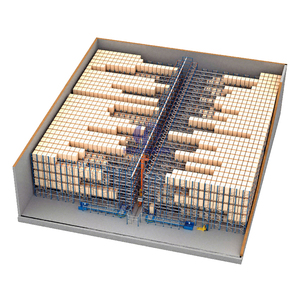
Heda Shelves Cold Storage Shuttle Rack ASRS Radio Shuttle Racking Pallet Racking System 4-Way Shuttle Racking
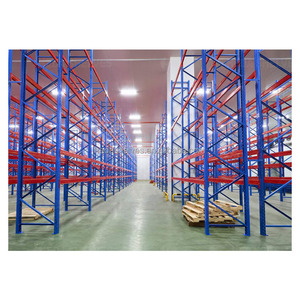
Heavy Duty Pallet Rack System Industrial Shelves Storage Shelves Heavy Duty Pallet Racking Pallet Shelving Warehouse Racking
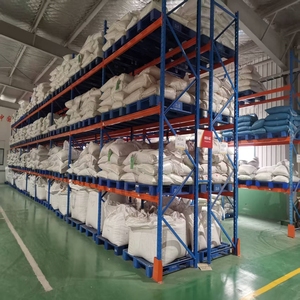
Industrial Storage Racks Custom 5 Layer US Teardrop Pallet Rack Conventional Pallet Racking for Warehouse Cold Room Storage
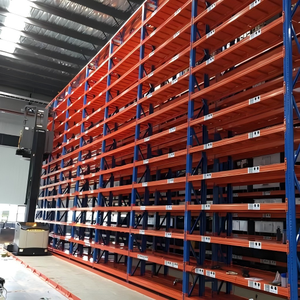
Custom Size Heavy Duty Steel Narrow Lane VNA Racking System High Bay Pallet Storage Shelving 500-4000kg/Level Capacity for
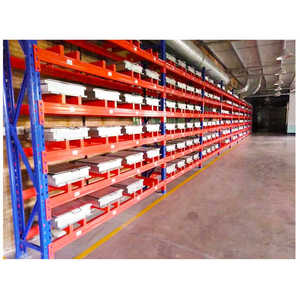
Direct Factory Metal Free Layout Design High-Density Drive-In Pallet Storage Rack for Warehouse Steel Narrow Lane Rack High Iron
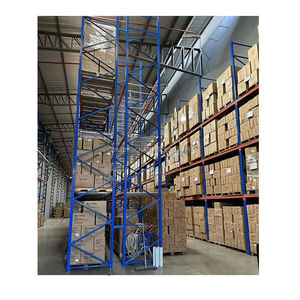
Logistics Center Pallet Rack Warehouse Rack Manufacturer Q235B Steel Heavy Duty Storage Rack Custom Design ISO Certified System
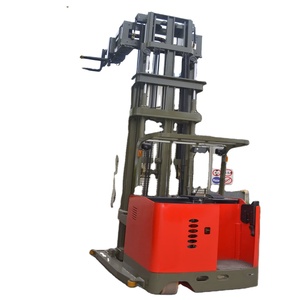
Automatic Retrival VNA Pallet Rack Fork Lifter Carge Stacker
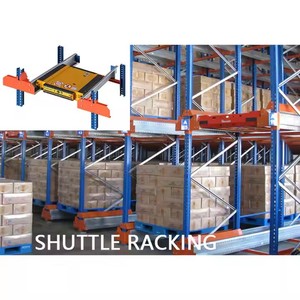
High-Density Automatic Four Way Shuttle Rack Radio Shuttle Rack System With Shuttle System
Executive Whitepaper: Strategic Selection of Narrow Aisle Racking Suppliers
Navigating High-Bay Storage Engineering, Floor Tolerances, and Automated Vertical Integration
In modern industrial logistics, commercial real estate costs continue to escalate globally, forcing warehouse directors and supply chain managers to maximize floor utility. Very Narrow Aisle (VNA) Pallet Racking has emerged as the definitive structural bridge between standard selective racking systems and fully automated high-bay warehouses. By compressing aisle widths from standard 3.5–4.0 meters down to 1.5–1.8 meters, VNA configurations instantly liberate up to 40% to 50% of wasted floor area, unlocking vertical capacity up to 18 meters high while preserving 100% direct pallet selectivity.
However, procuring a high-bay narrow lane pallet racking system is not merely a steel commodity purchase. It represents a complex civil and mechanical engineering integration. Systems operating at extreme heights under heavy dynamic loads require rigorous structural calculations compliant with international standards such as FEM 10.2.02, EN 15512, and ANSI/RMI MH16.1. Choosing the right tier-one manufacturer requires examining raw material metallurgical purity, automated continuous roll-forming accuracy, powder-coating durability, floor flatness tolerances (such as Superflat FM2 standards), and long-term structural warranties.
Enterprise Strengths: Remprack Storage Solutions Co., Ltd.
A Globally Certified Tier-1 OEM & ODM Racking Manufacturer Operating Since 2006
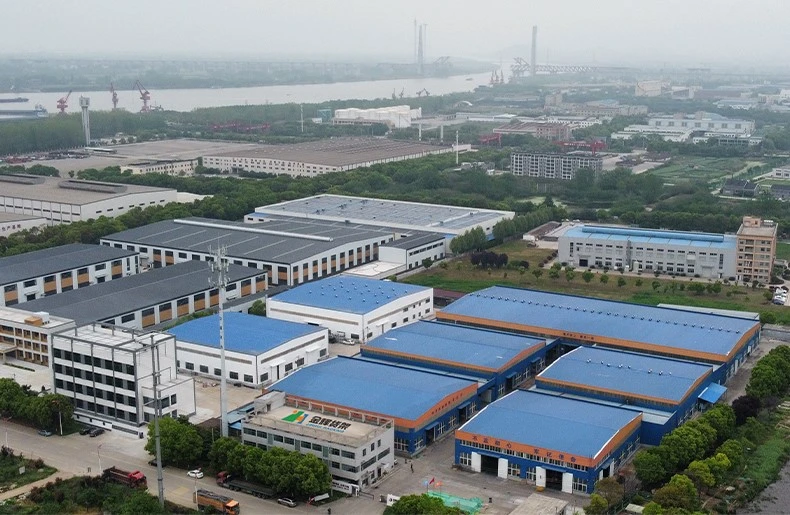
Precision Steel Engineering & Manufacturing Excellence
Founded in 2006 in Nanjing, China, Remprack Storage Solutions Co., Ltd. has established itself as an international powerhouse in heavy-duty warehouse racking design, fabrication, and system integration. Operating from a modern 40,000 square-meter production facility staffed by over 300 skilled technicians and engineers, Remprack holds over 100 patented technologies in structural rack optimization and semi-automated system design.
- Strict Quality Certification: Fully certified to CE, ISO 9001 (Quality), ISO 14001 (Environmental Management), and TUV Rheinland testing protocols.
- Premium Raw Materials: Exclusively utilizes high-tensile Q235B and Q355B structural steel certified for uniform yield strength and structural elasticity.
- Advanced Continuous Roll-Forming: Automated CNC punching and roll-forming guarantee strict dimensional tolerances required for high-bay VNA sway reduction.
- Global Turnkey Support: Successfully delivered over 2,000 enterprise-grade projects across 85 countries in Europe, the Americas, Asia, and the Middle East.
- Direct Factory Pricing & 10-Year Warranty: OEM/ODM customization backed by structural finite element analysis (FEA) and an industry-leading 10-year warranty.
Engineering Technical Comparison Matrix
Evaluating High-Density Racking Frameworks for Enterprise Logistics Procurement
| Racking Architecture | Aisle Width Requirement | Storage Density Rating | Pallet Selectivity | Guidance Method Required | Primary Industrial Use-Case |
|---|---|---|---|---|---|
| VNA (Very Narrow Aisle) | 1.5m – 1.8m | Very High (85%) | 100% Direct Access | Ground Rail / In-floor Inductive Wire | E-Commerce, FMCG, Pharmaceutical, High-Bay Hubs |
| Radio / 4-Way Shuttle System | N/A (Deep Lane) | Maximum (95%) | Batch / Lane Dependent | Autonomous Shuttle Track | Cold Storage, Food & Beverage, Bulk Commodity |
| Selective Pallet Racking | 3.2m – 4.0m | Standard (50%) | 100% Direct Access | None (Standard Forklift) | Low-Density Warehouses, High-SKU Mix |
| Drive-In / Push-Back Racking | N/A (Channel Access) | High (75%) | LIFO (Last-In, First-Out) | Forklift Channel Rails | Seasonal Stock, Homogeneous Product Lines |
| Automated ASRS Systems | 1.3m – 1.6m | Maximum (98%) | 100% Computer Controlled | Crane Mast / Rail System | 24/7 Fully Automated Distribution Centers |
*Note: Data derived from FEM 10.2.02 standard engineering thresholds. Actual pallet positions depend on ceiling clear height, building column spacing, and lift equipment specifications.
How to Benchmarking Top 10 VNA Racking Factories
Essential Quality Metrics Every Procurement Director Must Audit Prior to Vendor Selection
1. Structural Steel Purity & Steel Grade
Top factories do not compromise on steel chemistry. Demand mill test reports verifying certified Q235B or Q355B structural steel. Cheaper recycled scrap steel suffers from micro-cracking during cold roll-forming, causing structural failure under maximum high-bay load limits.
2. Roll-Forming Profile Geometry
High-bay VNA upright columns require sophisticated multi-ribbed profiles (up to 13–15 bends) to increase the moment of inertia without adding unnecessary weight. Verify if the supplier uses continuous automated CNC roll-forming lines to eliminate twist and sway.
3. In-Floor Guidance System Expertise
VNA trucks operating in ultra-narrow aisles rely on millimeter-precise floor guidance. Leading suppliers supply robust mechanical steel angle guide rails or coordinate with electrical contractors to install high-frequency wire-guidance systems embedded in concrete.
4. Surface Treatment & Powder Coating
Industrial storage racks endure constant impact from fork trucks and pallet friction. Premier factories utilize automatic multi-stage chemical washing, shot-blasting, and thermosetting epoxy-polyester powder coating (60–80 microns thick) for maximum abrasion and rust protection.
5. Finite Element Analysis (FEA) Simulation
Do not accept generic structural drawings. Top-tier manufacturers conduct computer-simulated static, dynamic, and seismic load analyses (ANSYS software) tailored to your geographic zone, floor slab load capacity, and operational safety factors.
6. International Engineering Credentials
Ensure the manufacturer holds verified third-party certificates including CE Marking, TUV Rheinland certification, ISO 9001, ISO 14001, and EN 1090 welding certification for steel structures. This prevents regulatory customs delays.
Future Procurement & Technology Trends in High-Density Storage
Anticipating Market Shifts: How Automated Integration & Green Logistics Are Redefining Racking Systems
1. Convergence of VNA Infrastructure with Autonomous AMR / AGV Systems
Historically, VNA racking systems depended exclusively on human-operated turret trucks or order pickers running along mechanical floor rails. The global market is rapidly shifting toward hybrid automation. Modern VNA racks are engineered with wider top clearance and retrofitted with laser-guided Autonomous Mobile Robots (AMRs) and automated VNA stacker cranes. This trend allows businesses to transition from manual operations to 24/7 lights-out automation in phases, avoiding massive upfront capital expenditures.
2. Integration of 4-Way Radio Shuttles in Deep-Lane High-Bay Bays
The boundary between pure VNA racking and high-density radio shuttle storage is blurring. Next-generation warehouse layouts combine a central VNA access spine with perpendicular 4-Way Radio Shuttle tracks. This multi-directional vehicle technology allows shuttles to travel across both depth lanes and longitudinal aisles without human intervention, driving storage density up to 90% while preserving high-speed retrieval rates in cold storage environments.
3. Green Steel Manufacturing & Eco-Friendly Powder Formulations
Global ESG (Environmental, Social, and Governance) mandates are reshaping procurement guidelines for multinational enterprise buyers. Major logistics operators now audit the carbon footprint of structural racking suppliers. Tier-one factories are adopting energy-efficient electric drying ovens, zero-VOC powder coatings, recyclable packaging materials, and scrap-steel recycling loops, ensuring that the cold-formed steel structure aligns with carbon-neutral supply chain targets.
4. Structural Health Monitoring via IoT & Smart Load Sensors
As VNA racking towers stretch beyond 15 meters high, structural safety monitoring is entering the digital age. Suppliers are integrating micro-strain gauges, optical laser deflection sensors, and impact-detection nodes directly onto critical column baseplates and beam connectors. These IoT sensors alert warehouse facility managers in real time via cloud platforms if an accidental forklift collision occurs or if a bay exceeds safe deflection limits (L/200).
Procurement & Engineering Buyer's FAQ
Expert Technical Answers to Common Questions Regarding Very Narrow Aisle Racking Systems
What is the exact aisle width required for a VNA Pallet Racking System?
Why is floor superflatness (EN 15620 / FM2 Standard) critical for VNA installations?
What certifications should I verify when importing industrial racking from China?
How do I choose between mechanical guide rails and wire-guidance systems for VNA?
What steel grades are used in heavy-duty VNA racking components?
Can VNA pallet racking be customized for cold storage and freezer applications?
What lead time and shipping packaging should international buyers expect?
What warranty is offered on industrial heavy-duty racking systems?
Transform Your Warehouse Floor Space Today
Contact our senior structural logistics engineers for a comprehensive warehouse CAD layout, technical consultation, and a direct factory quotation within 24 hours.