High-Performance Forklift Racking & Warehouse Equipment
Explore engineered heavy-duty racking systems, electric forklifts, and industrial shelving designed for seamless compatibility with counterbalance material handling fleets.
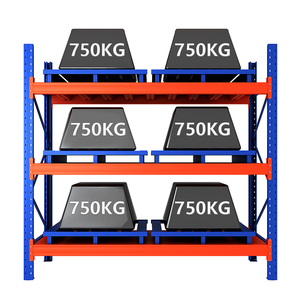
High Load Capacity Heavy Duty VNA Pallet Racks for Warehouse Storage Steel/Metal for Use with Forklift Trucks Save Space
Get a Quote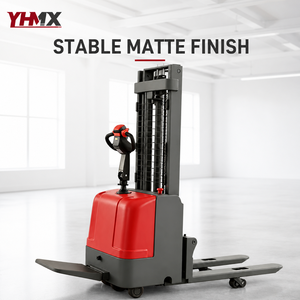
Self-Propelled 2T 3M Electric Forklift High Torque Warehouse Material Handling Equipment Walkie Pallet Mover Heavy Duty
Get a Quote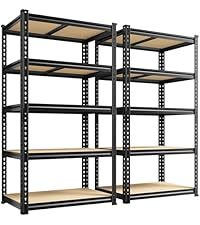
5 Layer Industrial Storage Shelving Racks Heavy Duty Adjustable Boltless Rivet Rack Corrosion Protection Warehouse Powder Coated
Get a Quote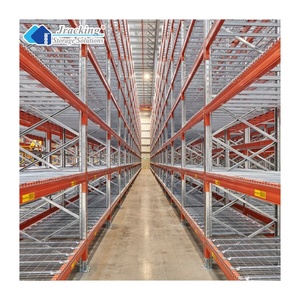
Jracking Australian Standard Industrial Racks CE Certified Heavy Duty Pallet Racking System for Warehouse Storage
Get a Quote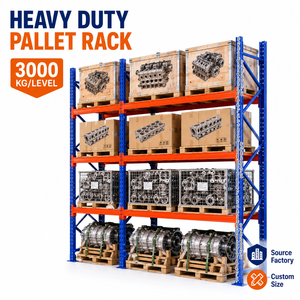
3000KG Heavy Duty Warehouse Shelf Rack for Pallet and Carton Storage 4 Levels for Pallet Storage
Get a Quote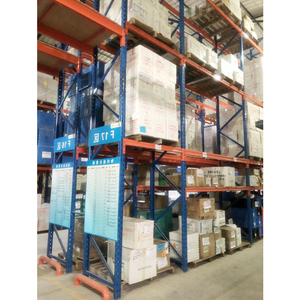
Steel Structure Racks Industriales Adjustable Warehouse Racking Heavy Duty Pallet Racking Systems Metal Storage Rack
Get a Quote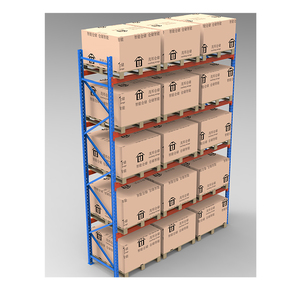
Steel Heavy Duty Racking High Density Pallet Racking Systems Warehouse Storage Racks for Sale
Get a Quote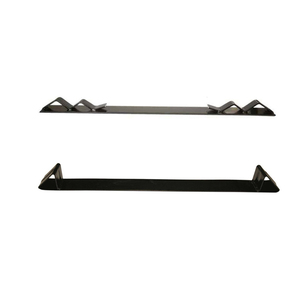
Standard Light-Duty Coil Racking, Lightweight Black Steel Warehouse Coil Storage Rack
Get a QuoteTechnical Director's Executive Insight: Counterbalance forklift trucks remain the workhorse of global logistics due to their versatility across indoor storage racks and outdoor staging yards. However, because counterbalance trucks lack straddle legs and rely on rear weight displacement, they demand significantly wider Right-Angle Stacking Aisles (typically 3.8m to 4.5m) and robust column collision protection compared to Reach Trucks or VNA equipment. Remprack Storage Solutions engineers structural OEM/ODM pallet racking specifically configured for counterbalance dynamics—incorporating Q355B high-tensile steel, heavy-duty floor anchors, and reinforced entry-level beam profiles to eliminate risk of structural fatigue.
Direct-from-Factory OEM/ODM Racking Manufacturing Strength
Established in 2006 in Nanjing, China, Remprack Storage Solutions Co., Ltd. operates a premier 40,000 m² smart manufacturing base, providing certified industrial storage systems for over 2,000 global projects across 85+ countries.
Year Established
Modern Factory Base
Patented Racking Techs
Global Export Countries
Certified Compliance & Standards
Our entire manufacturing process strictly adheres to ISO 9001 quality management and ISO 14001 environmental safety protocols. Every load beam and upright column design is validated according to international standards including CE, TUV, ANSI MH16.1, FEM 10.2.02, and AS4084-2012.
Full OEM/ODM Structural Customization
We provide complete custom engineering for global distributors and industrial system integrators. From profile cross-sections (80mm–120mm uprights) and steel thickness (1.5mm–3.0mm) to specialized RAL epoxy powder coatings or hot-dip galvanizing, we match your exact market requirements.
10-Year Structural Product Warranty
Backed by high-grade raw steel (Q235B & Q355B cold-rolled steel from Baosteel), automated continuous roll-forming lines, and robotic welding stations, our heavy-duty industrial racking systems carry a 10-year structural warranty under standard operational guidelines.
Engineering Counterbalance Forklift Racking Systems: Structural Physics & Operational Optimization
In modern industrial warehousing, selecting the appropriate pallet racking geometry is tightly coupled with the operational envelope of the material handling equipment (MHE). Counterbalance forklifts—available in electric, LPG, and diesel configurations with load capacities ranging from 1.5 to 5.0+ metric tons—are the undisputed workhorses for loading docks and cross-docking distribution centers. However, their structural interaction with warehouse pallet racking requires specialized engineering considerations that differ markedly from Reach Truck or Very Narrow Aisle (VNA) environments.
1. Calculating Clearances & Right-Angle Stacking Aisles for Counterbalance Trucks
Unlike reach trucks that pull loads back within their wheelbase or VNA turrets guided by floor tracks, a counterbalance forklift carries its load outside its wheelbase, supported entirely by front drive wheels and counterbalanced by heavy rear cast-iron weights or battery packs. Consequently, its turning radius requires significant spatial clearance.
When engineering an OEM/ODM racking layout for counterbalance operations, structural engineers must calculate the minimum Right-Angle Stacking Aisle (Ast) using the standard formula:
Ast = Wa + x + l + a
Where: Wa = Turning Radius of the forklift | x = Front Axle to Load Center distance | l = Length of the pallet load | a = Safety Clearance (typically 200mm to 300mm to prevent column impact).
For standard 2.5-ton 4-wheel counterbalance forklifts carrying standard 1200mm x 1000mm pallets, the required operating aisle width typically ranges between 3,800mm and 4,400mm. Designing racks with insufficient aisle tolerances leads to frequent driver contact, structural upright denting, and accelerated fatigue of anchor bolts.
2. Column Guarding & Impact Deflection Engineering
Because counterbalance forklifts move at higher travel speeds (up to 15-20 km/h) compared to narrow-aisle trucks, column protection at bay entry points is vital. Remprack's OEM engineering integrates multi-stage collision mitigation:
- Heavy-Duty Steel Column Protectors: L-shaped and U-shaped floor-anchored guards fabricated from 8mm thick Q235B structural steel, independent of the rack frame.
- Wrap-Around Post Protectors: Rubber-cushioned or steel wrap guards attached directly to the upright for upper-level protection.
- Aisle Portal Frame Barriers: Heavy tubular steel crash rails installed at aisle entry intersections to shield rack end-frames from high-speed turning sweeps.
Comparative Technical Analysis: Racking Configurations for Counterbalance Fleets
To help warehouse operations directors and procurement managers select the ideal layout, the following matrix evaluates the main pallet racking options used with counterbalance forklifts:
| Racking Architecture | Space Utilization | Pallet Selectivity | Aisle Width (Ast) | Structural Suitability for Counterbalance |
|---|---|---|---|---|
| Selective Pallet Racking | 40% – 50% | 100% Direct Access | 3.8m – 4.2m | Excellent: Easiest maneuvering, maximum flexibility for mixed SKUs. |
| Double-Deep Racking | 55% – 65% | 50% Direct Access | 3.8m – 4.2m | Requires Pantograph Attachment: Counterbalance needs dual-reach attachment. |
| Drive-In / Drive-Thru | 65% – 75% | Low (LIFO / FIFO) | Truck Enters Bay | Requires Guide Rails: High collision risk; mandates heavy bottom guard rails. |
| Push-Back Racking (2-5 Deep) | 60% – 70% | Per Lane (LIFO) | 3.8m – 4.0m | Very Good: Truck remains in main aisle; loads placed on nested carts. |
| Radio Shuttle Racking | 75% – 85% | High Density (FIFO/LIFO) | 3.6m – 3.8m | Optimal Hybrid: Counterbalance feeds aisle face, autonomous shuttle handles deep lane. |
Strategic Procurement Trends in Warehouse Racking Systems (2025–2030)
As global supply chains navigate labor shortages, rising industrial real estate costs, and aggressive ESG sustainability mandates, procurement directors must look beyond initial equipment purchase costs. Purchasing trends for counterbalance-compatible racking are evolving rapidly in three core areas:
1. High-Density Semi-Automated Hybrids
Buyers are shifting away from pure manual Drive-In racks toward hybrid Radio Shuttle Racking Systems. By pairing existing counterbalance forklift fleets with self-powered motorized pallet shuttles, logistics hubs achieve cold-storage density without forcing drivers to maneuver inside tight steel bays.
2. Green Steel & Decarbonized Supply Chains
Major enterprise buyers in North America and Western Europe now require environmental product declarations (EPDs) and low-carbon steel compliance. Remprack utilizes energy-efficient cold roll-forming lines, zero-emission water-based degreasing, and recyclable electrostatic powder coatings to reduce total Scope 3 carbon footprint.
3. Modular OEM Specification Standardization
Distributors and third-party logistics (3PL) providers are standardizing on universal tear-drop and adjustable box beam profiles. This allows rapid reconfiguration of beam heights, seamless rack extensions, and multi-facility equipment interchangeability as stock keeping unit (SKU) profiles change.
Product Development Trends: Advanced Metallurgical Engineering & Manufacturing Automation
The structural reliability of heavy-duty steel racking depends directly on raw material chemistry, post-forming tensile stress management, and surface protection technology. Factory advancements in racking production include:
High-Strength Steel Alloy Profiles (Q355B vs Traditional Q235B)
To reduce total deadweight while maintaining or increasing beam load capacity (up to 4,000 kg per level), Remprack has introduced high-yield-strength Q355B cold-rolled steel profiles. Q355B offers a yield strength of 355 MPa compared to 235 MPa for conventional mild steel. This high strength-to-weight ratio allows thinner profile gauges (e.g., 2.0mm Q355B replacing 2.5mm Q235B) without compromising safety factors (1.65 to 2.0 under EN 15512 standards).
Advanced Surface Finishing for Harsh Environments
For chemical manufacturing, cold storage freezers (-30°C), and coastal humid logistics hubs, traditional liquid paint fails rapidly. Modern OEM manufacturing utilizes two high-durability coating standards:
- Automated Electrostatic Powder Coating: Thermosetting epoxy-polyester powder applied at 70–90 microns thickness, cured at 200°C for exceptional impact resistance and scratch protection against forklift tines.
- Hot-Dip Galvanizing (HDG to ISO 1461): Steel components are fully immersed in molten zinc at 450°C, forming a metallurgical zinc-iron alloy coating over 65–85 microns thick for self-healing, decades-long outdoor rust resistance.
Remprack Structural Manufacturing Process & Quality Control
From coil slitting to automated bundle packaging, every heavy-duty beam and upright frame produced at Remprack undergoes strict quality gate checks:
- Raw Material Inspection: Spectrographic steel coil chemical analysis and thickness tolerance verification.
- Precision Continuous Roll Forming: 18-stage cold roll forming mills ensure tight dimensional tolerances on upright columns and step beam profiles.
- Automated Robotic Welding: Multi-axis robot welders create continuous, zero-defect weld seams on beam end connectors to guarantee load-bearing integrity under dynamic forklift loading.
- Destructive & Non-Destructive Load Testing: Periodic structural sampling including beam deflection tests (verifying compliance with L/200 load deflection limits) and anchor pull-out testing.
Frequently Asked Questions by Industrial Buyers & Engineers
Get immediate expert answers regarding layout engineering, OEM customization, safety compliance, and factory procurement lead times.
What warehouse drawings or parameters are required to engineer a custom counterbalance forklift racking layout?
To provide an accurate structural layout and quotation, our engineering team requires:
- Architectural floor plan (CAD DWG or PDF) indicating clear building height under beams/sprinklers, column grid spacing, and floor slab specifications.
- Pallet dimensions (Length x Width x Stacking Height) and maximum unit load weight (including pallet).
- Forklift specification sheet showing model, mast collapsed/lift height, turning radius (Wa), and front axle-to-load center (x).
- Target throughput volume and required SKU storage capacity.
Why do counterbalance forklifts require wider racking aisles than reach trucks?
Counterbalance forklifts carry loads forward of their front wheels without outriggers or straddle legs. To maintain stability, they rely on a heavy rear chassis counterweight, resulting in a larger overall vehicle length and wider turning radius. A standard 2.5-ton counterbalance truck requires an operating aisle width of 3.8m to 4.4m, compared to 2.8m to 3.2m for reach trucks.
Does Remprack provide full OEM / ODM customization for international racking distributors?
Yes. As an OEM/ODM factory manufacturer since 2006, we customize upright profiles (80, 90, 100, 120mm face widths), beam profiles, steel thickness (1.5mm to 3.0mm), connector hole pitch (50mm, 75mm, 76.2mm teardrop), specialized powder coat RAL colors, brand labeling, and export bundling.
What international quality standards and structural certifications do your racking systems hold?
Remprack racking systems are designed and tested in compliance with CE standards, ISO 9001, ISO 14001, and TUV certification. Our structural load calculations follow FEM 10.2.02 (European Racking Code), EN 15512, ANSI MH16.1 (US), and AS4084-2012 (Australian Standard).
What warranty is included with Remprack industrial storage racks?
All Remprack heavy-duty warehouse racking systems come with a 10-year structural warranty when installed according to our engineering assembly drawings and operated within specified load capacity plaques.
What is your standard factory lead time for container orders?
Standard production lead time is 14 to 21 days after drawing approval and deposit receipt. For complex automated shuttle systems, galvanized cantilever racks, or multi-tier mezzanine platforms, lead times range from 25 to 35 days depending on total steel tonnage.