Engineering High-Integrity Static Pallet Racking for Global Supply Chains
As modern logistics centers scale vertically, selecting structural static pallet racking requires stringent engineering compliance, precise steel grade selection, and tailored OEM customization. This paper reviews load dynamics, finite element analysis (FEA), and international structural safety codes.
Precision OEM Cold-Roll Forming & Load Capacity
Static pallet racking forms the structural bedrock of modern material handling. Unlike dynamic or automated storage mechanisms, static racking relies entirely on the cold-roll formed steel profiles' intrinsic material properties, geometry, and connection rigidity to sustain dead and live loads safely.
At our Nanjing manufacturing complex, we utilize high-tensile structural steel (Q235B and Q355B grades equivalent to ASTM A1011 SS Grade 36 and Grade 50). Through multi-stage automated roll-forming mills, structural uprights are shaped with up to 13-fold profile bends. This complex geometry dramatically enhances the section modulus and moment of inertia, preventing torsional buckling under heavy axial compression.
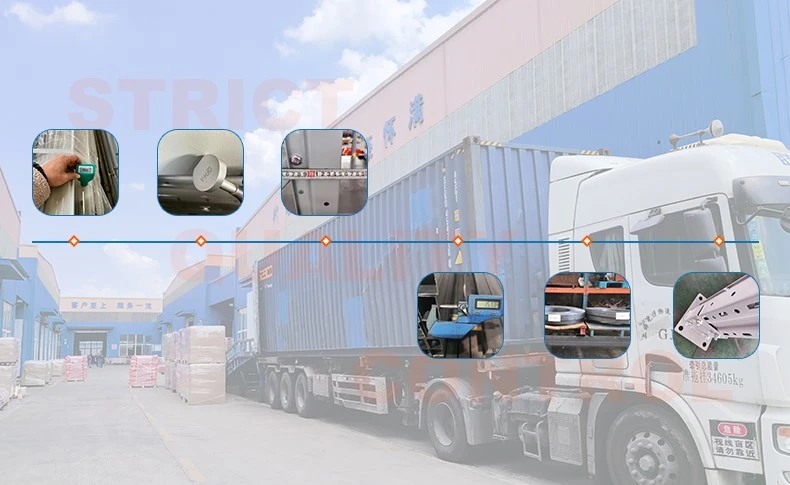
Structural Specification Comparison Matrix
| Racking Type | Steel Profile Grade | Upright Pitch Options | Beam Deflection Limit | Safety Factor Ratio | Optimal Application |
|---|---|---|---|---|---|
| Selective Static Racking | Q235B / Q355B Structural Steel | 50mm / 75mm / 76.2mm (Teardrop) | L/200 to L/300 per FEM | 1.65 : 1 to 2.0 : 1 | 100% Selectivity, Mixed SKU Distribution |
| Double-Deep Static Rack | High-Tensile Q355B Steel | 75mm Custom Punch | L/250 Max under Full Load | 1.8 : 1 Structural Reserve | High-Density Storage with Reach Trucks |
| Heavy-Duty Industrial Shelving | Cold-Rolled Steel Sheet | 50mm Adjustable Slots | L/200 Uniformly Distributed Load | 1.65 : 1 Standard Safety | Manual Picking, Spare Parts, Cartons |
| High-Bay Static Racking | Micro-Alloy Steel (St52 Equivalent) | Custom Engineering Pitch | Strict L/300 Limit for VNA | 2.0 : 1 Seismic Certified | VNA Warehouse Facilities, High Pallet Counts |
High-Performance Static Pallet Racking Systems
Explore our core certified static racking product configurations. Every system can be fully customized for specific pallet weights, footprint dimensions, and ambient temperature environments.
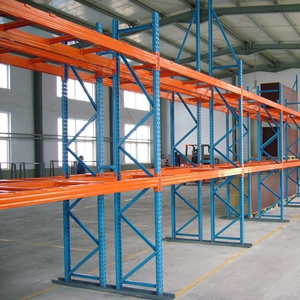
Adjustable Heavy Duty Pallet Rack Shelf Two Levels Custom High Load Capacity Industrial Warehouse Storage Pallet Racking System
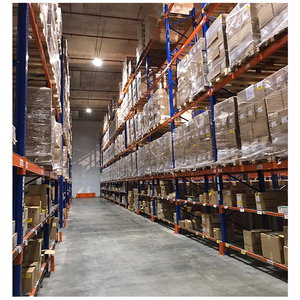
High Quality ODM/OEM Warehouse Multi-layers Shelves Storage Pallet Racking CE Certificated Industrial Racks for Save Space
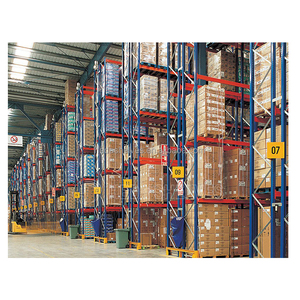
Warehouse Economical Heavy Duty Industrial Pallet Shelf Customized Manufacturer Wholesales Price Storage Selective Pallet Rack
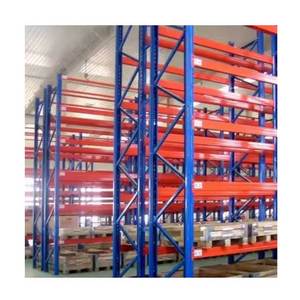
Industrial Heavy Duty Racks Pallet Racks Heavy Duty Warehouse Pallet Racking Manufacturing Companies OEM
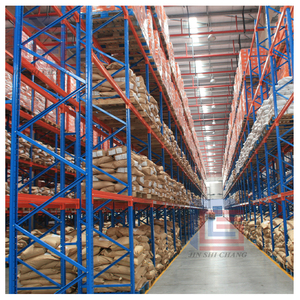
Manufacturer Steel Selective Pallet Rack for Warehouse Storage
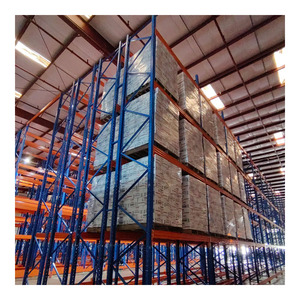
Material Handling Rack Pallet Racking Supplies Industrial Shelving For Pallets
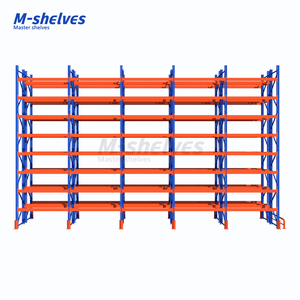
Shelf Heavy Duty Adjustable Corrosion Protected Customizable Size Pallet Beam Racking for Large Logistics Distribution Warehouse
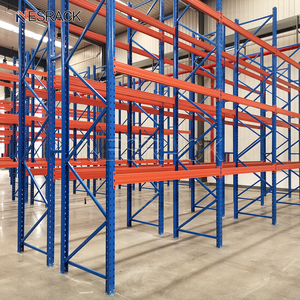
Custom Heavy Duty Industrial Steel Selective Pallet Rack Adjustable Warehouse Storage Rack Shelves
Why Leading Global Integrators Partner with Remprack
With over two decades of dedicated R&D and automated steel fabrication, we deliver engineered static pallet racking solutions that meet strict safety norms across 85+ countries.
40,000 m² Production Base
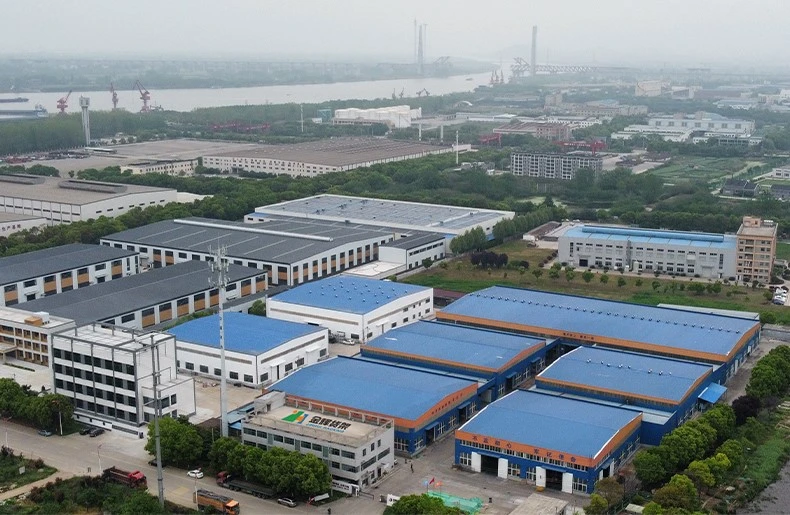
Our Nanjing manufacturing center houses continuous automated roll-forming lines, robotic welding stations, and zero-emission powder coating lines capable of outputting over 50,000 tons annually.
ISO, CE & TUV Certified Quality
Our structural designs undergo rigorous testing under EN 15512 and ANSI/RMI specifications. We provide complete mill test certificates (MTC) and third-party compliance reports for project verification.
Deep OEM / ODM Engineering
From proprietary beam hook designs to specialized teardrop, hex, or rectangular punches, our in-house engineering team converts client CAD specifications into buildable, optimized racking systems.
Emerging Technology Trends in Static Pallet Racking
While static pallet racks are fundamentally non-powered structural systems, the demand for higher vertical clearance, seismic resiliency, and integration with autonomous robotics is driving rapid structural innovation.
High-Strength Micro-Alloy Steel (HSLA)
The global steel industry is transitioning toward High-Strength Low-Alloy (HSLA) steels in cold-roll forming. By leveraging micro-alloying elements like Niobium (Nb) and Vanadium (V), manufacturers produce thinner-walled uprights with higher yield strength (up to 450 MPa). This reduces deadload weight on warehouse floor slabs while preserving elastic buckling resistance, lowering container shipping costs for global B2B procurement.
AMR & Automation Interface Readiness
Modern static selective racking is increasingly paired with Autonomous Mobile Robots (AMRs) and automated forklift trucks. This requires higher dimensional tolerances on bottom-level beam clearances, precise floor anchor positioning, and specialized rack-mounted reflector targets. OEM manufacturers must design static frame geometry with tighter straightness tolerances (<1/1000 of column height).
Advanced Finite Element Analysis (FEA)
Static racking engineering has shifted from standard empirical calculations to 3D non-linear Finite Element Analysis (FEA). FEA modeling simulates local plate buckling, beam-to-column connector semi-rigidity, and baseplate rotation under real seismic ground motion. This allows custom OEM suppliers to optimize weight-to-load ratios precisely tailored to regional seismic zones.
Eco-efficient Powder & Galvanized Finishes
Environmental regulations are accelerating the removal of volatile organic compounds (VOCs) and heavy metal pretreatments. Next-generation static racking uses nano-ceramic zirconium phosphate pretreatments combined with high-durability thermosetting epoxy-polyester powder coatings (60–80 μm thickness) or direct hot-dip galvanizing for cold-chain environments, extending service life beyond 25 years.
B2B Procurement Best Practices for Static Pallet Racking
Procuring industrial static pallet racking directly from China-based OEM manufacturers offers significant capital expenditure savings. However, procurement directors must evaluate several key engineering and logistical variables to prevent site installation delays or structural compliance issues:
- Verify Steel Grade Certification: Request original Mill Test Certificates (MTC) matching chemical composition and yield strength to verified batch heat numbers.
- Confirm Beam Connector Lock Pin Integrity: Ensure beam-to-column connectors feature heavy-duty safety locking pins capable of withstanding minimum vertical upward forces of 15kN per connector to prevent accidental forklift dislodgement.
- Packaging & Export Container Optimization: Confirm components are bundled with protective steel strapping, plastic film wrapping, and heavy-duty wooden dunnage to avoid transit damage over long ocean voyages.
- Assess Total Cost of Ownership (TCO): Factor in freight costs, floor anchor bolt specifications, frame assembly labor, and long-term maintenance accessibility alongside initial FOB pricing.
Frequently Asked Questions by Industrial Procurement Managers
Review engineering answers to critical operational, structural, and procurement questions when selecting static pallet racking systems.
What specific data is required for Remprack engineers to generate a static racking structural layout?
- Architectural building floor plan (CAD or PDF) showing column grids, building clear height under joists or sprinklers, and slab load-bearing capacity (kN/m²).
- Pallet dimensions (Width x Depth x Height including cargo overhang) and maximum unit weight (kg/pallet).
- Forklift specifications: Model type, minimum aisle width requirement (AST), and maximum lift height.
- Environmental requirements: Ambient temperature (room temp, cold store, or outdoor), seismic zone ratings, and local building codes (e.g., ANSI/RMI or EN 15512).
How do static selective pallet racks differ from drive-in or shuttle racking systems?
What anti-corrosion surface treatments are available for static racking installed in harsh environments?
- Electrostatic Powder Coating: Standard for indoor climate-controlled warehouses. Uses non-toxic thermosetting epoxy-polyester powder (60–80 μm thickness) baked at 200°C for smooth scratch resistance.
- Hot-Dip Galvanizing (HDG): Recommended for outdoor storage yards, chemical warehouses, or sub-zero freezer cold stores. Components are immersed in molten zinc at ~450°C, producing a thick zinc-iron alloy coating (55–85 μm) compliant with ISO 1461, offering 25+ years of rust protection.
Does Remprack support custom column punching profiles like American Teardrop or European 50mm pitch?
What safety accessories should be incorporated into a heavy-duty static pallet racking project?
- Column Protectors / Frame Guards: Heavy-gauge steel floor-anchored guards to absorb forklift impact forces at row ends and aisle intersections.
- Pallet Back Stops & Guide Rails: Physical safety beam stops preventing pallets from sliding off the rear into flue spaces.
- Wire Mesh Decking / Support Bars: Decking panels placed on step beams to support non-standard or damaged wooden pallets safely.
- Frame Row Spacers: Rigid steel tie bars connecting back-to-back rack frames for structural stabilization.
What is the typical production lead time and container packing capacity for global shipments?
Optimize Your Warehouse Footprint with Certified OEM Racking
Partner directly with Nanjing's premier static pallet racking manufacturer. Submit your warehouse floor plan today for a free structural load calculation and custom OEM quotation within 24 hours.