High-Capacity Industrial Racking Systems
Engineered for extreme pallet payloads, cold storage performance, automated picking, and maximal volumetric density.
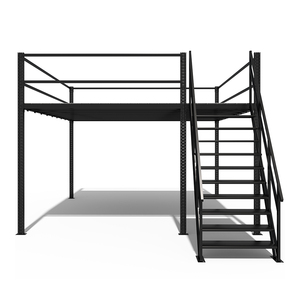
Heavy Duty Rack Industrial Mezzanine Interlocking Floor Rack Attic Racking System
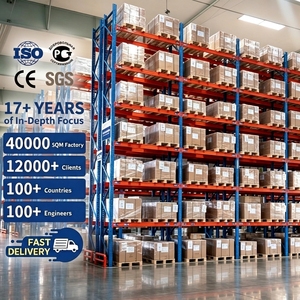
High Capacity Cold Room Pallet Racking System Anti-rust Heavy Duty Cold Chain Pallet Racks
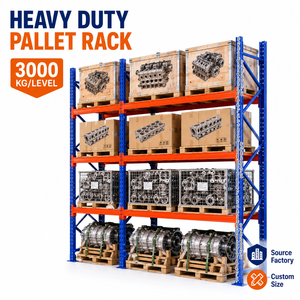
3000KG Heavy Duty Warehouse Shelf Rack for Pallet and Carton Storage 4 Levels
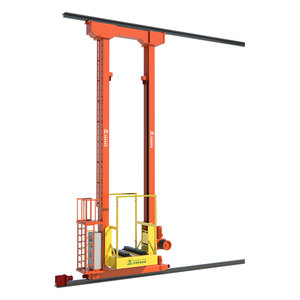
Automatic Pallet Stacker Crane Racking Intelligent Steel Warehouse System
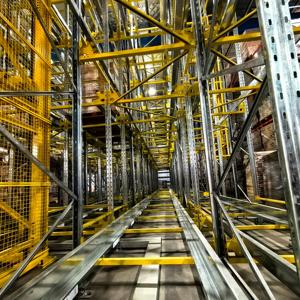
CE Certified Four-Way Radio Shuttle Rack System for Cold Storage Warehouse Use
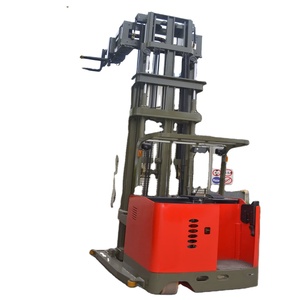
Automatic Retrieval VNA Pallet Rack Fork Lifter Cargo Stacker Integration
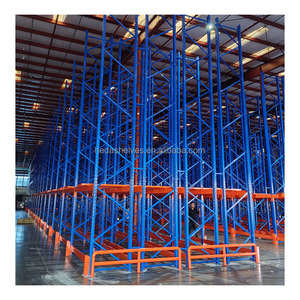
Boltless Heavy Duty Pallet Racking System & Industrial Storage Shelving
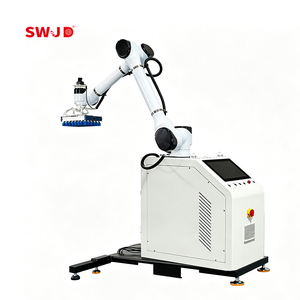
Automatic Palletizer Robot M50 With 50kg Payload for Warehouse Automation
Industrial Structural Whitepaper: Metallurgical Standards & Load Calculation Engineering
In modern industrial logistics, high-bay bulk material storage demands absolute structural predictability, seismic resilience, and precise deflection control. As a premier China wholesale bulk material pallet racking manufacturer, Remprack Storage Solutions Co., Ltd. engineers cold-formed structural steel profiles designed strictly to meet international FEM 10.2.02, RMI (Rack Manufacturers Institute), and AS4084-2012 codes. Procurement decisions must move beyond superficial price-per-kilogram metrics to evaluate yield strength, beam-column connection rigidity, dynamic buckling thresholds, and paint adhesion durability under multi-shift operation.
Our structural upright frames utilize high-tensile hot-rolled steel coils, predominantly Q235B and Q355B grades (equivalent to S235JR and S355JR under European EN10025 standards). Steel choice directly dictates structural safety under localized strain. Q355B steel provides a yield strength threshold of ≥355 MPa, granting high-bay installations (exceeding 12 meters in height) superior resistance to dynamic column twisting and forklift impact forces. The cross-sectional geometry of Remprack upright profiles incorporates multi-bend cold-roll forming with up to 13 distinct deformation stages, maximizing the moment of inertia ($I_x$, $I_y$) while reducing unnecessary structural tare weight.
Cold-Roll Formed Uprights
11-13 continuous rolling passes shape structural steel into omega and diamond profiles with 75mm or 50mm pitch adjustment, minimizing internal material stress concentrations.
Automated Robotic Welding
Beam connector claw plates feature 3, 4, or 5 tooth interlocking hooks pulse-welded via Panasonic robotic stations to eliminate manual weld splatter and joint fatigue.
Advanced Thermosetting Coating
Pre-treatment with automatic 6-stage shot blasting and zinc-phosphate washing ensures salt spray resistance up to 500 hours (or hot-dip galvanizing for cold storage environment).
Storage Topology Comparison & Space Efficiency Analysis
Choosing the correct racking topology requires balancing volumetric storage density against individual pallet selectivity and operational throughput demands.
| Racking Architecture | Volumetric Density Utilization | Pallet Selectivity | Stock Rotation Logic | Forklift / Equipment Requirement | Optimal Industry Application |
|---|---|---|---|---|---|
| Selective Pallet Racking | 40% - 50% | 100% Immediate | FIFO (First-In, First-Out) | Standard Counterbalance / Reach Truck | FMCG Distribution, High-SKU Logistics |
| Very Narrow Aisle (VNA) | 65% - 75% | 100% Immediate | FIFO | Guided Articulated / Turret VNA Truck | High-Bay E-Commerce, Restricted Floor Area |
| Drive-In / Drive-Through | 75% - 85% | 15% - 20% (Low) | LIFO (Drive-In) / FIFO (Drive-Thru) | Standard Reach Truck (Narrow Frame) | Homogeneous Bulk Material, Seasonal Storage |
| 2-Way / 4-Way Radio Shuttle | 85% - 90% | Lane-Dependent | Programmable FIFO & LIFO | Standard Forklift + Automated Shuttle Robot | Cold Storage (-25°C), High-Volume Food & Beverage |
| Gravity Pallet Flow | 80% - 85% | Lane-Front Selectivity | Strict FIFO (Gravity Roller Lanes) | Standard Loading & Unloading Trucks | Perishable Goods, Pharmaceuticals, Buffer Stock |
| AS/RS Automated High-Bay | 90% - 95% | 100% Computerized | WMS Automated Management | Automated Stacker Crane / Shuttle System | 24/7 Unmanned Smart Warehousing, Automotive Parts |
Global Procurement Trends & Future Intelligent Warehousing Directions (2025–2030)
The global industrial racking procurement landscape is undergoing a structural paradigm shift. Supply chain executives are transitioning away from fragmented component sourcing toward end-to-end turnkey engineering partnerships. Key macro procurement trends driving the wholesale bulk material racking market include:
1. Shift Toward Total Cost of Ownership (TCO) & Lifecycle Sourcing: Procurement officers historically prioritized lower initial FOB steel costs. However, premature fatigue failure, beam sag under sustained static load, and zinc flaking in cold rooms have redirected emphasis toward long-term structural durability. Buying decisions now calculate lifecycle maintenance costs, floor anchor corrosion prevention, and modular reconfigurability over a 10 to 20 year horizon.
2. Deep Integration with Autonomous Mobile Robots (AMR) & AGVs: Traditional warehouse racking layouts catered strictly to human-operated forklift turning radii (typically requiring 3.2m to 3.8m aisles). Modern bulk procurement specifications demand ultra-flat floor alignments (FM2 standard compliance) and bottom-level beam clearance designed specifically for AMR underside tunneling and Pallet Jack AGV navigation. Rack baseplates must incorporate recessed anchor bolt designs to protect robotic polyurethane tires from structural abrasion.
3. Rise of 4-Way Radio Shuttle & High-Bay AS/RS Systems: Land acquisition constraints in global logistics hubs have accelerated demand for vertical cube storage. 4-Way Shuttle technology allows automated shuttles to traverse both cross-aisle and longitudinal channels inside deep racking blocks. This technology reduces required energy consumption by up to 40% compared to heavy crane-based AS/RS while maintaining massive throughput elasticity during peak logistics cycles.
4. Environmental Sustainability & Green Steel Mandates: Global B2B buyers now mandate verified carbon-footprint tracking for industrial steel components. Remprack utilizes energy-efficient continuous powder coating lines that recycle 98% of oversprayed epoxy powder with zero volatile organic compound (VOC) emissions. Furthermore, structural steel utilized in our factory contains up to 35% recycled scrap content, directly supporting LEED certification for warehouse construction projects worldwide.
Remprack Manufacturing Infrastructure & Quality Engineering
Headquartered in Nanjing, China since 2006, Remprack operates a 40,000m² intelligent manufacturing base supplying custom OEM/ODM racking solutions to over 85 countries.
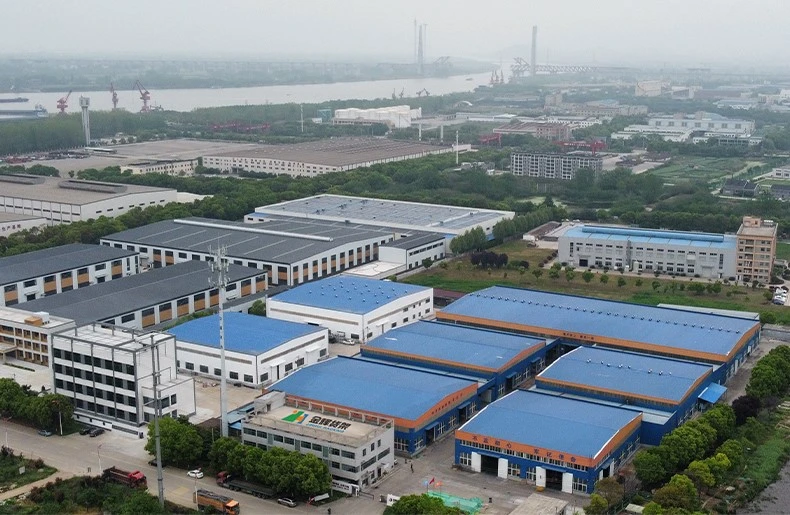
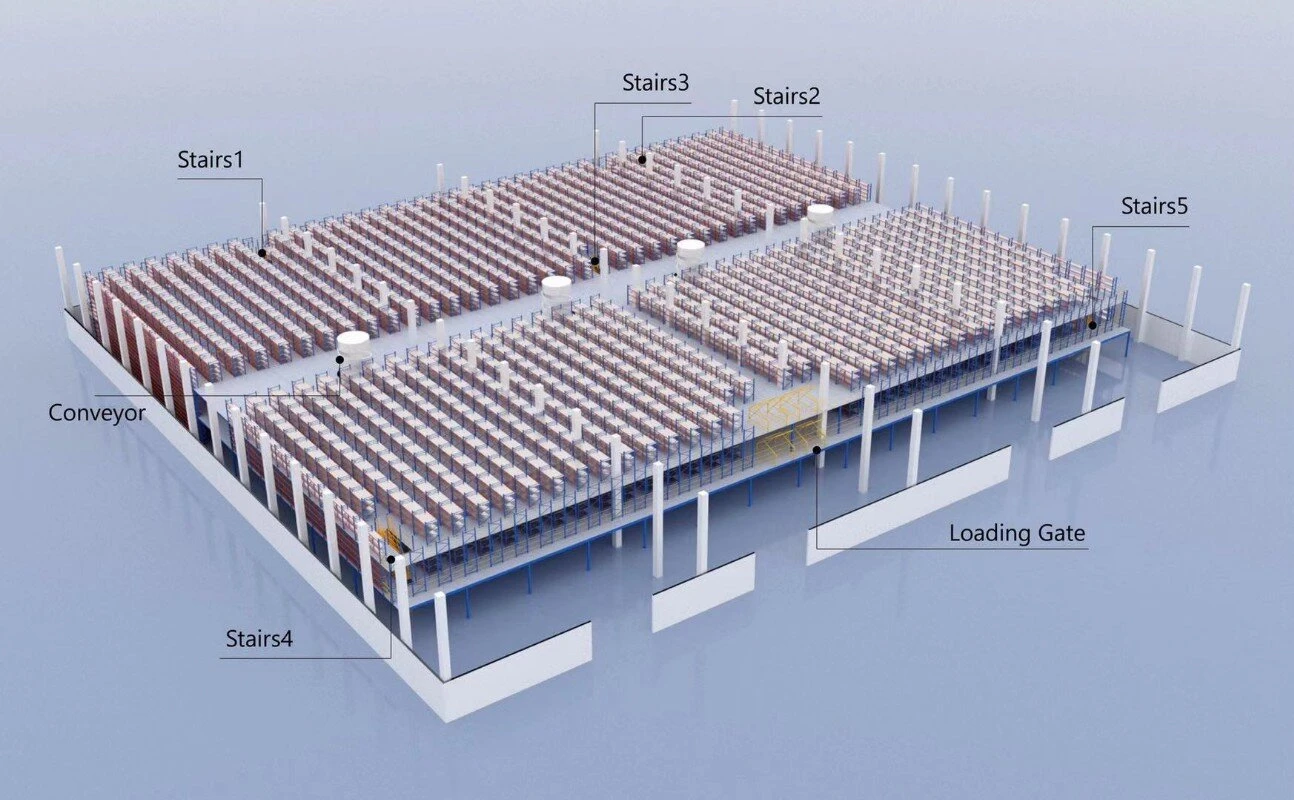
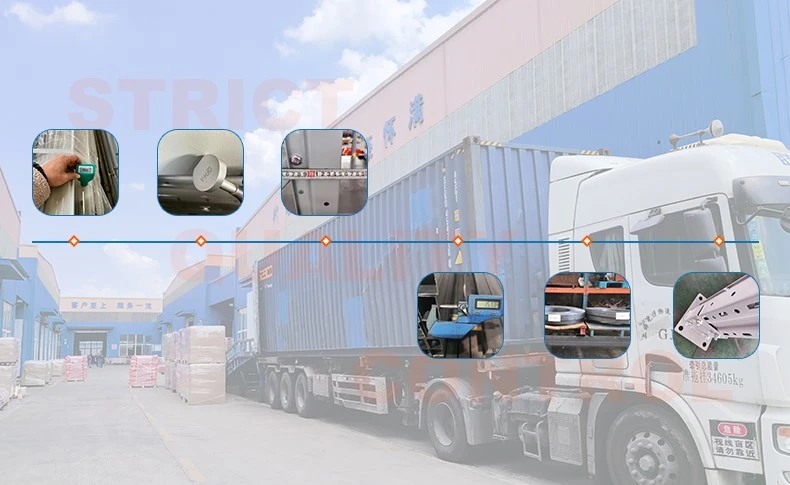
End-to-End Control Over Engineering & Quality
Unlike trading intermediaries, Remprack executes full raw material coil slitting, cold roll-forming, automatic punching, robotic welding, surface pretreating, electrostatic powder coating, and export bundle packaging under one continuous quality management system certified to ISO 9001, ISO 14001, and TUV international benchmarks.
- 20+ Years Sourcing Experience: Over two decades of specialized focus on industrial pallet racking, cantilever racks, mezzanine floors, and shuttle systems.
- 100+ Technological Patents: Continuous internal R&D investment resulting in proprietary beam connector locks, high-capacity cantilever arms, and low-temperature shuttle rails.
- Strict Metallurgical Quality Control: Mill test certificates (EN 10204 3.1) provided for every raw steel coil batch; universal strength test machines verify tensile limits.
- Global Export Logistics Capability: Customized container loading software optimizes container volume utilization up to 98.5%, reducing freight cost per pallet position.
- 10-Year Comprehensive Warranty: Full structural backing against material failure under normal load ratings specified in project engineering documentation.
Frequently Asked Questions for Wholesale Racking Buyers
Essential technical, structural, and commercial guidance for warehouse project managers, logistics integrators, and industrial buyers.
What exact data is required to generate a custom rack structural design and proposal?
1. Architectural warehouse CAD or PDF floor plan showing clear height under sprinklers/beams, column grid spacing, floor slab thickness, and door locations.
2. Pallet parameters: Width × Depth × Maximum Stacking Height (including goods) and exact Maximum Unit Weight (kg/pallet).
3. Material handling equipment specs: Forklift model, maximum lift height, mast collapsed height, turning radius, and aisle width requirement.
4. Environmental factors: Operating temperature range (ambient vs. cold room down to -25°C) and local seismic design zone requirements.