High-Performance Warehouse Storage & Automation Systems
Explore our export-grade structural racking configurations, customized heavy-duty solutions, and automated shuttle technologies manufactured in Nanjing, China.
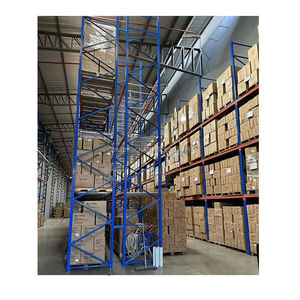
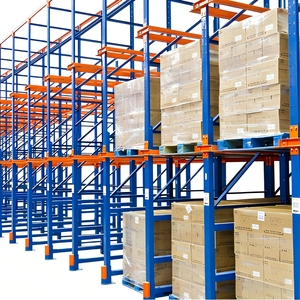
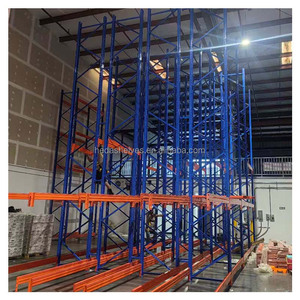
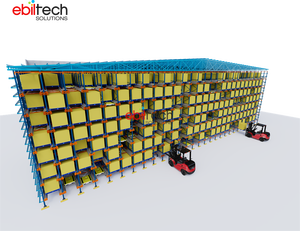
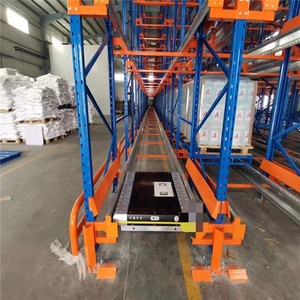
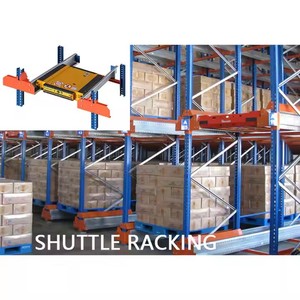
Double Row Pallet Racking: Spatial Optimization & Structural Mechanics
An in-depth evaluation of double-deep racking architecture, load dynamics, and floor footprint utilization for modern industrial logistics centers.
In contemporary supply chain operations, warehouse real estate cost per square meter continues to escalate globally. Logistics engineers, facility managers, and procurement officers face a constant challenge: how to maximize pallet storage density without compromising operational velocity or structural safety. Among high-density static storage methodologies, Double Row Pallet Racking (frequently designated in material handling engineering as Double-Deep Pallet Racking) stands out as the most cost-effective structural compromise between standard 100% selective racking and fully automated deep-lane storage systems.
1. Structural Architecture & Mechanical Engineering Principles
Double Row Pallet Racking is constructed by placing two sets of standard selective pallet racking back-to-back. Rather than operating with an aisle for every rack row, two pallet positions are accessed from a single aisle using specialized reach trucks equipped with double-deep pantograph mechanisms or telescopic fork extensions. This structural modification eliminates up to 50% of operational forklift aisles compared to standard single-selective configurations.
From an engineering perspective, Double Row Racking systems manufactured by top Chinese exporters like Remprack are constructed using high-tensile cold-rolled steel profiles (Q235B and Q355B grades). Upright frames feature continuous roll-formed teardrop or omega profiles with standard 50mm or 75mm height adjustment pitches. Key structural parameters include:
- Structural Connection Dynamics: Upright columns and heavy-duty step or box beams are joined via multi-prong connector hooks fitted with mechanical safety locks to prevent accidental dislodgement during high-reach loading.
- Double-Row Spacer Tie-Bars: Specialized structural steel cross-braces join adjacent rows together at calculated vertical intervals, providing superior lateral stability and transforming independent rows into a unified structural block capable of distributing horizontal seismic forces.
- Deflection & Load Parameters: Systems are designed strictly under international standards such as FEM 10.2.02 (European Federation of Materials Handling) and ANSI/RMI MH16.1 (Rack Manufacturers Institute). Beam deflection limits are engineered to not exceed L/200 under full rated capacity.
2. Volumetric Efficiency & Spatial Economics
By pairing pallet rows together, facility operators achieve a floor space utilization gain of 30% to 45%. Standard selective racking typically consumes up to 60% of total warehouse square footage purely in forklift operating aisles. Implementing a Double Row Pallet Racking system reduces floor footprint consumption dedicated to aisles down to approximately 35%–40%, dramatically increasing total pallet position counts within identical warehouse dimensions.
Storage Methodology Comparison & Data Visualization
Compare Double Row Pallet Racking performance against alternative warehouse storage configurations.
| Storage System Type | Pallet Selectivity | Floor Space Utilization | Capital Cost Index | Required Forklift Equipment | Stock Rotation Strategy |
|---|---|---|---|---|---|
| Double Row (Double-Deep) Racking | 50% Direct Access | High (65% – 75%) | Low - Medium | Double-Deep Reach Truck / Pantograph | LIFO (Last-In, First-Out) |
| Standard Selective Racking | 100% Direct Access | Moderate (40% – 50%) | Low | Standard Counterbalance / Reach Truck | FIFO (First-In, First-Out) |
| Drive-In Racking System | Low (Per Lane) | Very High (75% – 85%) | Medium | Standard Counterbalance Truck | LIFO (Last-In, First-Out) |
| Radio Shuttle Racking | Low (Per Lane) | Maximum (80% – 90%) | High (Automated) | Standard Forklift + Radio Cart | FIFO or LIFO Flexible |
| Very Narrow Aisle (VNA) Racking | 100% Direct Access | High (70% – 80%) | High | Specialized VNA Turret Truck / Articulated | FIFO (First-In, First-Out) |
Why Partner with China's Premier Racking Manufacturer & Exporter
Combining 20+ years of structural engineering expertise with advanced automated steel fabrication to serve global industrial markets.
Certified Compliance & Standards
Our production processes hold global quality credentials including ISO 9001:2015, ISO 14001:2015, CE Marking, and TUV Rheinland product safety verification. All exported structural components undergo rigorous tensile and load-to-destruction testing.
Automated Production Base
Operating from a 40,000 m² state-of-the-art facility in Nanjing, we leverage automated CNC cold roll-forming lines, robotic welding workstations, and eco-friendly thermosetting epoxy powder coating lines ensuring a 60–80 micron protective finish.
Global Export Track Record
Since 2006, our engineering teams have successfully delivered over 2,000 large-scale warehouse projects across 85+ countries in Europe, North America, Southeast Asia, the Middle East, and South America with a 10-Year product warranty.
Future Procurement Trends in Industrial Storage & Double Row Systems
Key technological advancements shaping the next decade of warehouse infrastructure procurement (2025–2030).
As global supply chains accelerate their transition toward digital intelligence and decarbonization, procurement strategies for industrial storage equipment are undergoing a structural shift. Buying decisions are no longer evaluated solely on initial steel price-per-kilogram; instead, enterprise buyers evaluate Total Cost of Ownership (TCO), material fatigue resilience, automated forklift compatibility, and environmental sustainability.
1. Automated Guided Vehicle (AGV) & Reach Robot Integration
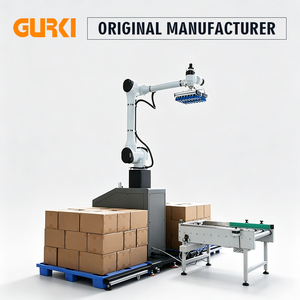
Traditional Double Row Racking required skilled human drivers to operate specialized pantograph reach trucks, where reduced visibility at heights above 8 meters presented operational risks. Future-proof procurement trends show a rapid movement toward pairing double-deep steel structures with Autonomous Mobile Robots (AMRs) and automated pantograph AGVs. These robotic units utilize 3D LiDAR vision and SLAM navigation to place and retrieve pallets in double-deep slots with millimeter precision, eliminating operator error and structural impact damage.
2. Cold Chain Infrastructure & Thermal Overhead Optimization
Cold storage facilities operate under intensive energy costs. Storing refrigerated or frozen food items requires minimizing unused air space within temperature-controlled chambers. Double Row Pallet Racking is rapidly displacing standard selective racking in cold storage design due to its ability to compress storage volume while maintaining reasonable SKU access speed. When combined with hot-dip galvanized surface finishes or specialized low-temperature powder coatings, double-deep structures offer maximum anti-corrosion protection against moisture condensation in sub-zero environments (down to -30°C).
3. Structural Health Monitoring (SHM) & Smart Sensor Integration
Next-generation double-row racking installations are increasingly integrated with IoT-based structural monitoring sensors. Micro-strain gauges and vertical alignment sensors attached to high-bay upright columns collect real-time data regarding rack overload, accidental forklift collisions, or foundation tilt due to floor slab settling. Exporters providing pre-drilled structural members compatible with smart monitoring hardware are securing a competitive edge in international infrastructure tenders.
4. Sustainable Green Steel & Eco-Coating Mandates
Multinational corporate buyers are requiring ESG (Environmental, Social, and Governance) compliance from their global supply chain vendors. Steel structural suppliers in China are adopting recycled green steel billets and volatile organic compound (VOC)-free powder coating processes. Remprack leads this sustainable transition by utilizing closed-loop water treatment systems and energy-efficient curing ovens during fabrication.
Double Row Pallet Racking Procurement FAQ
Engineering and logistical solutions to common questions encountered during system planning and international procurement.
Accelerate Your Warehouse Capacity Today
Contact our structural engineering team for a complimentary CAD warehouse layout design, load-bearing assessment, and factory-direct export quotation.