Featured Heavy-Duty Bulk Storage Systems
Direct from China's OEM Manufacturing Base — Custom Engineered for Superior Load Capacity and Maximum Vertical Volume
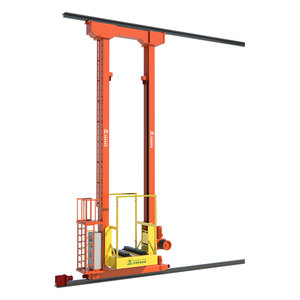
Automatic Pallet Stacker Crane Racking Intelligent Steel Warehouse System with Corrosion Protection
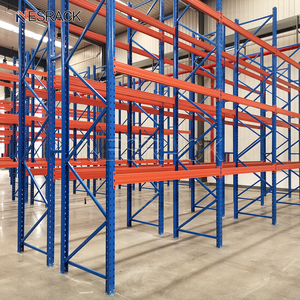
Custom Heavy Duty Industrial Steel Selective Pallet Rack Adjustable Storage Shelves
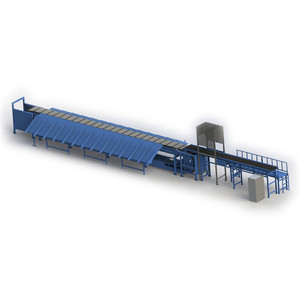
Automatic Parcel Sorting Machine Robotic Logistics Sorter System For Smart Warehouse Automation
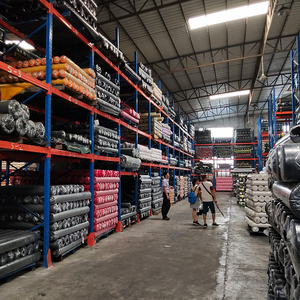
Highly Customizable Free Design Storage Rack for Various Heavy Duty Storing 1000KG-3000KG
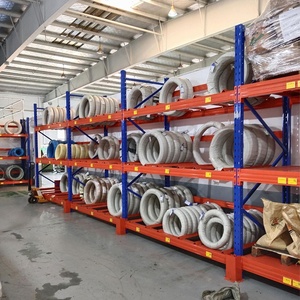
Industrial Pallet Rack Double Deep Selective Pallet Rack for Heavy Coil Material Storage
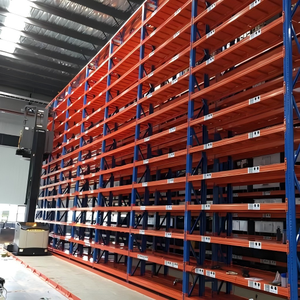
Custom Size Heavy Duty Steel Narrow Lane VNA Racking System High Bay Storage (500-4000kg/Level)
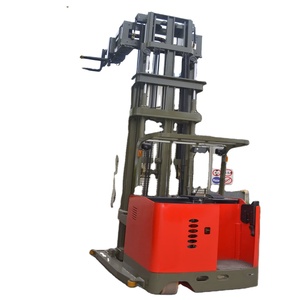
Automatic Retrieval VNA Pallet Rack Guided Fork Lifter Cargo Stacker System
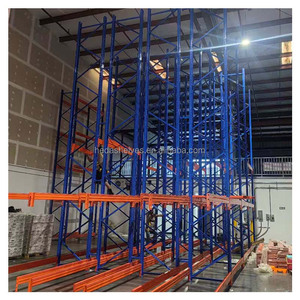
CE Industrial Steel Metal Heavy Duty Warehouse Selective Pallet Racking System
Why Remprack is China's Premier Racking Exporter
Combining Structural Engineering Excellence, Automated Cold-Roll Forming, and Rigorous Export Compliance
40,000m² Advanced Production
Equipped with continuous automated roll-forming lines, robotic welding stations, and zero-emission electrostatic powder coating plants to guarantee uniform structural tolerances.
Certified International Quality
Fully compliant with EN 15512, FEM 10.2.02, and RMI standards. Internationally certified by CE, ISO 9001, ISO 14001, and TUV Rhine for rigorous load safety margins.
Custom OEM/ODM Engineering
From seismic calculations to bespoke column section profiles, our 30+ structural engineers supply complete CAD floorplans and 3D FEA stress simulation reports.
1. Technical Engineering Principles in Bulk Storage Pallet Racking
Modern industrial warehousing requires maximum vertical space utilization without sacrificing structural stability or operational safety. As a leading manufacturer and exporter in China, Remprack Storage Solutions Co., Ltd. designs bulk storage pallet racking systems using high-grade cold-rolled structural steel (Q235B and Q355B equivalent to SS400 and S355JR). The structural integrity of industrial racking is governed by buckling calculations, connection rigidity between upright frames and box beams, and baseplate anchor shear stresses.
When selecting bulk storage systems, engineering buyers must evaluate the ratio between Storage Density and Pallet Selectivity. Standard selective pallet racking offers 100% direct access to every SKU but utilizes only ~40% of warehouse floor area for storage. Advanced high-density solutions—such as Radio Shuttle Racking, Very Narrow Aisle (VNA), Drive-In, and Automated Storage and Retrieval Systems (ASRS)—increase floor volume utilization up to 85% by minimizing or eliminating internal forklift aisles.
2. Structural Engineering & System Selection Matrix
To assist warehouse directors, procurement teams, and logistics integrators in specifying the optimal bulk storage setup, our structural team has engineered the comparative matrix below, analyzing structural performance metrics across standard industrial configurations:
| Racking System Type | Floor Density (%) | SKU Selectivity | Stock Rotation | Forklift Requirement | Optimal Bay Height | Max Load per Level |
|---|---|---|---|---|---|---|
| Selective Pallet Racking | 35% - 45% | 100% Direct | FIFO / LIFO | Standard Counterbalance / Reach | Up to 12m | 5,000 kg |
| Double Deep Racking | 55% - 65% | 50% Immediate | LIFO | Deep Reach Truck | Up to 11m | 3,500 kg |
| Very Narrow Aisle (VNA) | 60% - 70% | 100% Direct | FIFO / LIFO | VNA Turret Truck / Articulated | Up to 18m | 4,000 kg |
| Drive-In / Drive-Thru | 70% - 80% | Low (Per Lane) | LIFO (FIFO Thru) | Standard Reach / Counterbalance | Up to 10m | 1,500 kg/Pallet |
| Radio Shuttle Racking | 75% - 85% | Medium (Per Lane) | FIFO or LIFO | Standard Forklift (Outside Lane) | Up to 24m | 2,000 kg/Pallet |
| Pallet Flow (Gravity) | 70% - 80% | Medium (Per Lane) | Strict FIFO | Standard Loading/Unloading | Up to 10m | 1,500 kg/Pallet |
| ASRS Stacker Crane | 85% - 95% | 100% Automated | WMS Dynamic FIFO | Automated Stacker Crane / AGV | Up to 40m | 4,500 kg |
3. Global Bulk Procurement Trends (2025–2030)
The international procurement landscape for warehouse racking is undergoing a rapid evolution driven by land cost escalation, labor shortages, cold chain expansion, and ESG sustainability metrics. Key procurement shifts observed across 85+ export destinations include:
A. Transition from Manual to Semi-Automated High-Density Systems
Logistics operators in North America, Europe, and the Middle East are transitioning away from traditional Drive-In systems toward Radio Shuttle and 4-Way Automated Shuttle Systems. While Drive-In systems present low initial capital expenditure, they carry higher risks of forklift-upright impact damage. Shuttle systems eliminate forklift movement inside storage tunnels, reducing upright maintenance expenses by up to 70% while accelerating pallet cycle times.
B. Cold Chain Optimization & Thermal-Resilient Steel
Cold storage facilities operate at temperature zones from $-25^\circ\text{C}$ to $-40^\circ\text{C}$, where standard carbon steel risks embrittlement. Modern procurement requires certified fine-grain steel grades with guaranteed Charpy V-notch impact toughness at sub-zero temperatures. Furthermore, high-density Mobile Racking and Shuttle Racking are becoming mandatory in cold storage to minimize refrigerated volume per stored unit, directly reducing HVAC electrical loads.
C. Sustainable Surface Coatings and Eco-Friendly Finishing
Leading global enterprises require suppliers to eliminate toxic heavy metals and solvent-based paints. Remprack utilizes zero-VOC electrostatic powder coating systems certified by ISO 14001, providing salt spray resistance exceeding 500 hours (in accordance with ASTM B117 standards) for humid, coastal, or chemical environment installations.
4. Future Technological & Engineering Development Trends
As smart logistics hubs mature, static pallet racking is transforming into an active structural component of the digital warehouse ecosystem. Key technological innovations engineered by Remprack's R&D team include:
I. IoT Structural Health Monitoring (SHM)
Integration of strain gauges, tilt sensors, and optical collision sensors directly into critical corner uprights. These smart nodes detect structural overload, floor settlement, or accidental forklift impacts in real-time, transmitting automated warnings to warehouse managers via WMS software before catastrophic failure occurs.
II. Ultra-High Bay Self-Supporting Clad-Rack Buildings
Rather than constructing a building shell and installing racking inside, global developers are turning to Clad-Rack Architecture. In these systems, the steel racking itself forms the load-bearing framework supporting the building walls and roof panels. This approach reduces overall construction timelines by 30% and allows storage heights exceeding 40 meters.
III. AI-Optimized Beam Profile Engineering
Using machine learning algorithms and dynamic finite element analysis (FEA), structural profiles are optimized to redistribute steel mass to points of maximum stress. This yields higher load-bearing capacities with up to 12% reduced steel weight per pallet position, lowering raw material and international maritime shipping costs.
5. Enterprise Credibility & Manufacturing Superiority
Founded in 2006 in Nanjing, China, Remprack Storage Solutions Co., Ltd. has grown into an international leader in structural storage technology. Operating from a 40,000 square meter modern manufacturing facility, we manage the complete production lifecycle in-house:
- Raw Material Control: Direct mill sourcing of prime coil steel from top-tier state-owned mills (BaoSteel, Shougang Group) with mill test certificates (MTC) provided for every production heat batch.
- Precision Roll Forming: Over 20 automated continuous cold-rolling production lines equipped with online laser hole-punching to maintain column pitch tolerances within $\pm 0.5\text{mm}$.
- Robotic Welding: ABB and Panasonic 6-axis robotic welding cells guarantee 100% penetration welds on beam connectors and baseplates, eliminating human weld defect variances.
- Comprehensive Export Logistics: Heavy-duty export packaging utilizing steel strapping, protective corner guards, moisture-barrier wrapping, and specialized container loading fixtures to prevent transit abrasion.
Industrial Buyer Technical FAQ
Expert Answers to Procurement, Engineering, Quality Certification, and International Shipping Questions
What specific data is required for Remprack to generate an engineered layout and cost quotation?
1. Architectural building drawing (PDF or DWG) showing clear heights under trusses/sprinklers, slab floor load rating ($\text{kN/m}^2$), and column locations.
2. Pallet dimensions ($W \times D \times H$), including overhang, and maximum pallet gross weight ($kg$).
3. Forklift operational specifications (min aisle clearance, maximum lift height, mast collapsed height).
4. Temperature requirements (ambient, chilled, deep freeze) and local seismic design criteria (e.g., Zone 1-4 / ASCE 7).
Which international quality and safety standards do Remprack racking systems comply with?
How does Remprack guarantee structural safety in high seismic zones?
What surface treatment options are available for harsh or corrosive environments?
1. Thermosetting Epoxy-Polyester Powder Coating: Standard indoor option, applied at $\ge 60-80\mu m$ thickness.
2. Hot-Dip Galvanizing (HDG): Conforming to ISO 1461, providing a zinc layer thickness of $60-110\mu m$ for outdoor yards, chemical plants, and extreme humidity.
3. Pre-Galvanized Coil Framing: Cost-effective rust resistance for cleanroom or light cold-storage environments.