High-Density Cold Storage & Heavy-Duty Pallet Racking Systems
Engineered to resist structural steel embrittlement, withstand seismic loads, and maximize volumetric storage density in refrigerated and deep-freeze facilities.
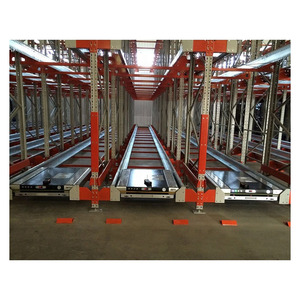
Automated Warehouse Racking System Radio Drive-in Shuttle Rack System With Pallet Runner
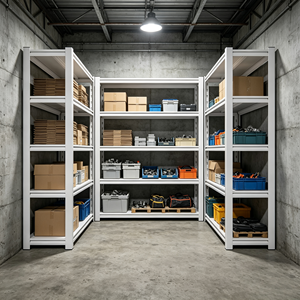
Light Duty Boltless Steel Storage Shelving Unit, Anti-Corrosion Adjustable Industrial Metal Rack For Warehouse Tool Storage
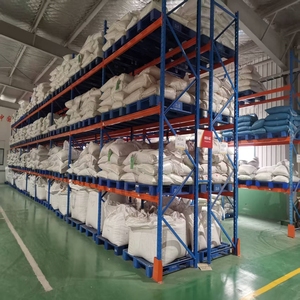
Industrial Storage Racks Custom 5 Layer US Teardrop Pallet Rack Conventional Pallet Racking for Warehouse Cold Room Storage
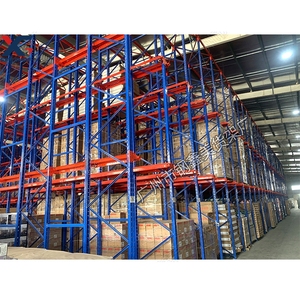
Boltless Metal Steel Stacked Parking System Refrigerated Warehouse Drive-in Rack Double Pallet Rack System
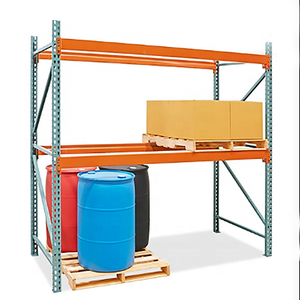
Drum Barrel and Chemical Selective Pallet Rack System Heavy Duty Industrial Warehouse Storage Rack for Oil Industry Safe Storage
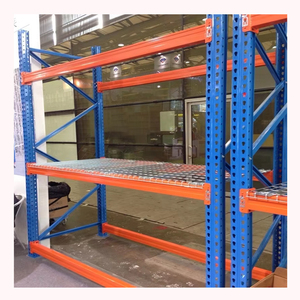
Heavy Duty Warehouse Storage Industrial Shelf Rack Metal Shelving with Steel Deck to Storage
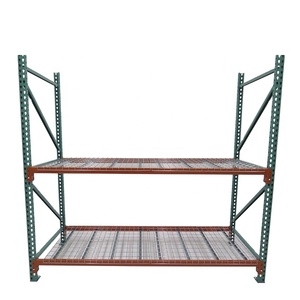
Heavy Duty CE Certificate Warehouse Storage Heavy Duty Pallet Rack US Teardrop Pallet Racking Industrial Racks
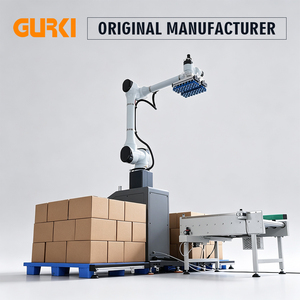
GURKI CE Certified and 1Years Warranty 30KG Payload Automatic Carton Robot Palletizer for Warehouses
Engineering Sub-Zero Structural Racking Integrity (-30°C to -40°C)
Why conventional structural steel fails under freezing temperatures and how micro-alloyed low-temperature steel prevents catastrophe.
Ductile-to-Brittle Transition (DBTT)
Standard structural carbon steel (like standard Q235B or S235JR) undergoes a severe reduction in notch toughness as temperatures drop below 0°C. At -25°C to -30°C, ordinary steel loses impact resilience, transforming ductile structural yield behavior into sudden, catastrophic brittle fracture. We utilize specialized low-alloy micro-steels (e.g., Q355D/E or S355J2) tested via Charpy V-Notch impact testing to maintain structural ductility at -40°C.
CE Mark & EN 15512 Compliance
All freezer pallet racking systems manufactured by Remprack undergo rigorous limit state structural calculations in strict compliance with European Norm EN 15512 (Steel static storage systems - Adjustable pallet racking systems - Principles for structural design) and FEM 10.2.02. Our CE certification verifies that column profiles, beam connectors, and baseplates safely accommodate thermal expansion contraction, dynamic forklift loads, and seismic shear forces.
Anti-Condensation & Coating Defense
Humidity transition between ambient dock doors and sub-zero storage rooms causes severe moisture condensation and ice accretion. Standard liquid paint peels off under freeze-thaw cycles. Remprack utilizes thermosetting electrostatic epoxy-polyester powder coating cured at 200°C or hot-dip galvanizing complying with ISO 1461, ensuring 100% rust prevention and zero coating delamination inside blast freezers.
Engineering Insight: Calculating Thermal Contraction in Deep-Freeze Vaults
In a 100-meter-long cold storage rack installation dropped from +20°C ambient assembly temperature to -30°C operational freezer temperature (ΔT = 50°C), linear steel contraction follows ΔL = α · L · ΔT. With structural steel's thermal expansion coefficient α ≈ 12 × 10⁻⁶ /°C, the entire rack run contracts by approximately 60 millimeters. Without dynamic floating beam connectors, oversized anchor slots, and thermal break baseplates, this shrinkage induces massive internal stress, causing anchor shear failure and frame distortion.
Sub-Zero Pallet Storage Architectural Comparison Matrix
Selecting the optimum structural racking configuration for cold chain logistics facilities.
| Racking System Type | Cubic Volumetric Density | Direct Pallet Selectivity | Operating Temp Range | Cold Air Circulation Index | Energy Cost / Pallet |
|---|---|---|---|---|---|
| Radio Shuttle Racking | 85% - 90% (Ultra High) | Lane Dependent (FIFO/LIFO) | -30°C to +45°C | High (Optimized Air Channels) | Lowest (Minimal Volume Wasted) |
| Drive-In Pallet Racking | 75% - 80% (High) | Low (Strict LIFO) | -25°C to +40°C | Restricted (Dense Block Storage) | Low |
| Motorized Mobile Racking | 85% - 95% (Maximum) | 100% (Single Moving Aisle) | -30°C to +40°C | Moderate (Closed Blocks) | Very Low |
| Selective Teardrop Racking | 40% - 50% (Low) | 100% Immediate Access | -40°C to +50°C | Excellent (Wide Aisles) | High (Wasted Aisles Cooled) |
| ASRS Pallet Clad-Rack | 90% - 98% (Automated) | Automated 100% Access | -35°C to +40°C | Custom Engineered | Lowest Per Unit Throughput |
Future Procurement Trends in Cold Chain Storage (2025–2030)
How energy costs, labor shortages, and ESG regulations are reshaping global cold storage infrastructure purchasing decisions.
1. Transition to "Dark" Automated Freezers
Operating sub-zero vaults at -25°C with human forklift operators incurs massive thermal loss through dock doors and high occupational health risks. Future procurement heavily shifts toward fully automated Radio Shuttle runners, 4-Way Pallet Shuttles, and automated carton robot palletizers. Automated "dark" cold rooms eliminate lights, reduce human heat dissipation, allow narrower aisles, and cut electricity overhead by up to 40%.
2. Clad-Rack Warehouse Architecture
Rather than erecting a building envelope and placing racking inside, modern cold chain logistics providers procure integrated Clad-Rack (Rack-Supported) buildings. The heavy-duty steel rack frame serves as the structural load-bearing skeleton supporting wall insulation panels and roof trusses. This architecture reduces construction timelines by 30%, eliminates redundant structural columns, and maximizes storage per square meter.
3. Ultra-Low Carbon Steel & Circular ESG Sourcing
Multi-national food manufacturers and 3PL cold storage operators now mandate Scope 3 supply chain carbon accounting. Procurement teams actively seek CE-certified racking factories utilizing Electric Arc Furnace (EAF) recycled steel, eco-friendly zinc-phosphate pretreatment, and zero-VOC powder finishes to fulfill corporate ESG benchmarks.
Industry Development Trends & Sub-Zero Storage Innovations
Leading-edge metallurgical, automated, and thermal break engineering engineered by Remprack's R&D department.
High-Yield Cold-Formed Steel Profiles
By leveraging high-tensile micro-alloy steel grades, our cold-roll forming lines produce upright posts with multi-fold rib profiles. These ribs increase section modulus and torsional rigidity while reducing steel mass. This structural optimization lowers thermal mass inside the freezer room, requiring less cooling energy to chill structural components.
Self-Heating Sub-Zero Battery Shuttle Tech
Conventional shuttle batteries lose up to 60% capacity in -30°C cold rooms. The latest generation of automated radio pallet runners feature self-heating Lithium Iron Phosphate (LiFePO4) energy cells, internal heat blankets, and IP65-rated moisture seal enclosures, allowing continuous 24/7 operation across freeze-thaw cycles without performance degradation.
Thermal Bridge Isolation Pads (TBIP)
Direct contact between steel baseplates and concrete floor slabs creates thermal bridging, causing frost heave and slab cracking under column footings. Our innovative high-density polymer isolation pads beneath heavy-duty baseplates act as a thermal barrier while maintaining 100% structural compression resistance under high column loads.
Why Global Buyers Choose Remprack Storage Solutions
Combining two decades of specialized manufacturing expertise, rigorous international certifications, and end-to-end technical support.
40,000 m² Advanced Production Base
Operating since 2006 in Nanjing, China, our state-of-the-art facility features automated continuous roll-forming production lines, robotic laser welding stations, and fully automated electrostatic powder coating lines capable of processing over 50,000 tons of structural steel annually.
Strict International Certification Standard
Our entire management system and structural racking products hold authentic certifications for CE (EN 15512), ISO 9001 quality management, ISO 14001 environmental management, and TUV Rheinland load testing verification, giving global distributors and end users total confidence.
Custom OEM / ODM Technical Engineering
Supported by a technical R&D team with over 100 patented structural technologies, we provide bespoke OEM/ODM manufacturing. We customize beam section profiles, teardrop vs. structural bolt patterns, color finishes, and special load configurations according to your floor plan (CAD/PDF).
10-Year Structural Product Warranty
We stand firmly behind our structural design integrity. Every standard installation operated within specified load limits carries a comprehensive 10-year product warranty, supported by clear load signs, installation manual packages, and global remote engineering guidance.
Freezer Pallet Racking Procurement FAQ
Essential structural, thermal, and compliance answers for cold storage project engineers and procurement managers.
What steel grade is recommended for freezer storage environments (-20°C to -30°C)?
How does CE certification (EN 15512) safeguard cold storage warehouse operations?
Which surface finish is superior for sub-zero rooms: Galvanizing or Powder Coating?
1. Hot-Dip Galvanizing (ISO 1461): Ideal for severe humidity, blast freezers, and wet environments where ice thaw occurs frequently. The zinc coating provides sacrificial cathodic protection, ensuring complete immunity to rust even if scraped by pallets.
2. Thermosetting Epoxy-Polyester Powder Coating: Ideal for stable sub-zero environments (-25°C) with low moisture ingress. Remprack applies an automated multi-stage chemical wash, zinc phosphate pretreatment, and 80–100 micron electrostatic powder coat cured at 200°C to prevent micro-cracking and flaking.
Why is Radio Shuttle Racking preferred over Drive-In Racking for cold storage?
What critical data is required for Remprack to prepare an optimized engineering layout?
• Architectural warehouse drawing (CAD file or dimensioned PDF showing column grids, clear height under sprinklers/evaporators, and dock door locations).
• Pallet specification: Width × Depth × Height (including load) and maximum gross weight per pallet (kg).
• Operating temperature range (°C) and humidity conditions.
• Forklift truck model, maximum lift height, and minimum right-angle turning radius.
• Preferred inventory management protocol (FIFO vs. LIFO) and target SKU throughput.
How does thermal expansion and contraction affect rack installation in freezers?
Does Remprack provide custom OEM branding and color options for distributors?
What is the standard production lead time and export loading process?
Request an Engineered Layout & Structural Quotation
Planning a cold storage upgrade or new freezer warehouse installation? Contact Remprack's senior structural racking engineers today to receive a free CAD layout, load capacity calculation, and factory-direct price proposal within 24 hours.