Featured CE-Certified Racking Systems & Automation Hardware
Precision-engineered high-density storage solutions, automated material handling interfaces, and structural racking frameworks manufactured to EN 15512 and FEM 10.2.02 international compliance standards.
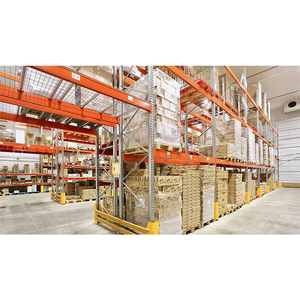
Very Narrow Aisle Storage System Reach Truck Warehouse Solution Space Saving VNA Rack
Inquire Now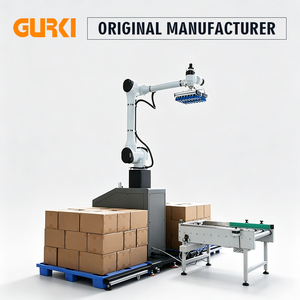
GURKI High Speed Full Automatic Robotic Palletizing Systems Cobot Palletizer
Inquire Now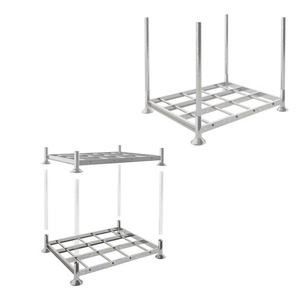
Industrial Detachable Commercial Adjustable Pallet Vertical Stillage Storage Rack
Inquire Now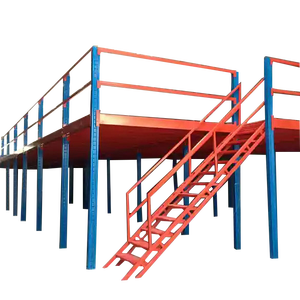
Customized Heavy Load Mezzanine Floor Rack Warehouse Shelf System 2 Layers
Inquire Now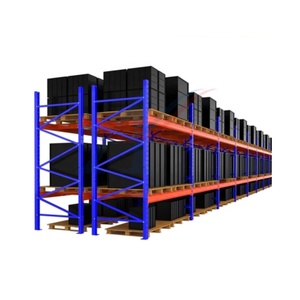
Customized Warehouse Storage Steel Heavy Duty Pallet Rack System 15,000kg Capacity
Inquire Now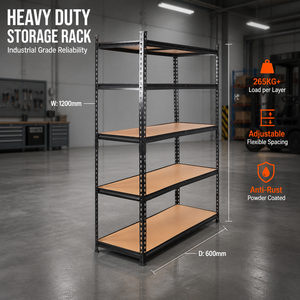
Heavy Duty Steel Shelving Rack Boltless Storage Shelves 5 Tier Adjustable Metal
Inquire Now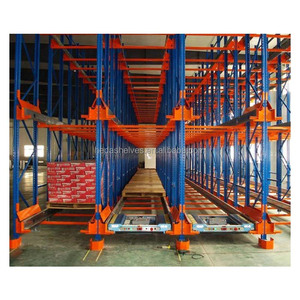
Auto Shuttle Racking System Intelligent Cold Storage Automated Shuttle Rack
Inquire NowEnterprise Manufacturing Infrastructure & Quality Engineering
Founded in 2006 in Nanjing, China, Remprack Storage Solutions Co., Ltd. has established itself as an authoritative global manufacturer of high-density steel warehouse racking, automated storage and retrieval systems (AS/RS), multi-tier mezzanine floors, and structural cantilever frameworks. Spanning a state-of-the-art 40,000 m² automated production facility staffed by over 300 skilled structural technicians and mechanical engineers, Remprack operates with a singular focus: delivering structural integrity, seismic safety compliance, and maximum spatial efficiency for complex enterprise logistics.
Over the past two decades, our factory has successfully executed more than 2,000 turnkey intralogistics projects across 85 countries spanning Europe, the Americas, Southeast Asia, Australia, and the Middle East. As a certified OEM and ODM supplier to tier-1 system integrators, automated logistics engineers, and multinational supply chain operations, Remprack enforces a zero-defect production methodology backed by rigorous laboratory material validation.
Stringent International Certifications
Fully compliant with EU CE Machinery Directive 2006/42/EC, ISO 9001:2015 Quality Management Systems, ISO 14001 Environmental Standards, and TÜV Rheinland structural load certification protocols.
Advanced Roll-Forming Technology
Equipped with continuous automated cold-roll forming lines, robotic laser welding cells, and automated electrostatic powder-coating lines delivering durable, corrosion-resistant finishes (60–80 μm thickness).
10-Year Structural Product Warranty
Every beam, upright profile, dynamic shuttle rail, and connector bracket is backed by an industry-leading 10-year factory structural guarantee under engineered rated load capacities.
Strategic Procurement Trends in Automated Racking (2025–2030 Insights)
The global intralogistics landscape is experiencing a paradigm shift driven by escalating urban industrial real estate costs, labor availability challenges, and stringent corporate ESG commitments. Supply chain directors and procurement executives are moving away from traditional static racking solutions toward intelligent, high-density, and energy-efficient automated storage architectures. Key procurement trends shaping the future of industrial storage include:
1. Rapid Shift from Semi-Automated to 4-Way Radio Shuttle Matrix Systems
While traditional 2-way radio shuttles established high-density deep-lane storage, procurement data indicates a 42% annual surge in demand for 4-Way Automated Shuttle Systems. 4-Way shuttles navigate along longitudinal storage tracks and transverse transfer aisles autonomously, enabling dynamic lane switching without requiring dedicated vertical lifts for every level. This modular architecture decreases equipment CAPEX while boosting warehouse pallet throughput by up to 300% compared to traditional reach-truck operations.
2. Cold Chain Optimization & Sub-Zero Automated Storage
With global cold chain logistics expanding rapidly in food, beverage, and pharmaceuticals, operating costs in temperature-controlled facilities (-25°C to -30°C) are exceptionally high. High-density dynamic automated racking—such as automated pallet shuttles and mobile rack platforms—maximizes cubic meter usage by up to 85%, significantly lowering refrigeration energy usage per pallet position.
3. ESG Alignment: Low-Carbon Steel & Eco-Friendly Powder Coatings
Enterprise procurement teams in Europe and North America now demand documented environmental footprint verification. Manufacturers are utilizing high-tensile Q235B and Q355B cold-rolled steel sourced from certified carbon-conscious mills, paired with zero-VOC, heavy-metal-free epoxy-polyester powder coatings that comply with EU REACH and RoHS environmental directives.
4. Structural Resilience & Seismic Finite Element Analysis (FEA)
Modern warehouse design mandates advanced structural simulations. Factory engineers employ ANSYS Finite Element Analysis (FEA) to model complex stress concentrations, dynamic forklift impact loads, and seismic acceleration forces ($a_g$), guaranteeing structural stability in seismic zone 4 environments according to EN 16681 standards.
Supply Chain Director Insight: Total Cost of Ownership (TCO) vs. Initial CAPEX
When procuring enterprise pallet racking, purchasing managers often evaluate supplier bids solely on price-per-tonne of steel. However, structural racking designed with optimized cold-rolled profile geometry (e.g., 11-fold to 13-fold upright bending profiles) provides higher buckling resistance with less steel weight. This reduces shipping freight, installation labor, and floor slab loading while ensuring long-term operational durability.
Engineering Innovation & Structural Development Trends
Automated racking factories are incorporating advanced structural mechanics and real-time monitoring technology into steel storage frameworks. Below is an engineering overview comparing traditional static racking against modern automated intralogistics structures:
| Storage System Type | Volumetric Space Utilization | Pallet Selectivity | Operational Throughput | Automation Compatibility | Target Industry Applications |
|---|---|---|---|---|---|
| Selective Pallet Racking | 40% – 50% | 100% Direct Access | Moderate (Forklift dependent) | Low (Manual/Reach Truck) | General Logistics, E-commerce, FMCG Hubs |
| Very Narrow Aisle (VNA) | 65% – 75% | 100% Direct Access | High (Guided Turret Trucks) | Medium (Semi-Guided AGV) | High-Bay Distribution, Pharmaceutical Warehouses |
| Radio Shuttle Racking | 80% – 88% | Filo / Fifo Lane-Based | High (Automated Shuttle) | High (Semi-Automated) | Cold Storage, Food & Beverage Bulk Warehousing |
| Automated AS/RS Crane System | 85% – 95% | Automated Dynamic Access | Ultra-High (24/7 Continuous) | 100% Fully Automated (WMS/WCS) | Smart Factories, Automotive, High-Bay Intralogistics |
| Multi-Tier Mezzanine Platform | 200% Floor Expansion | Manual / Tote Access | High (Manual Piece Picking) | Medium (Conveyor/AMR Integration) | E-commerce Sortation, Spare Parts, Garment Picking |
Key Manufacturing & Structural Innovations:
- High-Tensile Cold-Rolled Steel Formulations: Utilization of structural grade steels such as S355GD and S420GD for upright columns, featuring structural yield strengths exceeding 420 MPa to sustain extreme multi-tier vertical axial loading.
- Self-Locking Beam Connector Hooks: Engineered multi-claw connector brackets fitted with mechanical safety locks (minimum 0.5 kN pull-out resistance) to prevent accidental beam dislodgement from high-speed forklift maneuvers.
- Precision Guide-Rail Tolerances for Robotics: Sub-millimeter laser alignment standards (under 1.5mm variance over 50 meters) on shuttle track profiles to ensure jam-free automated shuttle operation at velocities up to 1.5 m/s.
- Integrated Dynamic Safety Accessories: Heavy-duty column protectors, frame end guards, mesh decking, and aisle anti-collapse safety netting engineered to dissipate severe forklift impact energies.
Comprehensive Procurement FAQ & Technical Buyer's Guide
Essential technical, compliance, and engineering queries answered by Remprack senior storage system engineers to assist enterprise procurement teams in selecting the right supplier.
What preliminary technical data does the factory require to design an optimal racking system layout?
To prepare an accurate 2D/3D CAD layout, structural load calculation, and quotation, our engineering team requires:
- Detailed warehouse floor plan drawings (CAD or PDF format) indicating clear headroom beneath roof trusses, sprinkler pipes, and lighting fixtures, alongside column grid locations.
- Pallet dimensions including total load height, width, depth, and maximum unit weight (kg per pallet).
- Type of material handling equipment (e.g., standard counterbalanced forklift, reach truck, VNA turret truck, or AGV) and its corresponding maximum lift height and aisle turnaround radius.
- Required stock turnover rotation (FIFO vs. LIFO) and daily throughput volume targets.
- Local seismic parameters, slab concrete thickness/strength (e.g., C25/C30 grade), and environmental operating temperature range.
How do CE Certification and EN Standards protect procurement teams against structural failures?
CE marking under the European Standard EN 15512 (Steel static storage systems – Adjustable pallet racking systems – Principles for structural design) verifies that the racking manufacturer adheres to validated mathematical modeling, physical destructive testing of components, and strict safety factors. It guarantees that upright columns, beam welds, baseplates, and floor anchor bolts are rated to withstand designated static and dynamic impact loads without cataclysmic structural failure or excessive beam deflection (exceeding L/200).
Does Remprack support custom OEM/ODM profile manufacturing and private labeling?
Yes. As an established OEM/ODM factory, Remprack regularly produces customized upright pitch patterns (such as 50mm, 75mm, and 76.2mm teardrop profiles), customized beam steps, unique RAL color powder coatings, and branded packaging for industrial distributors, logistics system integrators, and engineering EPC contractors globally.
What surface treatments are recommended for outdoor or cold storage environments?
For indoor dry warehouses, electro-statically applied epoxy-polyester powder coating (60–80 μm) provides superior scratch resistance and aesthetic longevity. For outdoor storage yards, high-humidity processing facilities, or corrosive chemical environments, hot-dip galvanization (HDG) compliant with ISO 1461 is mandatory, offering zinc coating thicknesses of 65–85 μm for multi-decade corrosion resistance. For cold storage (-25°C), low-temperature-rated powder formulations prevent coating embrittlement.
How does an automated radio shuttle system compare to traditional drive-in racking?
While drive-in racking provides high storage density, it requires forklifts to physically drive inside deep storage channels. This significantly increases rack damage rates, slows down cycle times, and limits storage depth to 6–8 pallets. In contrast, dynamic Radio Shuttle Racking utilizes self-propelled shuttle carts to traverse inside deep channels (up to 40+ pallets deep). Forklifts remain outside in main transport aisles, reducing pallet handling times by 50% and eliminating structural frame impact risks.
What is the expected factory production lead time and international delivery protocol?
Standard manufacturing lead time for standard pallet racking projects ranges between 14 to 21 business days upon technical CAD drawing approval. For complex custom automated AS/RS or multi-tier mezzanine structural systems, production ranges from 30 to 40 days. All steel components are securely bundled, edge-protected, and packed using container-optimized steel saddles to prevent transit damage during ocean freight.
Optimize Your Warehouse Footprint & Request a Custom Layout Design
Consult with our senior intralogistics structural engineers today. Receive a free engineering design analysis, 3D CAD layout proposal, and factory-direct competitive quotation within 24 hours.