0%

Very Narrow Aisle Racking helps warehouses store more pallet positions within a fixed footprint. Its narrow lanes can leave more floor area for inventory, but they also demand careful equipment and layout choices. Aisle width, pallet dimensions, floor condition, and truck turning clearance all matter. A small mismatch can slow picking or create awkward movements at the rack ends.

This guide examines the top types of Very Narrow Aisle Racking, including systems served by man-up and man-down trucks. Each option suits different operating patterns. For example, a man-up truck lifts its operator with the load, which can support accurate picking at height. A man-down truck keeps the operator at floor level and may suit pallet handling instead. Neither choice is automatically better. It depends on throughput, product access, building height, and operator workflow.

The aisle can look impressively slim. The full operation still needs room to work. Before selecting a system, warehouse teams should check load ratings, clearances, floor flatness, and the truck manufacturer’s specifications. A site assessment can reveal constraints that a plan drawing misses. One limitation deserves attention: no verified expert quotation or source material was provided for this introduction. Rather than invent a named specialist’s words, this guide focuses on practical selection factors that readers can verify with qualified rack and equipment providers.
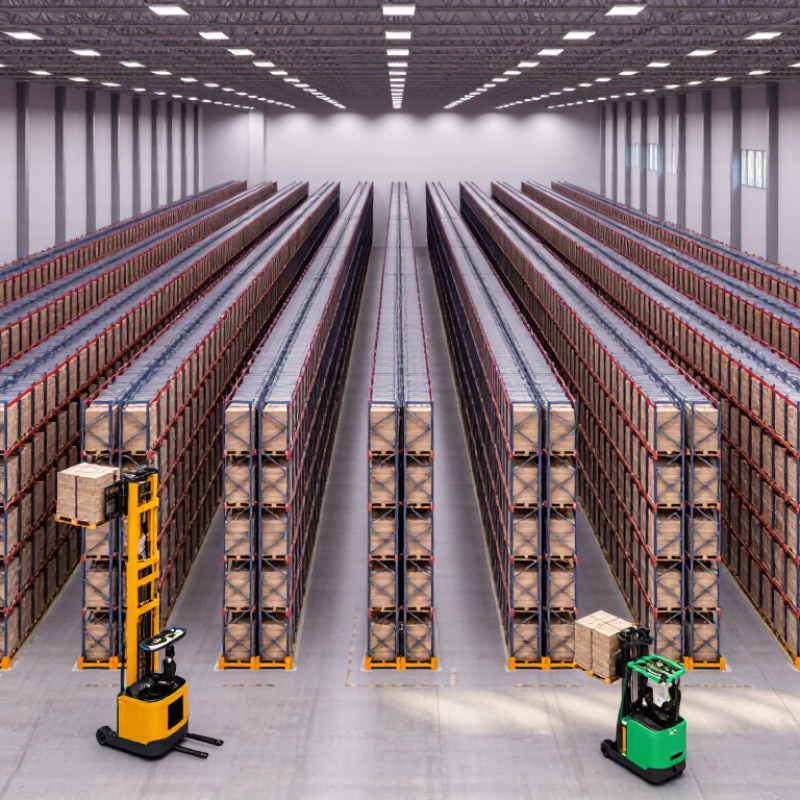
What Are the Top Types of Very Narrow Aisle Racking?

What Defines Very Narrow Aisle Racking?

Very narrow aisle (VNA) racking is defined less by a special shelf shape than by the tight operating space between storage rows. Aisles are commonly around 1.5 to 2 metres wide, though the practical figure depends on the truck, pallet size, and handling method. That distinction matters: a layout is not VNA just because the rack rows look close together. The truck must still travel, lift, and retrieve pallets without striking uprights. Space is the point.

VNA systems often use tall selective racks with turret or articulated trucks, sometimes guided by floor rails or wire. These trucks work in narrow travel lanes while placing loads at height, creating more storage positions without adding floor area. But aisle width must match the equipment’s turning envelope and the site’s clearances. Check pallet overhang, beam levels, floor flatness, mast height, and sprinkler clearance during design. Small differences matter. A leaning pallet can turn a safe gap into a scrape.

Published aisle figures are starting points, not guarantees. Actual requirements vary with the truck and warehouse conditions, so the layout should be checked against measured loads, lift heights, and daily routines. Denser storage can also mean less flexibility for mixed equipment or awkward loads. It is easy to focus on capacity and overlook handling.

Single-Deep Selective Very Narrow Aisle Racking

Single-deep selective very narrow aisle racking stores one pallet deep on each beam level, leaving every pallet directly accessible. This suits warehouses with many product lines and frequent picking, where operators need to reach a specific load without moving another pallet. Aisles can be designed narrower than conventional forklift aisles, often around 5–6 feet, but the required clearance depends on the truck, pallet size, load overhang, and floor condition. Measure with the actual handling equipment in mind.

The design can increase pallet positions within an existing building, but it does not automatically improve throughput. Aisle-end congestion can offset the space gain, and specialized trucks may add cost and require careful operator training.

MHI’s 2024 Annual Industry Report found that 55% of surveyed supply chain professionals planned to increase investment in supply chain innovation. That figure is not a racking performance measure; it does suggest that warehouse decisions increasingly need to fit wider operational plans.

Access stays simple. Before specifying the layout, test turning clearances and picking routes on the floor. Small details matter, and a tidy drawing can still miss a bottleneck at shift change.

Double-Deep Very Narrow Aisle Racking

What Are the Top Types of Very Narrow Aisle Racking?

Double-Deep Very Narrow Aisle Racking

Double-deep very narrow aisle racking stores pallets two positions deep on each side of a narrow aisle. It combines high-density storage with access from specialized narrow-aisle equipment. The rear pallet sits behind the front one, so direct access to every load is limited. This arrangement suits facilities that hold several pallets of the same product and can manage inventory by position.

Tips: Check pallet dimensions, load weights, and forklift reach before choosing this layout. Keep clear labels on both pallet positions. A small mismatch in pallet size can make rear loads difficult to retrieve.

This system can use floor space more efficiently than single-deep layouts, but it is not ideal for every operation. Operators may need to move a front pallet before reaching a rear one. That adds handling time and can complicate stock rotation when product batches differ. Aisle width, rack height, floor condition, and equipment turning space all need careful review. On a drawing, the capacity gain may seem obvious; on a busy shift, congestion can tell a different story. Trialing a representative aisle and reviewing picking patterns can reveal issues early.

High-Bay Very Narrow Aisle Racking

High-Bay Very Narrow Aisle Racking

High-bay very narrow aisle racking pairs tall storage frames with tightly spaced aisles. It can add pallet positions without expanding the building footprint. Actual aisle width depends on trucks, pallet dimensions, and site conditions. At height, small errors matter. Rack beams, floor flatness, load sizes, and truck guidance must work together. A pallet that clears easily at floor level may be harder to place near the top. Operators also need clear sightlines and reliable lighting.

Tips: Measure the largest pallet, including any overhang, before setting aisle widths. Confirm truck lifting and turning requirements. Check floor flatness and rack protection, too. Small gaps count.

This system can suit facilities with steady pallet flows and consistent storage practices. Guided turret or articulated trucks may be needed, making maintenance and operator training important. Keep fast-moving goods accessible where possible, and label storage locations clearly. A dense layout can look efficient on paper yet feel cramped during busy shifts. Review actual traffic patterns after installation; the first plan may need adjustment. Confirm safety clearances and fire-protection needs with qualified site professionals.

How to Choose the Right Very Narrow Aisle Racking Type

Choosing very narrow aisle racking starts with the work happening around it, not just the aisle width. Selective VNA racking suits warehouses that need direct access to many pallet locations. Turret trucks can work in narrow aisles, but they need compatible guidance and a floor that is sufficiently level. Check the truck’s turning requirements, lift height, and load dimensions before fixing a layout. Small measurement errors can become daily delays.

Double-deep layouts store more pallets in the same footprint, but reduce access to some loads. They work best when stock rotation and retrieval patterns support deeper storage. Consider how many different products need immediate access, and how often operators retrieve individual pallets. Measure clear height, columns, sprinklers, and staging areas too. A layout that fits on paper may feel cramped beside a busy dock.

Ask suppliers or an independent racking professional to review site measurements and equipment specifications. Compare usable pallet capacity with realistic travel and handling times, not aisle width alone. Test the plan against peak-season volumes. And leave room for change. Product sizes, order profiles, or handling equipment may shift, so a little flexibility can be worth more than squeezing in one extra row.

What Are the Top Types of Very Narrow Aisle Racking? - How to Choose the Right Very Narrow Aisle Racking Type

Racking Type Typical Aisle Arrangement Pallet Access Key Advantages Considerations Best Suited To
Single-Deep VNA Selective One pallet deep on each rack face. Aisles are often about 1.5–1.8 m, depending on the truck, load, and site layout. Direct access to every pallet location. High selectivity, straightforward stock rotation, and relatively simple inventory control. Requires specialized VNA trucks and careful aisle, floor, and guidance-system planning. Storage density is lower than multi-deep alternatives. Warehouses with many SKUs, frequent pallet access, and a need for direct access to individual loads.
Double-Deep VNA Two pallets deep per rack position, using compatible reach or turret equipment. Aisle dimensions vary with the truck and load-handling method. The front pallet must be moved to reach the pallet behind it. More pallet positions per unit of floor space than single-deep selective racking. Reduced selectivity, compatible truck requirements, and a need to manage pallet depth and stock rotation carefully. Operations with multiple pallets per SKU and a priority on increasing storage density.
VNA Selective with Rail Guidance Usually a single-deep selective layout. Guide rails are installed along the aisle to help constrain the truck’s travel path. Direct access when paired with single-deep rack; access depends on the selected rack configuration. Provides a defined travel path and can support accurate truck operation in narrow aisles. Rails need space and protection; aisle and truck compatibility should be confirmed before installation. Facilities seeking a physically guided truck path and a conventional VNA selective layout.
VNA Selective with Wire Guidance Usually a single-deep selective layout. An embedded wire provides a signal that guides compatible trucks along the aisle. Direct access when paired with single-deep rack; guidance method does not itself change pallet access. No guide rails protrude into the aisle, leaving the aisle edges unobstructed. Requires compatible trucks and floor installation. The guidance system and floor condition need to be considered in the design. New-build or suitably planned facilities that prefer electronic aisle guidance without floor-mounted rails.
Shuttle-Assisted Multi-Deep Storage Pallets are stored several positions deep in lanes served by a shuttle. The operating aisle width is set by the serving truck and layout; this system is not inherently VNA. Access is lane-based; pallets within a lane are not all directly accessible from the aisle. Can provide high storage density and reduce forklift travel into storage lanes. Requires shuttle equipment, compatible pallets, and planned lane-level inventory. Selectivity is lower than single-deep racking. High-volume, lower-SKU operations storing several pallets of the same product.

Aisle dimensions are indicative only, not guaranteed design values. Confirm the required clearance with the truck supplier and a qualified rack designer using the actual pallet size, load dimensions, handling equipment, floor tolerances, and local safety requirements.

FAQS

What defines very narrow aisle racking?

It is defined by tight operating lanes, often around 1.5 to 2 metres wide. Space is the point. The truck must still move and retrieve pallets safely.

Is a rack system VNA just because its rows look close together?

No. Aisle width must suit the truck, pallet size, and handling method. A close-looking layout may still leave too little room for safe operation.

What equipment is commonly used in VNA warehouses?

Turret or articulated trucks are common. Some systems use floor rails or wire guidance. The equipment must match the aisle and lifting requirements.

What should be checked before setting aisle widths?

Check the truck’s turning space, pallet overhang, beam levels, floor flatness, mast height, and sprinkler clearance. Small differences matter.

How does double-deep VNA racking store pallets?

It places two pallet positions deep on each side of a narrow aisle. A rear pallet sits behind a front pallet.

What operations suit double-deep racking?

It can suit sites holding several pallets of the same product. Clear labels for both positions help operators locate loads.

What are the trade-offs of double-deep storage?

A front pallet may need to be moved before reaching a rear one. That adds handling time and can complicate stock rotation.

How can a warehouse test a proposed layout?

Trial a representative aisle and review actual picking patterns. Drawings can make capacity look convincing, but busy shifts may reveal congestion. I might still overlook a routine that matters.

Conclusion

Very Narrow Aisle Racking is a storage system designed to make better use of warehouse floor space by reducing the width of access aisles while keeping goods organized and accessible. The right configuration depends on how items are stored and retrieved. Single-deep selective racking offers direct access to each pallet, making it a practical choice when product variety and quick picking matter. Double-deep racking places pallets two positions deep, increasing storage density but requiring suitable handling equipment and more planning for stock access.

For facilities with high ceilings, high-bay Very Narrow Aisle Racking can use vertical space to expand capacity. Choosing between these options means weighing storage density against selectivity, inventory turnover, building height, and equipment requirements. A careful assessment of available space and daily operations helps identify a system that supports efficient movement of goods while making effective use of the warehouse.

Vivian

Vivian

Vivian is a professional marketing specialist dedicated to helping businesses understand products, markets, and practical solutions through clear, reliable, and engaging content. With a strong knowledge of the company’s product portfolio, industry applications, and customer needs, Vivian regularly......