Choosing the right Selective Pallet Racking supplier affects storage capacity, worker safety, operating speed, and future expansion. This guide examines ten leading suppliers worldwide, focusing on practical performance rather than brand visibility alone. It considers rack strength, engineering support, customization, installation quality, inspection services, and regional availability.
As warehouse expert Dr. James A. Tompkins has stated, “The warehouse is the heart of the supply chain.” His point remains relevant. A rack system may look simple, yet every beam, frame, aisle, and connector influences daily operations. The best suppliers understand product weights, pallet dimensions, forklift movement, ceiling height, and local operating conditions. They also provide clear load ratings and useful technical documentation.
Price can mislead.
A cheaper quotation may exclude installation, seismic design, maintenance, or future modifications. That weakness often appears later. This ranking therefore looks beyond initial cost. It also considers project experience, manufacturing consistency, delivery capability, and customer support. Some suppliers excel globally. Others perform better in specific regions or industries. That distinction matters.
The comparison is not perfect. Supplier performance can vary by country, distributor, and project team. Published information may also change. Readers should verify certifications, references, warranty terms, and engineering calculations before purchasing. Still, these ten companies offer a practical starting point for warehouse owners, logistics managers, and procurement professionals seeking reliable Selective Pallet Racking solutions.
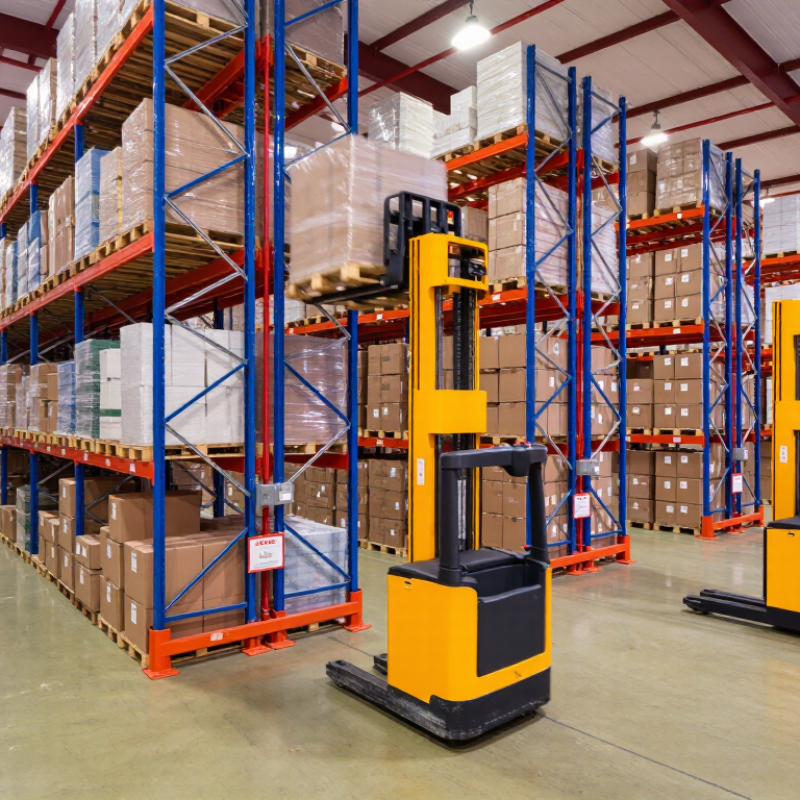
Definition and Key Features of Selective Pallet Racking
Selective pallet racking is an adjustable storage system designed for direct access to every pallet. It uses upright frames, horizontal beams, and pallet supports. Forklifts load pallets from the aisle side, without moving other goods first. That is the defining advantage.
Access stays simple.
This layout suits warehouses with many product types, changing inventory levels, or frequent picking activity. Beam heights can be adjusted for different pallet sizes, while aisle widths should match the selected forklift and operating method. Real warehouse assessments also examine floor strength, ceiling clearance, fire protection, and traffic flow. These details often influence capacity more than the rack itself.
Safety requires careful engineering. Each bay needs a visible load rating, secure anchoring, and protection against forklift impact. Regular inspections should check bent uprights, loose components, missing pins, and uneven loading. Local building and seismic requirements may also affect the design. A common mistake is choosing the highest storage capacity without measuring daily access needs. It can reduce movement efficiency and create congestion. Selective racking offers excellent flexibility, but it uses more floor space than denser systems. The best configuration depends on pallet dimensions, turnover rate, handling equipment, and the warehouse’s actual working habits.
Top 10 Selective Pallet Racking Suppliers Worldwide? - Definition and Key Features of Selective Pallet Racking
| Rank | Anonymous Supplier Profile | Typical Geographic Coverage | Typical Upright Height | Typical Beam Length | Typical Unit Load Capacity | Common Pallet Positions | Key Product Features | Common Compliance References | Typical Application Strength |
|---|---|---|---|---|---|---|---|---|---|
| 1 | Supplier Profile A | Global project delivery | 2,000–12,000 mm | 1,800–3,900 mm | 500–5,000 kg per pallet | 2–6 levels | Adjustable beams High-density layouts Seismic options | EN 15512; FEM design practices; local building regulations | Large distribution centers and multi-site warehouse programs |
| 2 | Supplier Profile B | North America and international exports | 2,400–13,000 mm | 1,830–3,660 mm | 450–4,500 kg per pallet | 2–7 levels | Teardrop-style connections Wire decking Guard protection | RMI MH16.1; OSHA workplace requirements; local seismic codes | General warehousing, retail distribution, and industrial storage |
| 3 | Supplier Profile C | Europe, Middle East, and Africa | 2,000–11,000 mm | 1,850–3,600 mm | 500–4,000 kg per pallet | 2–6 levels | Bolted frames Load signage Back-to-back rows | EN 15512; EN 15629; EN 15635 operational guidance | FMCG, spare parts, and mixed-SKU pallet storage |
| 4 | Supplier Profile D | Asia-Pacific and export markets | 2,000–10,000 mm | 1,800–3,600 mm | 500–3,500 kg per pallet | 2–6 levels | Roll-formed frames Adjustable levels Cost-efficient components | AS 4084 where applicable; EN-based calculations; local standards | Manufacturing plants and regional logistics warehouses |
| 5 | Supplier Profile E | Latin America and international projects | 2,000–9,000 mm | 1,800–3,300 mm | 400–3,000 kg per pallet | 2–5 levels | Starter and add-on bays Pallet supports Column guards | Applicable national codes; EN or RMI-based engineering where specified | Mid-sized warehouses and phased capacity expansion |
| 6 | Supplier Profile F | Europe and North Africa | 2,000–12,000 mm | 1,800–3,900 mm | 500–4,500 kg per pallet | 2–7 levels | Cold-store suitability Corrosion protection Aisle optimization | EN 15512; EN 15635; temperature-specific material requirements | Cold storage, food logistics, and temperature-controlled operations |
| 7 | Supplier Profile G | North America and selected overseas markets | 2,400–12,000 mm | 1,830–3,660 mm | 450–5,000 kg per pallet | 2–7 levels | Carton-flow integration Pick modules Impact protection | RMI MH16.1; OSHA requirements; project-specific engineering | E-commerce fulfillment and high-SKU distribution |
| 8 | Supplier Profile H | Australia, New Zealand, and Asia-Pacific | 2,000–10,000 mm | 1,800–3,600 mm | 500–4,000 kg per pallet | 2–6 levels | Seismic engineering Mesh decking Forklift protection | AS 4084; local seismic and structural requirements | Industrial facilities and regions with elevated seismic considerations |
| 9 | Supplier Profile I | Middle East, Africa, and South Asia | 2,000–12,000 mm | 1,800–3,900 mm | 500–4,500 kg per pallet | 2–6 levels | High-temperature options Powder coating On-site installation | EN 15512 or local structural codes; project-specific safety requirements | Third-party logistics, construction materials, and bulk goods |
| 10 | Supplier Profile J | Regional suppliers with export capability | 2,000–8,000 mm | 1,800–3,300 mm | 400–2,500 kg per pallet | 2–5 levels | Standard components Fast lead times Small-project flexibility | Applicable national standards and verified engineering calculations | Small warehouses, workshops, wholesalers, and expansion projects |
FAQS
It is an adjustable storage system with upright frames, beams, and pallet supports. Forklifts can reach every pallet directly. No rearrangement is usually needed.
It suits warehouses with many product types and changing inventory levels. It also supports frequent picking. Access remains simple.
Aisle width should match the forklift and operating method. Measure turning space carefully. A narrow aisle may slow daily movement.
Check floor strength, ceiling clearance, fire protection, and traffic flow. Pallet size and weight also matter. The rack alone does not decide capacity.
Each bay needs a visible load rating and secure anchoring. Add protection around forklift impact areas. Missing pins and bent uprights require prompt attention.
Inspect the racks regularly for bent frames, loose parts, missing pins, and uneven loading. Record each finding. Small damage can become a larger problem.
Request a site assessment, load calculations, aisle measurements, and forklift-based layouts. Provide pallet dimensions, weights, ceiling height, and floor details. Good planning asks questions.
Review material grades, beam connections, column protection, corrosion resistance, and inspection procedures. Request installation drawings and quality records. Impressive paperwork is not proof of performance.
A low quote may exclude transport, installation, replacement parts, or site changes. Confirm lead times in writing. Price is only one piece.
Yes, a small pilot area can reveal congestion, access problems, or weak communication. Speak with operators after several weeks. Doubt is useful here.
Conclusion
This article presents the fundamentals of Selective Pallet Racking, one of the most accessible and adaptable storage systems for warehouses handling varied products and frequent inventory movement. It explains its structure, direct pallet access, adjustable beam levels, space utilization, load capacity, safety considerations, and compatibility with different material-handling equipment. The article also establishes practical criteria for evaluating global suppliers, including product quality, engineering expertise, manufacturing consistency, customization options, installation support, certifications, delivery capability, after-sales service, and overall value.
It then provides profiles of ten leading supplier categories without focusing on brand names, highlighting their typical strengths, product ranges, target markets, and service models. A comparison section examines how suppliers differ in rack design, accessories, technology integration, international coverage, and customer support. Finally, the article offers guidance for selecting the right partner by considering warehouse layout, pallet dimensions, load requirements, expansion plans, budget, local support, and long-term operational goals.