Buying Pallet Racking is not simply a matter of comparing prices, heights, and load capacities. It is a decision about movement, people, products, and future change. A rack that looks strong in a showroom may perform poorly beside a loading dock, under uneven flooring, or beneath careless forklift traffic.
“Good storage design starts with understanding the work, not just the equipment,” says warehouse safety consultant John D. Larkin. That principle deserves attention. Buyers often focus on beam length and upright color, while overlooking aisle width, pallet condition, impact protection, and inspection routines. Small omissions can become expensive weaknesses.
This guide explores 10 Pallet Racking tips every buyer should know before requesting a quotation. It considers load data, warehouse measurements, rack configuration, installation quality, safety accessories, and long-term maintenance. Each detail matters.
Measure twice.
A practical example helps. A warehouse may accept standard pallets today, then add heavier goods next year. Without spare capacity, the original layout becomes restrictive. The cheapest option may create the highest operating cost.
There is no perfect purchase. Product ranges change, buildings shift, and human behavior remains unpredictable. Buyers should question supplier assumptions and request clear engineering information. They should also verify whether the proposed system matches local safety requirements and the manufacturer’s specifications.
Reliable Pallet Racking is not defined by appearance alone. It should support safe access, consistent handling, and sensible expansion. Careful buying takes more time at the beginning, but it can prevent damaged stock, blocked aisles, and difficult redesigns later.
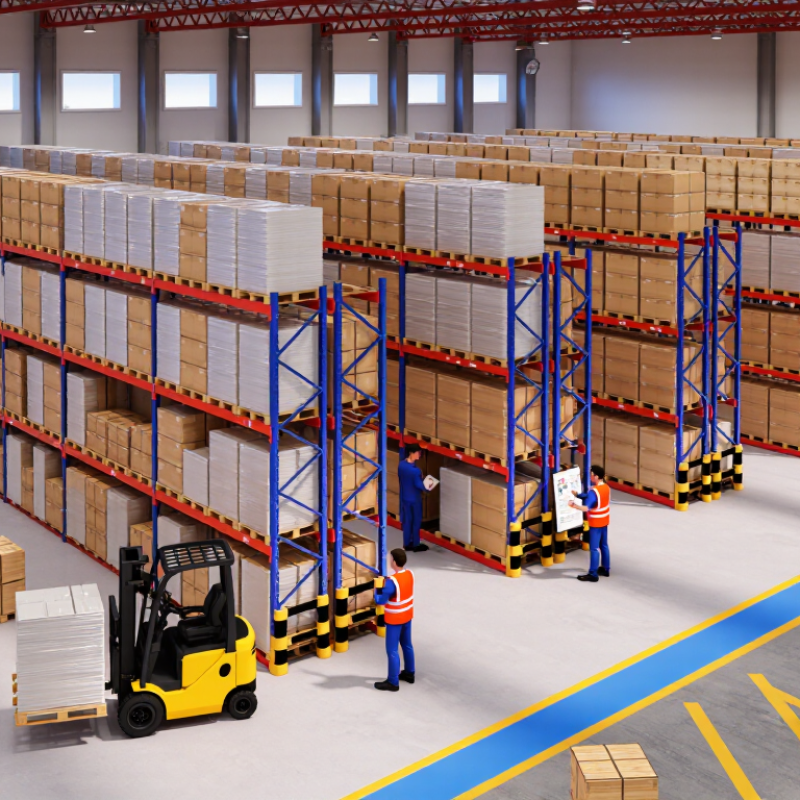
Before choosing pallet racking, define what your operation must store today and six months from now. Record pallet dimensions, weights, quantities, and expected growth. Measure clear ceiling height, aisle space, columns, doors, and sprinkler locations. A rack may fit on paper but fail during daily forklift movement.
Separate fast-moving goods from slow-moving stock. Your handling method also matters. Forklifts, pallet jacks, and manual picking require different aisle widths and access levels. Decide whether you need direct access, higher density, or faster rotation. During one warehouse review, the original plan focused too much on capacity. It ignored picking speed. That mistake would have created unnecessary travel and delays.
Set clear objectives before requesting quotations. These might include storing 240 pallets, reducing retrieval time, or leaving room for future expansion. Define acceptable damage limits and inspection routines as well. Ask a qualified storage professional to verify load ratings, beam levels, floor conditions, and installation requirements. Never estimate structural capacity from appearance alone. It can be misleading. Recheck your assumptions with real inventory data, because product sizes and order patterns often change.
Before choosing pallet racking, measure the warehouse as a working space, not an empty rectangle. Record length, width, ceiling height, column positions, doors, lighting, sprinklers, and emergency access routes. Leave room for forklifts to turn without scraping nearby frames. A laser measure improves accuracy, but verify key dimensions manually. Small errors can create expensive problems.
My first layout looked efficient on paper. It ignored a low beam near the loading door. That mistake reduced usable height and forced several pallets into temporary storage. Mark rack footprints with tape before installation. Walk the proposed aisles with the actual handling equipment. Check turning space, pedestrian paths, and pallet overhang. Aisles that feel wide may become tight during busy shifts. Measure twice.
Select the layout around product movement and storage priorities. Long rows can maximize capacity, while shorter rows may improve access and visibility. Keep fast-moving goods closer to dispatch areas. Place slower inventory in less convenient positions. Confirm floor capacity, rack heights, beam levels, and load limits with a qualified professional. Do not rely only on drawings from a previous tenant. Warehouses change, and old assumptions become unsafe. Review the plan with operators who use the space daily. Their practical comments often reveal blocked sightlines, awkward pallet positions, and wasted walking time.
A reliable rack starts with accurate load data, not a sales estimate. Record pallet weight, height, width, and load distribution before requesting quotations. OSHA estimates that forklifts cause about 85 workplace fatalities and 34,900 serious injuries each year in the United States. Poor rack planning can increase these risks. (OSHA, Powered Industrial Trucks Safety)
Check beam capacity at every storage level. Capacity changes with beam length, connector design, and pallet placement. RMI’s ANSI MH16.1 standard requires rack systems to be designed for stated loads and proper installation. Ask for engineering calculations, not only a capacity label. I have seen buyers trust labels too quickly. That mistake can become expensive.
Rack dimensions must match aisle width, ceiling height, forklift turning radius, and sprinkler clearance. The U.S. National Fire Protection Association provides clearance guidance for storage systems, but local conditions still matter. Measure columns, doors, lighting, and floor flatness. A few missing millimeters can disrupt an entire aisle.
Material quality deserves equal attention. Request steel grade information, weld inspection records, coating details, and corrosion testing. Thin paint can hide weak preparation. Galvanized surfaces may suit humid spaces better, but they are not automatically stronger. Inspect sample frames and beam connectors physically. Photographs are imperfect evidence, and I would not rely on them alone.
10 Pallet Racking Tips Every Buyer Should Know?
A safe rack begins with verified design data, not a low price. Ask for load capacity, beam levels, upright protection, and floor requirements. OSHA estimates that forklifts cause about 85 workplace deaths and 34,900 serious injuries each year. Those figures cover more than racking, but they show the risk around busy storage aisles. Specify impact protection where trucks turn or reverse. Confirm that the system follows applicable standards, such as ANSI MH16.1, and request stamped calculations from a qualified engineer. Do not rely on a sales sketch alone.
Tip 1: Measure the real warehouse. Record aisle width, ceiling height, slab condition, sprinkler clearance, door positions, and pedestrian routes. The National Fire Protection Association stresses maintaining required sprinkler clearances; a few missing inches can create a serious problem. Leave room for imperfect driving. Plans often assume perfect behavior.
Installation deserves equal attention. Check plumbness, anchor depth, torque records, and damaged components before loading bays. HSE guidance in HSG76 recommends suitable inspection and control arrangements for storage equipment. Create a handover file with drawings, load plaques, inspection dates, and installer qualifications. Tip 2: Test access with the actual forklift, pallet, and turning path. A rack may fit on paper but fail during a wet Monday shift. Keep emergency exits, hydrants, and electrical panels accessible. Tip 3: Schedule documented inspections after impacts, relocations, or changes in pallet weight. Ask who will inspect, how defects will be tagged, and how quickly unsafe bays will be unloaded. Costs are easy to compare; access failures are not.
| No. | Buying Priority | What to Check | Practical Benchmark or Requirement | Recommended Buyer Action | Risk Level |
|---|---|---|---|---|---|
| 1 | Confirm the Applicable Standard | Identify the safety rules and rack design standard that apply to the installation location. | Common references include ANSI MH16.1 in the United States and EN 15635 in Europe. Local building, fire, and seismic codes may also apply. | Request written compliance documentation and have the final design reviewed by a qualified structural professional where required. | High |
| 2 | Match Capacity to Actual Loads | Check pallet weight, load dimensions, beam span, number of storage levels, and load distribution. | The rated capacity must cover the heaviest planned load for each beam and upright configuration; capacity is not universal across all layouts. | Provide the supplier with verified load data and keep a visible capacity plaque for every rack configuration. | High |
| 3 | Plan Safe Aisle Widths | Allow enough space for the selected forklift, pallet size, turning radius, and pedestrian movement. | Aisle width depends on the equipment and operating method; there is no single width suitable for every forklift or warehouse. | Use the forklift manufacturer’s minimum aisle requirement, then validate turning movements with a scaled layout or site trial. | Medium |
| 4 | Verify Floor and Anchoring Conditions | Review concrete strength, slab thickness, levelness, floor joints, and anchor locations. | Rack stability depends on the supporting slab and the anchoring system specified for the design loads and site conditions. | Obtain floor documentation or a site assessment before ordering, especially for tall racks, heavy loads, or seismic areas. | High |
| 5 | Require Qualified Installation | Check installer competence, assembly procedures, plumbness, bolt tightening, and anchoring. | Installation should follow the approved design, manufacturer instructions, and local workplace safety requirements. | Include installation, inspection, and handover documentation in the purchase contract. | High |
| 6 | Add Impact Protection | Protect upright frames and end-of-aisle locations from forklifts and other moving equipment. | Protection should be selected for the traffic pattern, vehicle type, impact direction, and rack configuration. | Use guards, barriers, or an equivalent engineered solution and keep them clear of pallet handling paths. | Medium |
| 7 | Use Correct Pallet Support | Confirm pallet type, pallet condition, beam spacing, decking, and the required support for each load. | Damaged pallets or unsupported pallet overhang can reduce stability and may cause load failure. | Define pallet acceptance criteria and use wire decking or other approved supports when required by the design. | High |
| 8 | Maintain Warehouse Access | Preserve access to exits, fire equipment, electrical panels, sprinklers, inspection points, and service routes. | Storage layouts must not obstruct required emergency egress or building safety systems; clearance rules vary by jurisdiction and fire design. | Review the proposed layout with facility, fire-protection, and safety professionals before installation. | High |
| 9 | Establish Inspection Controls | Plan routine checks for bent uprights, damaged beams, missing components, loose anchors, and overloaded positions. | OSHA requires maintaining material-handling equipment and systems in safe condition; EN 15635 uses a documented inspection approach with regular visual checks. | Create a defect-reporting process, remove unsafe sections from service, and retain inspection records. | High |
| 10 | Design for Future Changes | Consider changes in pallet size, product weight, forklift type, storage height, and inventory turnover. | Changing beam levels, adding components, or increasing loads can invalidate the original capacity and stability assessment. | Buy a documented modular system and require engineering approval before modifying the rack configuration. | Medium |
Reference note: Safety requirements vary by country, building type, rack configuration, fire-protection design, and operating equipment. Verify the final design with the applicable authority, qualified engineer, and workplace safety professional.
Buying pallet racking is not a race to the lowest quotation. Compare suppliers by engineering drawings, load calculations, installation records, inspection support, and replacement-part availability. Ask whether the quote includes anchors, protectors, delivery, unloading, permits, and commissioning. Those exclusions can quietly change the installed cost. Request two layouts. One should maximize current density; the other should preserve future aisle changes. Independent certification matters. Local building requirements still need verification by a qualified engineer.
Do not compare only price per bay. Use total cost of ownership: steel, labor, forklifts, floor work, inspections, repairs, and downtime. Maintenance records should show upright damage, beam locks, floor anchors, and load signs. OSHA’s warehousing guidance emphasizes stable storage, clear aisles, and protection from vehicle impact. Schedule documented inspections after impacts and at defined intervals. Cheap frames can become expensive when one damaged component delays operations. I still distrust spreadsheets that hide labor.
Expansion deserves a real budget, not a hopeful note. MHI’s 2024 Annual Industry Report indicates robotics adoption could reach 76% within five years among surveyed supply-chain professionals. That shift can change aisle widths, pick faces, and rack interfaces. Reserve floor zones, confirm beam compatibility, and select modular components before signing. Design spare capacity for new pallets, not imaginary growth. Allow for fire-protection changes and revised traffic paths. Ask suppliers for a phased expansion price today. Even then, forecasts fail. Demand changes, and my assumptions may be wrong. Build review points into the contract.
Compare suppliers, costs, maintenance requirements, and future expansion before selecting a pallet racking system.
Planning benchmark based on typical North American market ranges for standard warehouse applications. Costs are shown in USD per pallet position. Selective racking generally offers the lowest entry cost and easiest expansion, while mobile systems require a higher investment but provide greater storage density. Actual prices vary with load capacity, building conditions, seismic requirements, installation, delivery, and local labor rates.
Record pallet sizes, weights, quantities, load distribution, and expected growth. Measure ceiling height, aisles, doors, columns, floors, and sprinkler locations. Create a storage profile for each pallet type.
Study product movement, not only pallet volume. Fast-moving goods need quick access and shorter travel paths. Slow stock may suit denser storage. Capacity alone can mislead.
Provide the heaviest realistic pallet weight and its exact dimensions. Include load height and how weight sits on the pallet. Do not use an average weight. That assumption may fail.
Compare rack height with ceiling clearance and sprinkler space. Check aisle width against the actual forklift turning radius. Measure door openings, columns, lighting, and floor flatness. A few millimeters can disrupt an aisle.
Request engineering calculations for every beam level. Capacity depends on beam length, connectors, spacing, and pallet placement. Ask for stated load limits and clear load plaques. Never trust appearance alone.
Ask about steel grade, weld checks, coatings, and corrosion resistance. Inspect sample frames and beam connectors physically. Photos can hide poor preparation. They are imperfect evidence.
Use upright protection near turning points and reversing areas. Keep emergency exits, hydrants, and electrical panels accessible. Maintain required sprinkler clearances. Leave room for imperfect driving.
Check plumbness, anchor depth, connection torque, and damaged components. Test the layout with the real forklift, pallet, and turning path. Keep installation records, drawings, and load information. A paper plan can still fail.
Arrange documented inspections after impacts, relocations, or heavier loads. Tag defects clearly and unload unsafe bays quickly. Assign responsibility before problems occur. Routine checks are easy to postpone.
Choosing the right Pallet Racking system begins with a clear understanding of your storage needs, inventory types, workflow, and future objectives. Before purchasing, measure the warehouse carefully, including ceiling height, aisle space, doors, columns, and equipment routes. This information will help you select an efficient rack layout that improves capacity without restricting access. Buyers should also review load capacity, rack dimensions, material quality, and adjustability to ensure the system can safely support current and changing inventory requirements.
Safety and long-term value are equally important. Confirm that the racks meet applicable safety expectations, and ensure professional installation, regular inspections, and proper protection for busy warehouse areas. When comparing suppliers, consider the total cost rather than the initial price alone, including delivery, installation, maintenance, replacement parts, and potential expansion. A reliable system should support organized operations today while allowing your storage capacity to grow as business needs change.
