Global buyers often compare pallet-racking prices before checking how pallets, forklifts, and daily picking patterns actually fit together. That can be an expensive starting point. Drive-In Pallet Racking uses deep storage lanes and shared access aisles, helping operations store more pallets within a limited footprint. The trade-off is reduced selectivity: many drive-in systems work on a last-in, first-out basis, so product rotation needs careful planning.
Industry data points to growing attention to warehouse technology. MHI’s 2024 Annual Industry Report found that 88% of surveyed supply-chain professionals expected to increase technology and innovation investment over the following two years. That figure is a useful signal, not a buying instruction. It does not mean every warehouse needs automation or high-density storage. The right decision depends on product turnover, SKU variety, pallet condition, available building height, and the equipment operating in each lane.
Small details matter. A few centimeters of pallet overhang can affect clearance; inconsistent loads can slow forklift movement. Buyers should also confirm rack dimensions, load ratings, installation requirements, and applicable local safety standards with qualified suppliers and engineers. Drive-in storage may suit large quantities of fewer SKUs, but it can be a poor fit for frequent access to every pallet. There is no universal layout. This guide shares seven practical tips to help global buyers compare options, ask better questions, and avoid treating density as the only measure of value.
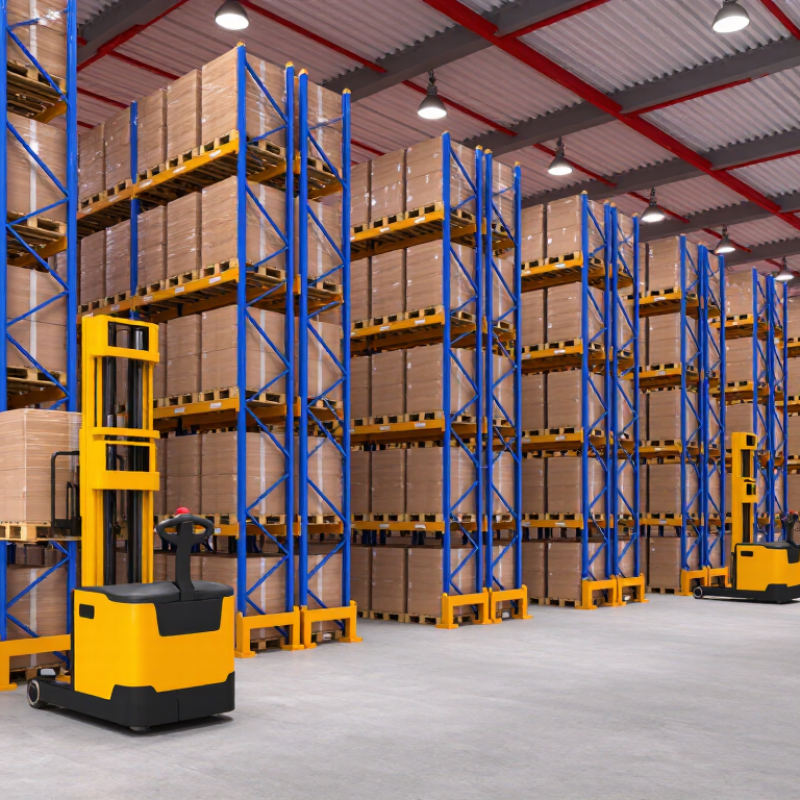
7 Drive In Pallet Racking Tips for Global Buyers
How Drive-In Pallet Racking Works and Where It Fits
Drive-in pallet racking lets a forklift enter a storage lane to place or retrieve pallets. Pallets sit on support rails, with no aisle between positions in the lane. The system suits warehouses holding many pallets of the same product, such as seasonal cartons or packaged ingredients. It uses floor space efficiently, but access is less direct than in selective racking. In a typical drive-in layout, the last pallet loaded is the first one retrieved. That matters.
Tips: Check pallet dimensions, load weights, and forklift turning space before choosing lane depth. Keep each lane assigned to a consistent product where possible. Leave clear, visible entry points; a tight corner can make daily handling awkward. Confirm the design and installation against the facility’s operating needs with a qualified racking professional.
Drive-in racking fits best when storage density matters more than immediate access to every pallet. It may be a poor match for goods with frequent date rotation or many different product types. In practice, inventory plans are not always as tidy as a layout drawing suggests. Product changes can leave half-filled lanes and reduce the expected space savings. Review picking patterns and stock rotation before committing, and consider whether a drive-through arrangement is more suitable when loading from one side and unloading from the other is practical.
Before choosing drive-in pallet racking, measure usable clear height, bay depth, column positions, and forklift turning space. A floor plan can hide obstructions. Check sprinkler clearance, exits, and slab capacity with qualified site professionals; do not treat every square metre as rackable space.
Inventory determines whether dense lanes make sense. Drive-in systems suit many pallets of the same product, but typically offer less selectivity than selective racking. Review pallet dimensions, load weights, SKU counts, and weekly turnover. The U.S. Census Bureau’s Manufacturers’ Shipments, Inventories, and Orders report recorded a total business inventories-to-sales ratio of 1.37 in December 2023. That is a broad economic benchmark, not a warehouse target. Use your own stock history to estimate peak pallet positions and seasonal surges.
Map the slowest-moving and fastest-moving items separately. A deep lane may save aisle space, yet slow retrieval when different batches share it. MHI’s 2024 Annual Industry Report found that 55% of respondents expected to adopt robotics and automation within five years. Leave room for equipment changes where practical. Measure twice. Some assumptions will still be wrong; validate the layout with a sample lane and actual handling equipment before committing.
| Tip | What to Assess | Planning Data | Why It Matters | Practical Action |
|---|---|---|---|---|
| 1. Measure usable warehouse space | Clear internal dimensions, column positions, doorways, loading areas, sprinkler systems, lighting, and obstructions. | Record clear height and floor dimensions, then map fixed obstacles and required access routes before choosing rack dimensions. | Drive-in racks use deep storage lanes and can make later access to walls, services, or stored goods difficult. | Prepare a scaled layout and confirm local fire-protection, egress, and building requirements with qualified professionals. |
| 2. Verify pallet and load specifications | Pallet length, width, overall load height, loaded weight, overhang, pallet condition, and load stability. | Use the heaviest expected unit load—not just the average—when confirming beam, rail, and frame capacities. | Inconsistent pallet sizes or damaged pallets can create clearance problems and increase the risk of load or rack damage. | Measure representative loaded pallets from each product group and share the maximum dimensions and weight with the rack designer. |
| 3. Match the system to inventory rotation | SKU count, units per SKU, replenishment frequency, expiry dates, and first-in-first-out requirements. | Typically LIFO Drive-in lanes generally load and retrieve from the same aisle opening. | The last pallet placed in a lane is usually the first one retrieved, so this layout is best suited to compatible products stored in larger batches. | Group same-SKU or same-batch pallets in lanes. Consider another storage method where strict FIFO or frequent individual-pallet access is essential. |
| 4. Choose lane depth from stock quantities | Number of pallets held per SKU, average stock on hand, peak inventory, and expected stock changes. | Plan lane capacity around actual inventory profiles; deeper lanes increase density but reduce selectivity and access. | Too many deep lanes for slow-moving or fragmented stock can leave locations partly filled and make retrieval less efficient. | Compare current and peak pallet quantities by SKU before setting lane depth, and allow for a practical amount of spare capacity. |
| 5. Check forklift compatibility and clearances | Forklift type, overall width and height, turning requirements, mast and load dimensions, and operator visibility. | Confirm the truck can enter the lane, raise and place the load safely, and operate within the rack’s specified clearances. | Forklifts travel into the rack structure, so truck-to-rack compatibility and operating procedures are especially important. | Have the equipment supplier and rack designer review the proposed layout together; validate clearances using the actual truck and load. |
| 6. Review floor capacity and rack protection | Slab condition, floor flatness, anchoring requirements, column positions, and potential forklift impact areas. | Rack loads are concentrated at frame base plates; floor and anchorage suitability must be checked for the planned configuration. | Uneven floors, unsuitable anchorage, or repeated impacts can affect rack stability and safe operation. | Obtain appropriate structural review, follow the rack designer’s anchoring specifications, and consider protection at exposed frame ends. |
| 7. Plan for safety, inspection, and change | Operator training, load notices, inspection routines, damage reporting, maintenance access, and future product changes. | Display the approved load limits and establish documented inspections based on applicable regulations and site risk. | Rack capacity depends on the installed configuration, while damage or unapproved changes can compromise safe use. | Keep the approved layout and load data on site, report damage promptly, and have repairs or modifications reviewed by a competent professional. |
Planning note: Capacities, clearances, fire-protection provisions, and inspection obligations depend on the specific rack design, equipment, building, and local regulations. Confirm final specifications with qualified professionals before installation.
Drive-in pallet racking saves aisle space by allowing forklifts to enter storage lanes. That density has trade-offs. Compare single-entry drive-in layouts, commonly used for last-in, first-out stock, with drive-through layouts accessible from both ends. The better fit depends on stock rotation, pallet consistency, and forklift traffic—not just the number of storage positions on a quote.
Check the rack design against actual pallet dimensions, including overhang, and the forklift’s mast height and turning clearance. Ask for rated loads per pallet position and per lane, plus drawings showing beam, rail, and upright specifications. Capacity changes with rack height, layout, and load placement. A headline rating is not enough. Have a qualified rack professional verify the proposed configuration for the site and floor conditions.
Safety details deserve the same scrutiny as capacity. Look for clear entry guides, column guards, suitable pallet supports, and end stops where the design requires them. Confirm that operators can see lane conditions and that damaged components can be reported and inspected promptly. These details help, but they cannot prevent every collision. A narrow clearance on paper may feel tighter once a loaded forklift enters the lane, so leave room for real operating conditions.
How to read this chart: Values show a simple layout calculation: storage depth multiplied by four pallet levels, assuming one pallet per position. Deeper lanes can increase storage density, but reduce selectivity and require compatible forklift operation. These figures are not load ratings. Have a qualified rack designer verify pallet and rail loads, clearances, rack protection, and applicable seismic and safety requirements for your site.
Before ordering drive-in pallet racking, ask for drawings, load calculations, and inspection records tied to the exact steel sections and connection details. Check the stated design basis: ANSI MH16.1 and EN 15512 address rack design in different markets, while EN 15635 covers use and maintenance. These standards are not interchangeable certificates. Confirm that the supplier’s calculations match your pallet dimensions, forklift clearances, floor conditions, and local seismic requirements.
Ask for traceable material certificates, weld and coating inspection records, and a sample load plaque. Then compare the plaque’s capacity with the approved layout; a generic “per-bay” figure can hide differences in beam levels or frame spacing.
Small mismatch.
The World Bank’s 2023 Logistics Performance Index assessed 139 economies using six dimensions, including customs, infrastructure, and shipment tracking. That is a useful reminder to verify the route as well as the rack: request a commercial invoice, packing list, bill of lading instructions, and certificate-of-origin details before production. For wooden export packaging, check whether ISPM 15 treatment and marking apply.
Names, weights, quantities, and product descriptions should match across documents. One overlooked field can delay clearance. Ask for draft documents early, and have your broker review them; I would not treat a polished certificate as proof that the underlying rack design is sound.
Drive-in pallet racks save aisle space, but installation tolerances matter because forklifts enter storage lanes. Before anchoring, confirm slab condition, floor level, rack plumb, and clearances against approved engineering drawings and load ratings. Verify rails, bracing, column guards, and backstops match the design. Keep installation records and post each bay’s capacity where operators can see it. Small details matter.
Train operators to approach squarely, raise loads only when needed, and keep forks level with the rails. Use the truck type and turning space specified in the layout; a mast or load that clips an upright can damage the lane. OSHA’s Powered Industrial Trucks guidance estimates about 85 fatalities and 34,900 serious injuries annually in the United States involving powered industrial trucks. This is a US estimate, not a global rate, but it supports conservative speeds, practical training, and pedestrian separation.
Inspect daily for impact damage, displaced beams, loose anchors, bent rails, and missing pins. Take a damaged bay out of service until a qualified person assesses it; do not straighten structural members on site. Record defects, repairs, and repeated forklift contact, then adjust guards or traffic paths. Even good plans drift. Recheck racks after layout changes, floor work, or new truck deployment. Maintenance intervals should reflect traffic and damage history, not just calendar convenience. Some teams learn this late.
Drive-in lanes have one entry point and often suit last-in, first-out stock. Drive-through lanes are accessible from both ends. Choose based on stock rotation and forklift traffic.
Measure pallet dimensions, including overhang. Check forklift mast height and turning clearance. A layout that looks roomy on paper may feel tight in use.
Request rated loads for each pallet position and lane. Review drawings and calculations for the exact layout. A headline rating alone is not enough.
Check for entry guides, column guards, suitable pallet supports, and required end stops. Make sure operators can see lane conditions. These features reduce risk, but cannot prevent every collision.
Ask for design drawings, load calculations, inspection records, and traceable material details. Compare the capacity plaque with the approved rack layout. Small mismatches matter.
Check floor condition, level, rack alignment, and clearances against approved drawings. Verify rails, bracing, guards, and backstops. Keep installation records.
Operators should approach squarely and keep forks level with the rails. Use the truck type and turning space specified for the layout. Go slowly.
Take the affected bay out of service until a qualified person assesses it. Record the damage and repair. Do not straighten structural parts on site. Even good plans drift.
Drive-In Pallet Racking is a high-density storage system that allows forklifts to enter rack lanes to place and retrieve pallets. It works best for warehouses storing large quantities of similar products, especially when maximizing floor space is more important than accessing every pallet individually. Before choosing a system, buyers should assess available space, inventory types, pallet dimensions, stock turnover, and the storage capacity they need.
Compare rack designs, load ratings, and safety features to ensure the system suits the goods and equipment in use. Check that the supplier can provide clear quality information, relevant standards, and complete export documentation. Planning should also cover professional installation, suitable forklift operation, staff training, and routine inspections and maintenance. Considering these factors together helps global buyers select a practical, safe, and dependable storage solution.