0%

Global warehouses are under pressure to store more pallets without expanding their buildings. MHI’s 2024 Annual Industry Report highlights continuing investment in automation, data visibility, and flexible material-handling systems. The message is clear. Storage design is becoming a strategic decision.

This guide examines the 2026 Top Adjustable Pallet Racking Types for Global Buyers. It compares selective, drive-in, double-deep, narrow-aisle, and mobile configurations. Each system serves a different operating profile. Selective racks offer direct access to every pallet. Drive-in racks increase density but reduce stock rotation flexibility. Narrow-aisle systems save floor space while demanding better equipment control and operator discipline.

Real projects often expose the gaps in simple comparisons. A rack drawing may look efficient. Yet a 1,000-kilogram pallet, uneven flooring, or changing SKU sizes can alter the result. The Council of Supply Chain Management Professionals continues to emphasize inventory accuracy, space utilization, and operational resilience in modern warehouse planning. These factors should guide every Adjustable Pallet Racking decision.

Buyers should also review rack load tables, beam deflection limits, seismic conditions, forklift clearances, and local engineering requirements. EN 15635 and RMI MH16.1 provide useful technical references, but they do not replace site-specific assessment. Some recommendations may appear obvious. They are not always correct. Warehouse growth, labor availability, and product turnover can quickly challenge an otherwise attractive layout. This overview offers a practical starting point, not a substitute for qualified structural and safety review.
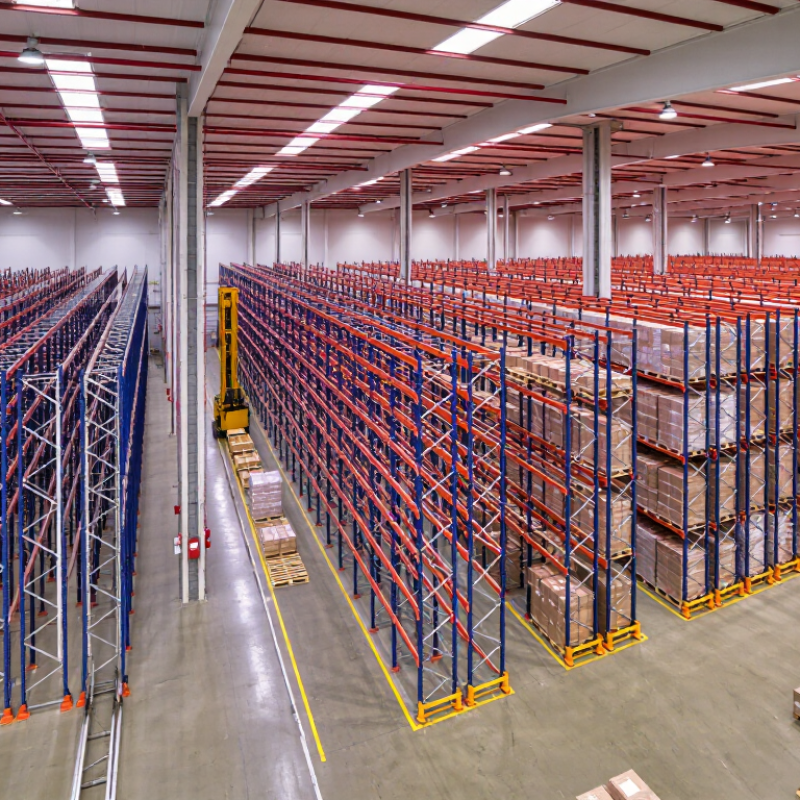
2026 Top Adjustable Pallet Racking Types for Global Buyers?

Adjustable Pallet Racking Classification Under EN 15635 and ANSI MH16.1

2026 Top Adjustable Pallet Racking Types for Global Buyers

Adjustable pallet racking is not classified by one universal product list. EN 15635 focuses on the safe use, inspection, and maintenance of steel storage systems. ANSI MH16.1 focuses more on rack design, materials, load capacity, and structural performance. This difference matters when global buyers compare selective, double-deep, narrow-aisle, and very-narrow-aisle layouts.

Selective racking offers direct access to every pallet. It suits mixed inventory and frequent picking. Double-deep racking increases storage density but needs compatible handling equipment. Narrow-aisle systems save floor space. Their safety depends heavily on truck guidance, beam levels, and aisle control. Very-narrow-aisle designs demand tighter installation accuracy and stronger operating discipline.

Check the actual load data.

Under EN 15635, users should arrange regular inspections by a competent person. Damaged uprights, bent beams, missing locking pins, and overloaded bays require prompt action. ANSI MH16.1 supports engineering checks for rack capacity and component behavior. Buyers should request signed calculations, clear load notices, anchoring details, and inspection procedures.

A practical review should measure pallet weight, dimensions, turnover, equipment reach, floor quality, and seismic conditions where relevant. Standards do not replace site judgment. A neat spreadsheet is not enough. One weakness in many comparisons is treating “adjustable” as automatically flexible. Poorly set beam levels can create unusable clearance and hidden impact risks. Rechecking the design after real operations is sometimes necessary.

2026 Top Adjustable Pallet Racking Types for Global Buyers

Adjustable Pallet Racking Classification Under EN 15635 and ANSI MH16.1

The chart compares representative pallet positions in depth for rack configurations commonly evaluated by global buyers. Selective and double-deep systems provide direct aisle access, while push-back, drive-in, pallet shuttle, and pallet-flow systems increase storage density by adding depth. EN 15635 focuses on the safe use, inspection, and maintenance of storage equipment, while ANSI MH16.1 addresses the design and specification of steel storage racks. Neither standard sets a universal storage-depth limit; final dimensions depend on pallet loads, equipment, seismic conditions, clearances, and the approved rack design.

Selective Racking: 100% Pallet Access for High-SKU Warehouses

For global buyers, adjustable pallet racking remains a practical choice for high-SKU warehouses. Its main strength is direct access to every pallet position. Operators can retrieve one product without moving another pallet first. This supports faster picking and clearer inventory control. Access matters daily.

A typical system uses upright frames, horizontal beams, and adjustable storage levels. Beam heights should match pallet dimensions, forklift clearance, and required load capacity. A 1,000-kilogram pallet needs more than a strong-looking frame. Qualified planners should verify beam ratings, floor conditions, anchoring, and aisle width before installation. Clear labels help operators confirm each bay’s capacity during busy shifts. Regular inspections can identify bent uprights, loose connections, or overloaded beams early. Those checks should be recorded.

Selective racking uses more floor space than compact storage systems because aisles serve every bay. That trade-off often makes sense when product variety matters more than maximum density. However, 100% pallet access does not mean all pallets are handled simultaneously. It means each pallet is individually reachable without relocating another pallet. A layout can look efficient on paper and still frustrate operators. Field reviews often reveal poor slotting, tight turning areas, or inconvenient picking heights. A small pilot zone can expose these problems before full installation. The best design may need revision.

Double-Deep and Push-Back Racking: 2–6 Pallets Deep for Higher Density

Double-deep and push-back pallet racking can place two to six pallets behind the aisle. This arrangement increases storage density when warehouse space is expensive or limited. Double-deep systems usually require a reach truck with extended reach. Push-back racking uses nested carts that move pallets along inclined rails. Operators load and retrieve pallets from one accessible side.

The choice depends on inventory rotation, pallet quality, and handling discipline. Push-back racking suits several pallets of the same product, especially when last-in, first-out storage is acceptable. Double-deep layouts can reduce aisles, but they may limit direct access to older stock.

Every rack should match verified pallet weights, dimensions, beam levels, and forklift clearances. Load signs must remain visible.

Small details matter.

I have seen dense layouts underperform when damaged pallets jam carts or operators misread locations. That risk deserves honest attention. Regular rail inspections, upright checks, and impact protection support safer operation. Buyers should also review floor capacity, fire protection, seismic conditions, and local warehouse requirements. A two-deep design may be easier to control than a six-deep system, even when the latter holds more pallets. Clear slotting rules and trained operators often decide whether density creates value or congestion.

Drive-In, Pallet-Flow, and Mobile Racking: Comparing FIFO, LIFO, and Space Use

For global buyers in 2026, adjustable pallet racking should match stock rotation, not only warehouse height.

Drive-in racking stores pallets on rails and removes internal aisles. It delivers strong space utilization in suitable layouts. LIFO works naturally here. It suits stable, non-perishable goods with many pallets per SKU. Forklift access requires disciplined entry and exit. Damaged rails can create serious handling risks, so inspections must be routine.

Pallet-flow racking uses inclined rollers to move pallets toward the picking face. New stock loads from the rear, while older stock leaves first. This supports FIFO and clearer inventory control. It is useful for date-sensitive goods. Flow lanes need consistent pallet quality and accurate loading. Uneven pallets may stop halfway. Its space use is good, though lanes and safety clearances consume more room than drive-in systems.

Mobile racking places adjustable rows on motorized bases, opening one aisle at a time. It can provide high density while preserving direct access to each pallet. FIFO or LIFO depends on the operating layout and software rules. Buyers should compare cycle time, floor loading, seismic design, maintenance access, and local safety requirements. A small pilot with real pallets is wiser than relying on a brochure. In practice, predicted capacity can disappoint when forklifts queue. A perfect layout rarely exists. Recheck assumptions after peak-season trials.

Global Buyer Checklist: Load Capacity, Aisle Width, Seismic Design, and Compliance

2026 Top Adjustable Pallet Racking Types for Global Buyers?

Global buyers should match racking type to load data, not warehouse fashion. Selective adjustable racks suit mixed stock and frequent access. Double-deep systems improve density but require compatible handling equipment. A 2024 logistics property report from a global real-estate research group recorded continued pressure for higher warehouse utilization, making aisle planning increasingly important.

Record the pallet weight, dimensions, beam levels, and maximum bay load. Never rely on an average pallet weight. A spreadsheet can still lie.

For many counterbalance operations, 3.2 to 3.6 metres is a practical aisle range, while reach-truck layouts may work near 2.7 metres. Confirm these figures through equipment specifications and a site trial. The RMI MH16.1 standard also requires design checks for upright frames, beams, connections, and impact protection.

Seismic design deserves separate engineering review. FEMA 460 warns that rack anchorage, bracing, and load restraint can influence earthquake performance. Buyers should request calculations for the local seismic zone, soil condition, rack height, and stored mass.

EN 15512 and EN 15629 provide useful European design and specification references, but they do not replace local approval. Compliance may involve fire protection, load notices, inspection records, and workplace safety rules. Ask for traceable material certificates and installation records. Cheap documentation is rarely cheap later.

FAQS

What is adjustable pallet racking?

It uses upright frames, horizontal beams, and movable storage levels. Beam heights must match pallet size, equipment clearance, and load capacity.

Which warehouse layout suits mixed inventory?

Selective racking suits mixed products and frequent picking. Every pallet can be reached without moving another pallet. Access matters daily.

Does 100% pallet access mean every pallet is handled simultaneously?

No. It means each pallet is individually reachable from the aisle. Busy operations may still reveal poor slotting or tight turning areas.

When is double-deep racking useful?

Double-deep racking increases density by placing two pallets behind the aisle. It requires suitable reach equipment and may limit access to older stock.

How does push-back racking improve storage density?

Push-back systems use nested carts on inclined rails. They can store several pallets from one accessible side. Product grouping works best.

What should buyers verify before installation?

Verify pallet weight, dimensions, turnover, equipment reach, aisle width, floor quality, and seismic conditions where relevant. Check actual load data.

Which rack conditions require prompt action?

Bent uprights, damaged beams, missing locking pins, and overloaded bays need immediate attention. Block the affected location when necessary.

How often should inspections occur?

Regular inspections should be arranged by a competent person. Record findings, repairs, and recurring impact points. A checklist alone may not be enough.

Are dense layouts always more efficient?

No. A six-pallet-deep design may hold more inventory but create congestion. A two-deep layout can be easier to control.

How can buyers test a proposed layout?

Build a small pilot zone before full installation. Observe turning space, picking heights, clearance, and real operator behavior. Revise the design if needed.

Conclusion

Adjustable Pallet Racking offers global buyers a flexible way to balance storage density, product access, and warehouse efficiency. Under EN 15635 and ANSI MH16.1 principles, system selection should consider structural safety, inspection requirements, beam capacity, pallet dimensions, and operating conditions. Selective racking provides direct access to every pallet and suits warehouses with many SKUs, while double-deep and push-back racking can store pallets two to six positions deep for improved space utilization. However, these higher-density solutions may reduce immediate access and require suitable handling equipment.

Drive-in, pallet-flow, and mobile racking each support different inventory strategies. Drive-in systems generally favor LIFO storage, pallet-flow systems are well suited to FIFO rotation, and mobile racking can significantly reduce aisle space when access frequency is controlled. Before purchasing, buyers should compare load capacity, aisle width, forklift compatibility, seismic design, installation quality, and compliance documentation to ensure the selected solution is safe, practical, and adaptable to future warehouse needs.

Clara

Clara

Clara is a dedicated marketing professional with a deep understanding of the company’s products, services, and customer-focused approach. Through her work, she translates complex product features into clear, practical insights that help readers make informed decisions and recognize meaningful......